
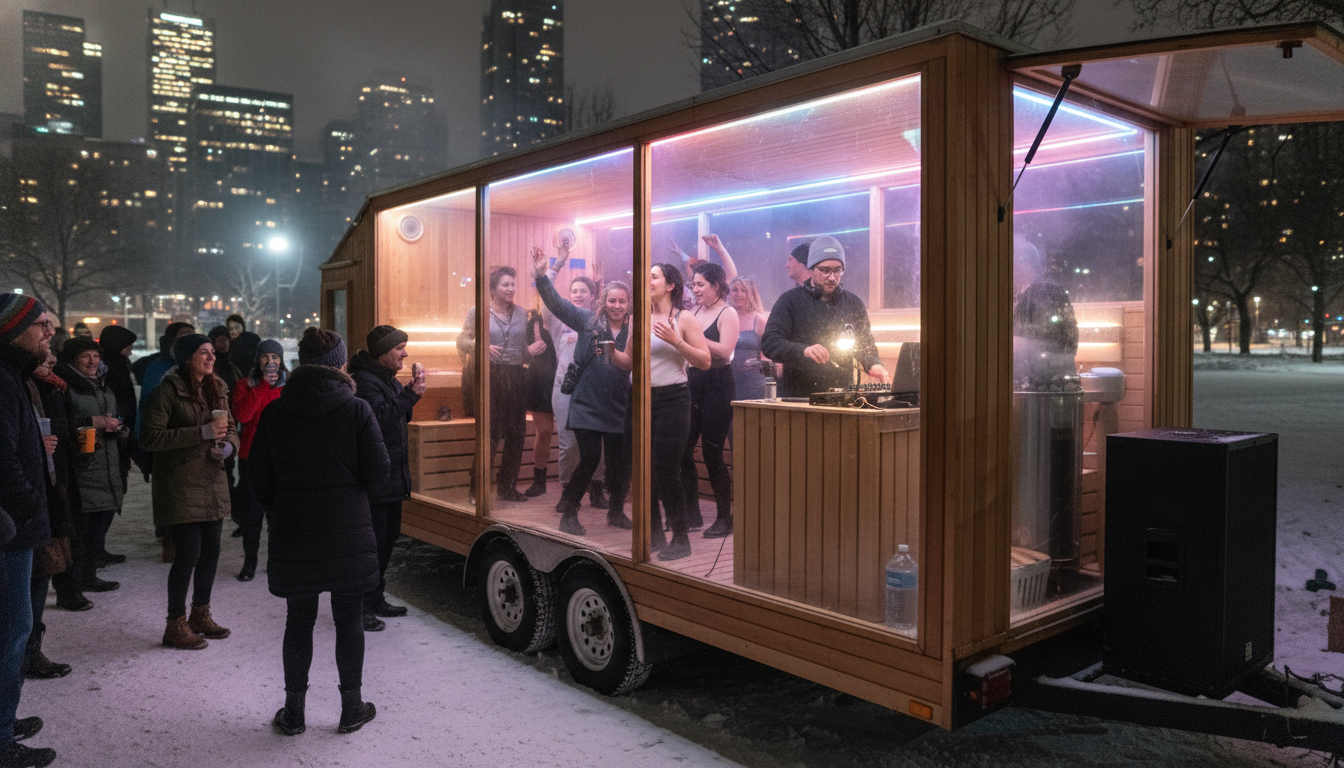
Sauna raves heat up Canadian cities as an alcohol-free nightlife trend
Sauna raves are transforming urban nightlife across Canada with alcohol-free, hot-and-cold events that blend music, social connection and wellness.
A new kind of evening event called a sauna rave is gaining traction in cities from Toronto to Calgary, offering participants a nightclub-like atmosphere without alcohol alongside traditional hot-and-cold therapy. The gatherings mix scheduled sauna and cold-plunge rotations with lounge spaces that become dance floors under low lighting and live DJs, attracting people who want an alternative to bars and late-night clubs. Organizers and attendees describe the format as a social wellness experience — part recovery ritual, part shared party — scheduled earlier in the evening and focused on connection, movement and stress relief.
Weeknight sauna raves shift how people socialize
Hosts are staging sauna raves on evenings when traditional nightlife is usually quiet, turning midweek hours into opportunities for communal relaxation and dancing. Events typically run in the early evening, often beginning between 7 p.m. and 8 p.m., allowing attendees to return home and sleep on time while still enjoying a lively social outing.
At the same time, the absence of alcohol is deliberate: promoters emphasize sober socializing and the physical benefits of thermal contrast rather than drinking as the central activity. Participants report the combined ritual of heat, cold and music creates an atmosphere that feels both intimate and celebratory without the need for drinks.
What happens at a sauna rave
A sauna rave generally follows a predictable flow designed around contrast therapy. Guests move through hot saunas and cold plunges on a set or free schedule, then gather in a lounge area that converts into a dance space when a DJ starts a set. The programming often includes guided breathing, timed cold-plunge intervals and DJ-driven blocks that encourage dancing in swimwear or light attire.
Venues vary: some are boutique wellness clubs with single-room setups, while others operate larger facilities with multiple saunas, plunge pools and multipurpose lounges. In addition to music, organizers sometimes layer in elements such as guided meditations, themed nights or collaborations with sober dance collectives to expand the sensory experience.
Who is attending sauna raves in Canadian cities
Organizers report a broad demographic attending sauna raves, with many participants clustered in the 30-to-45 age range but with interest from both younger and older adults. The events appeal to people who prioritize fitness, recovery and mental wellness, as well as those looking for new ways to socialize in low-pressure, alcohol-free settings.
Attendees describe motivations ranging from muscle recovery after exercise to seeking quieter, more restorative social nights. Some come explicitly for the health benefits associated with hot-and-cold therapy, while others treat the gatherings as a novel form of night out that combines music and the emotional lift of communal movement.
Businesses are adapting to a growing hot-and-cold market
Wellness operators and fitness studios are investing in saunas and cold-plunge infrastructure as they respond to rising consumer demand. Designers and consultants working in the industry note that such facilities can be space-efficient and require fewer employees than full-service spas, which makes them attractive propositions for operators expanding into urban neighbourhoods.
Market observers say initial growth is concentrated in larger cities where health-focused lifestyles and experiential leisure drive new concepts, but operators expect the model to spread to smaller markets. For business owners, sauna raves unlock new revenue streams through ticketed events, memberships and ancillary services while leveraging the crossover between recovery therapies and social programming.
Sauna as a social ‘third space’ beyond home and work
Advocates say sauna raves are helping define the sauna as a new kind of public gathering place — a “third space” where people meet outside the contexts of home and workplace. Proponents liken the dynamic to the role pubs and bars have long played as social anchors, but without the alcohol component.
International ambassadors for sauna culture point to a global shift toward public sauna use, where communal bathing and shared thermal rituals serve as important social glue. In this framing, sauna rave nights are another iteration of that social function: a place to encounter others, exchange conversation and experience vulnerability safely in a calibrated environment.
Health and safety considerations for sauna raves
Organizers emphasize safety protocols given the physical stresses of hot-and-cold exposure and the active dancing component. Venues typically require pre-screening for cardiovascular risk, post clear guidance about pacing through heat and cold, and staff the events to supervise plunge pools and temperature-controlled rooms.
Medical and wellness experts stress that contrast therapy is not suitable for everyone, particularly people with uncontrolled hypertension, recent cardiac events, pregnancy or certain chronic conditions. Event hosts commonly advise participants to consult health professionals when in doubt and to hydrate, pace their rotations and prioritize comfort over perceived social expectations.
How sauna raves fit into broader sober social movements
Sauna raves intersect with a growing sober-curation culture that reimagines social life without alcohol. Groups that champion sober socializing have been staging daytime and early-evening dance events for years, and those practices are now blending with wellness-led rituals to produce events centered on mood, movement and health.
Collaborations between sauna venues and sober dance movements have surfaced in larger markets, where organizers team up to produce elevated nights with high-energy DJs, themed performances and curated playlists. These larger productions aim to broaden the appeal of sauna raves beyond niche wellness audiences toward people seeking alternatives to the late-night club scene.
Local examples and the evolving event calendar
In Calgary, a contrast-therapy venue that launched in the past year has started hosting monthly sauna rave nights alongside women-only sessions and quieter programming. Participants at those events cite a mix of health and social reasons for attending, from muscle recovery to spending time with friends in a different setting.
In Toronto, operators with multiple locations are programming a range of social sauna nights — from comedy or couples evenings to larger, higher-energy weekends — sometimes in partnership with international sober-dance collectives. Those operators say the format allows them to offer a variety of atmospheres, from reflective to raucous, within the same overall model.
Cultural and experiential appeal of low-light communal spaces
Part of the attraction lies in the ambiance: low light, music-forward soundscapes and the shared vulnerability of being in swimwear contribute to feelings of safety and intimacy. Organizers say that the combination of controlled exposure and curated sound encourages authentic connection without the inhibiting effects of alcohol.
Attendees frequently remark that the environment lowers social barriers while remaining less intense than a nightclub. Many describe the experience as energizing and restorative: a social outlet that still supports physical recovery and sleep the next morning.
Accessibility and inclusivity in sauna events
Promoters are paying attention to accessibility and inclusivity as demand grows, adapting ticketing and scheduling to different needs and offering gender-specific nights or mixed events to suit varied comfort levels. Some venues run adults-only nights, while others schedule family-friendly or couples sessions at different hours to broaden appeal.
Still, barriers remain: membership fees, ticket prices and facility accessibility can limit who participates. Industry players say expanding into smaller markets and developing more affordable programming will be necessary for sauna raves to move beyond an urban, middle-income base.
Regulation, liability and staff training
The thermal and social nature of sauna raves introduces regulatory and liability considerations for operators and municipalities. Facilities must comply with public health codes, pool and plunge regulations, and workplace safety rules for staff who supervise hot rooms and plunge pools.
Operators that succeed emphasize rigorous staff training, clear participant waivers and transparent pre-event health guidance. Risk mitigation strategies include limiting capacity, timed rotations through heat and cold, and providing shaded or low-sensory lounge areas for anyone seeking quieter respite.
What participants say they gain from sauna raves
Regular attendees describe a mix of physical and social benefits: reduced muscle soreness, improved mood, better sleep and a sense of community. Many treat the events as part of a broader wellness routine that may include fitness classes, mindful breathing and targeted recovery sessions.
For some, the principal gain is social: sauna raves create a shared ritual that replaces bar-based outings and feels purposeful in ways that many modern social nights do not. Participants highlight the novelty of a party where the primary focus is movement, breath and thermal contrast rather than alcohol consumption.
Outlook for sauna raves across Canada
Industry experts predict continued expansion of hot-and-cold social programming into additional urban neighbourhoods and, eventually, smaller cities and towns. Business models that combine walk-in recovery services with ticketed event nights offer flexibility to operators and recurring revenue through membership tiers and seasonal schedules.
Those tracking the trend say the combination of low staffing needs, smaller footprint and consumer appetite for experiential wellness makes sauna raves a commercially attractive concept for studios and boutique operators. As programming diversifies, organizers expect to see an increase in themed nights, collaborative pop-ups and partnerships with music curators.
Sauna raves are emerging as one of several trends that recast how urban residents spend their evenings, privileging wellness, meaningful contact and novel experiences over alcohol and late-night partying. The format appeals to people seeking balance between social life and health, and its growth points to a broader recalibration of nightlife in Canadian cities.
Longer term, the question for operators and communities will be whether sauna raves remain a specialized, urban wellness curiosity or evolve into an enduring social institution that complements — rather than competes with — established nightlife and public gathering places.
