
10-unit development drawn into dispute over floor plans that could yield a 30-person rental
Appellants contend a proposed 10-unit development with three-bedroom layouts could function as a 30-person rental unit, raising zoning and safety concerns.
They say each bedroom in the plans includes its own bathroom and that units lack meaningful shared living areas beyond a kitchen.
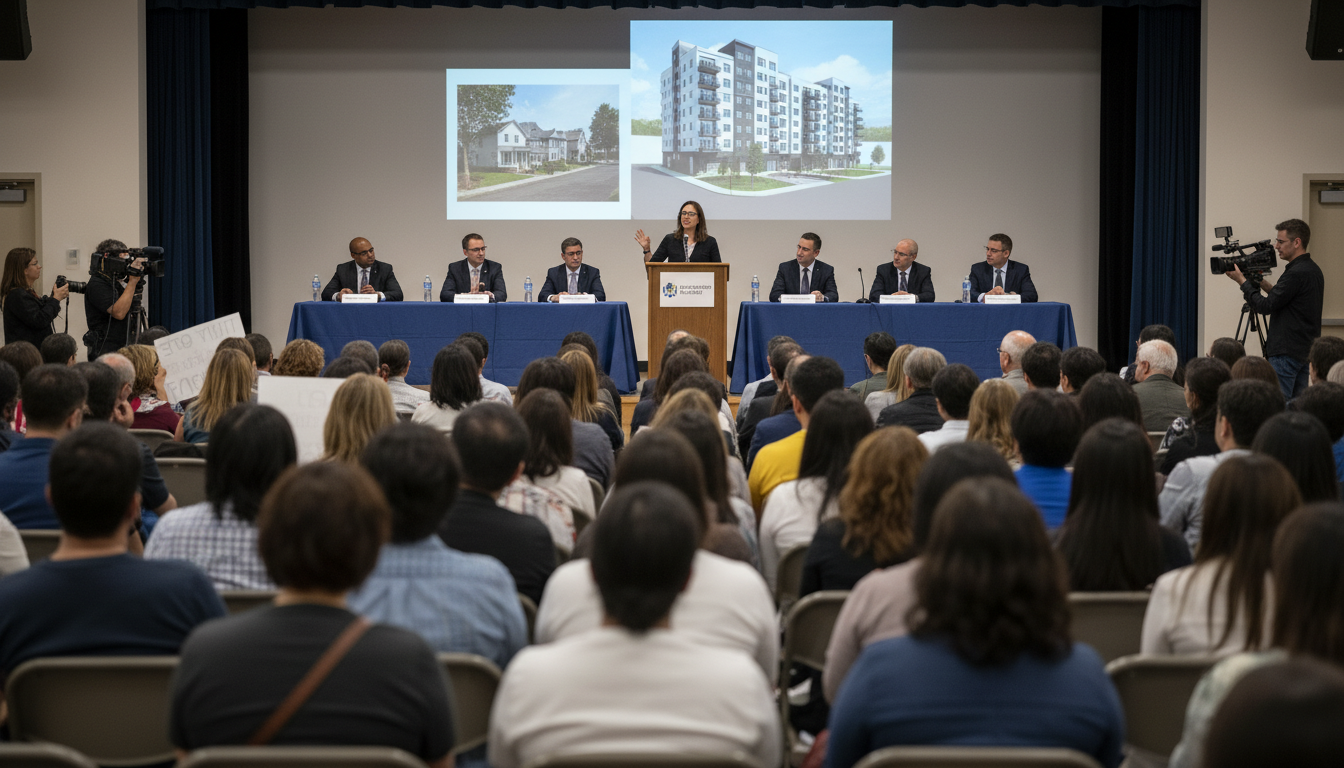
The claim was highlighted by Gwendolyn Stewart-Palmer, representing Progressive Academy, who noted the floor plans resemble other properties owned by the developer that are already being rented.
Appellants outline the core architectural concern
Appellants argue the developer’s submitted floor plans show three separate sleeping rooms per unit, each with an ensuite, which, they say, removes the traditional residential living space that distinguishes family units from rooming houses.
Their contention is that without a communal living room or other shared areas, the design facilitates individual rentals rather than long-term family occupancy, effectively multiplying the number of unrelated residents.
Progressive Academy raises parallels with existing properties
Gwendolyn Stewart-Palmer told the hearing that the proposed layouts are similar to configurations already built by the developer elsewhere, many of which are currently being leased.
Progressive Academy’s counsel expressed concern that a 10-unit development built to that pattern could be managed as 30 separate rentals, a change of use that would have different regulatory and operational implications than a traditional multi-unit residential building.
Local impacts cited by neighbours and planners
Opponents warned at the appeal stage that a shift toward multiple single-occupancy rentals can increase pressure on parking, waste management and local infrastructure, and may alter neighbourhood character.
Safety officials and community advocates commonly point to higher occupant counts as a risk factor for building egress, fire planning and emergency response, particularly where plans do not show expanded common areas or dedicated communal infrastructure.
Regulatory ambiguity over occupancy and use
Municipal bylaws typically distinguish between self-contained dwelling units and rooming houses or boarding-style accommodations, but variances in design can blur that line.
Appellants argue that the design’s emphasis on individual bedrooms with private bathrooms creates a de facto rooming-house arrangement that may require a different permit, inspections, or operational conditions under local zoning and licensing regimes.
Precedent and enforcement questions around developer practices
City officials and community groups will likely review whether the developer’s other properties set a practical precedent for how units are marketed and occupied.
If similar buildings have been rented to multiple unrelated tenants without enforcement action, appellants say that creates an expectation and a pattern that the new 10-unit development would replicate, complicating municipal oversight and policy responses.
Possible outcomes and routes forward
The appeals process can produce a range of outcomes: conditions imposed on the development permit, changes to the floor plans to introduce clear shared living spaces, or denial of permission if the project is found to contravene zoning intent.
Local authorities may also require additional information on intended tenancy models, parking allocations, and fire-safety measures before granting final approval.
The dispute centers on whether the 10-unit development as designed will serve multi-person households or be used as a collection of individual rental rooms, and that determination will guide regulatory decisions and community expectations.
Municipal planners, the appellants and the developer will now proceed through the review and appeal channels to establish whether the proposed plan aligns with local bylaws and neighbourhood standards.
