
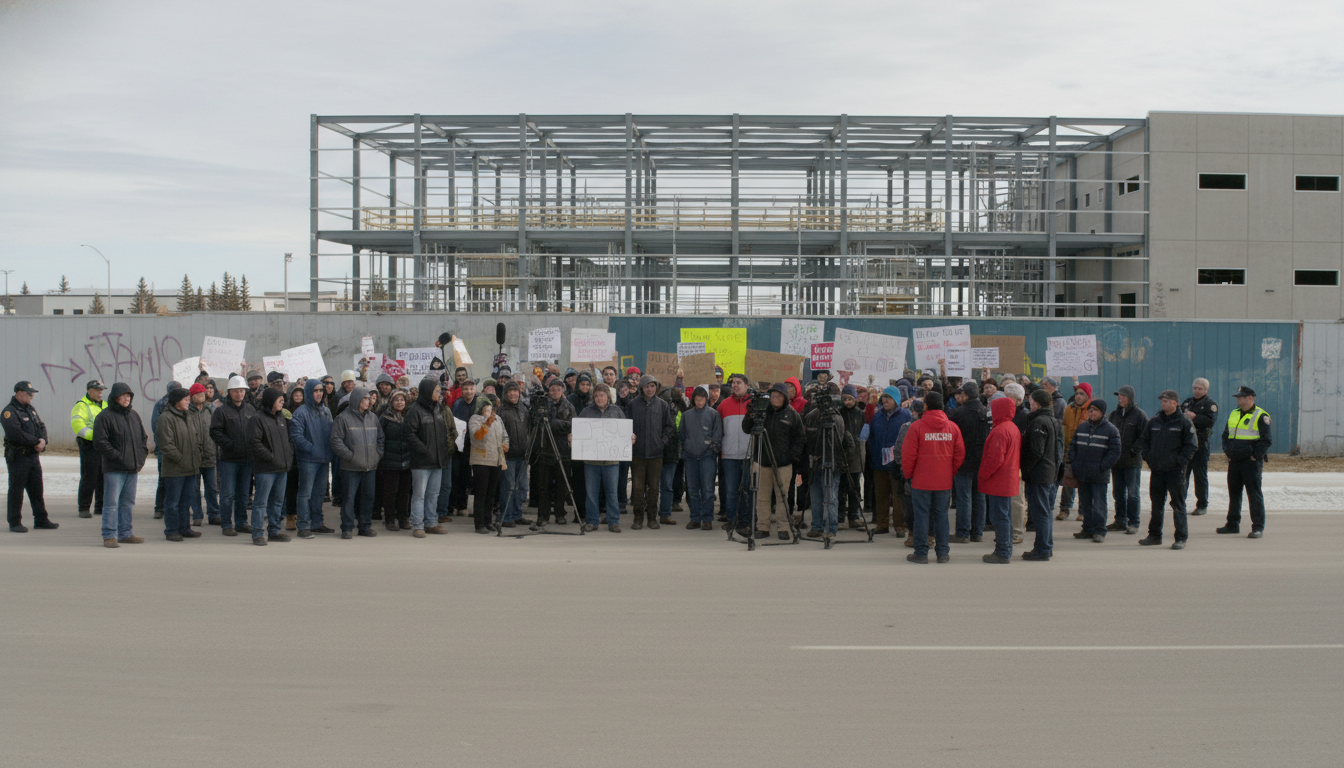
Olds residents mobilize over Synapse data centre proposal beside homes
Olds residents raise health, noise and consultation concerns over the Synapse data centre and a proposed 1,400-megawatt gas power plant near neighbourhoods.
Synapse data centre plan upends life for west-side homeowners
Marnie Desjardins and several neighbours on Olds’s west side say their quiet retirement plans were shaken when the Synapse data centre proposal surfaced this year.
The project, as presented, would see ten 100-megawatt data halls built near the town alongside a gas-fired generating station described by residents as having capacity comparable to a major city grid.
Residents say the scale and proximity of the development have prompted fears about noise, air quality and long-term property and health impacts.
Town halls reveal deep local anxiety
Community meetings in late April brought house-by-house concerns into public view and highlighted the emotional strain many residents are feeling.
An April 28 town hall convened by local organizers drew packed rooms where parents, retirees and health professionals voiced questions about emissions, noise and the adequacy of public consultation.
Organizers and participants say the sessions exposed gaps in communication between the developer, municipal authorities and affected households.
Health and quality-of-life concerns drive opposition
Residents at the meetings repeatedly raised potential health risks tied to continuous noise, local air emissions and the industrialisation of nearby land.
Mothers and seniors in the crowd described sleeplessness and anxiety over living adjacent to industrial-scale infrastructure.
Local advocates say those concerns are amplified by scientific uncertainty and by the fact that many long-time residents were not prepared to engage with complex technical filings.
Regulatory track: AUC rejection and a resubmission
Synapse’s initial application to Alberta’s energy regulator did not proceed after being judged inadequate by the Alberta Utilities Commission (AUC).
Company representatives later resubmitted materials and are now awaiting the AUC’s next steps, which include an information session slated for May and a public hearing process later in the year.
Provincial officials have stressed that approvals for water use, emissions, noise and land use proceed through multiple regulatory processes that allow for public participation.
Local organizing coalesces around transparency and process
A grassroots coalition called the Olds Transparency Project has formed to centralize information for neighbours and to press for clearer consultations.
The group produced information packages and convened the town hall to make technical documents more accessible to residents who said they felt shut out of early planning.
Organizers emphasize that many community members, especially seniors, lack digital access and need in-person briefings and paper notices to meaningfully participate.
Wider Alberta context: multiple proposals, limited assessments
Olds is not the only Alberta community facing large data centre proposals, and several projects in the province have proceeded without federal environmental impact assessments.
Advocacy groups and municipal leaders in other regions have raised similar questions about whether provincial and federal review frameworks are keeping pace with rapid growth in AI-focused data infrastructure.
Public-interest advocates argue that the province lacks an overarching legal framework for AI data centres and that citizens are often left to navigate technical filings without sufficient institutional guidance.
Voices from the field: residents and advocates recount experience
Long-time Olds residents say the timing and volume of technical material have made meaningful participation difficult for many households.
“It consumes your life if you let it,” one resident said after weeks of reviewing planning documents and speaking at meetings.
Public-interest groups report hearing from residents across Alberta and neighbouring provinces who feel unprepared to assess the local impacts of sprawling data campuses and associated energy facilities.
Lessons from nearby fights and municipal decisions
Residents point to recent fights elsewhere in Alberta where community pressure changed the outcome of proposed developments.
In one county outside Calgary, local objections and detailed submissions helped a municipal council reject a proposed data centre that would have bordered farmland.
Advocates say that case shows the importance of focused, well-documented public input when hearings arrive, and they are urging Olds residents to prepare evidence and statements for the AUC process.
Developer and government responses to concerns
Synapse has said it is listening and has posted information intended to address questions about design, operations and public consultation.
Provincial officials maintain that regulatory processes will examine water, emissions and noise, and that residents will have opportunities to participate in consultations at multiple stages.
Nevertheless, some residents say those assurances feel distant until they see completed regulatory filings that spell out mitigation measures and monitoring plans.
Key technical issues demanding scrutiny
Noise modelling and continuous operational sound were raised repeatedly at public meetings as an area needing independent evaluation.
Air emissions and the composition of potential contaminants from the gas plant and backup generators are also central concerns for health professionals who spoke at the town hall.
Other technical questions include local water use and disposal, emergency response plans, and the visual and land-use changes that accompany large industrial campuses.
Capacity and scale: what the numbers imply for a small town
The proposed cluster of ten 100-megawatt buildings and a 1,400-megawatt power plant would represent a major industrial footprint relative to Olds’s population and current development patterns.
Residents and local planners are questioning how the town’s infrastructure and emergency services would adapt to such a concentration of industrial energy use.
Planners also note potential downstream impacts on local roads, utility corridors and future land uses that could shape municipal budgets and development trajectories for decades.
How residents are preparing for the AUC hearings
Local groups are building submission templates, gathering expert summaries and encouraging neighbours to file statements of concern with the regulator.
Community advocates stress the need for clear timelines, accessible summaries of technical reports and support for residents who lack digital access or experience with regulatory procedures.
Organizers are also seeking third-party reviews of noise and air modelling to supplement developer-supplied studies.
Transparency and the politics of fast-paced development
Many residents say the speed and quantity of incoming proposals across Alberta has made it difficult for municipal governments to provide timely, detailed responses.
Public-interest organisations warn that fast-paced approval pathways can squeeze meaningful civic engagement, particularly in smaller towns where administrative resources are limited.
Elected officials and regulators have pointed to procedural safeguards, while critics counter that the safeguards need better resourcing and clearer communication to be effective.
Practical steps for residents ahead of hearings
Community leaders recommend keeping concise written records of concerns, photographing nearby land uses, and noting dates and details of any health or noise events that residents attribute to early industrial activity.
They also advise neighbours to attend information sessions, request plain-language summaries of technical reports, and to coordinate statements so that the regulator hears a range of specific, evidence-based concerns.
Legal and technical support options exist for intervenors at regulatory hearings, and some advocacy groups are offering guidance on how to access those resources.
The Synapse proposal has crystallized a wider debate about how fast-growing data infrastructure should be sited and regulated in communities that did not plan for industrial-scale energy production.
For many Olds residents, the conflict has brought into sharp relief how local identity, public health and municipal planning intersect with global demand for data and AI processing.
As the AUC process moves forward, the decisions made in Olds may shape expectations about public consultation, technical review and municipal influence on similar projects across the province.
Long after the meetings and filings conclude, residents say the question will be whether the process truly addressed community health and quality-of-life concerns or merely checked technical boxes on a path to construction.
