
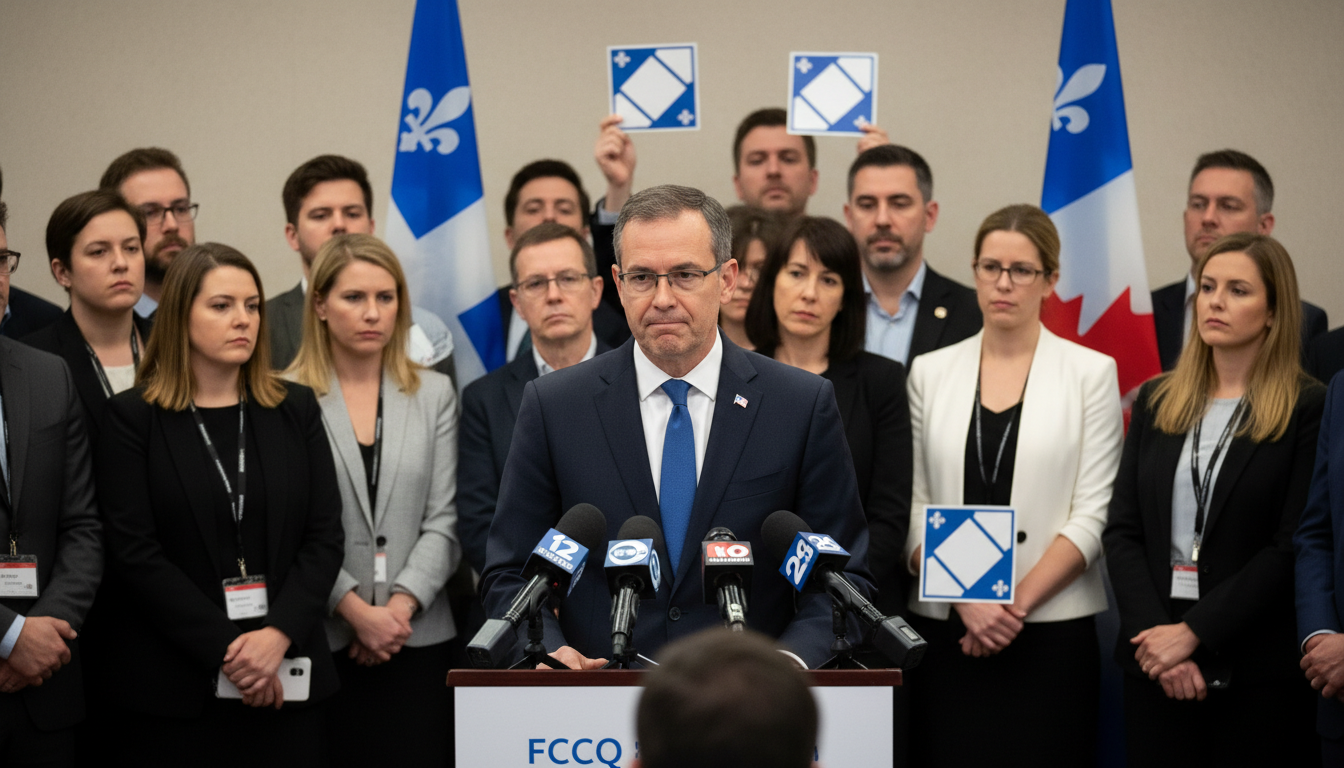
Quebec Liberal leader Charles Milliard criticized after offering to repeat remarks in English or Spanish amid Law 96 debate
Quebec Liberal leader Charles Milliard drew sharp criticism on May 6, 2026, after suggesting he could repeat answers in English or Spanish during a press exchange about Law 96, prompting accusations from rival parties that he is dismissive of the French language.
Comments draw immediate party attacks
Several senior provincial figures quickly seized on Milliard’s remarks, portraying them as evidence he lacks commitment to protecting French in Quebec. Simon Jolin‑Barrette, the author of Law 96, reminded reporters that Quebec recognizes French as its sole official and common language, while Education Minister Jean‑François Roberge called the episode “embarrassing” and questioned Milliard’s familiarity with the government’s linguistic framework.
The Parti Québécois also weighed in, with caucus members saying the exchange raised doubts about Milliard’s judgment and readiness to become premier. Opponents characterized the comments as a continuation of a fraught relationship between the Liberal Party and francophone voters since the original debates over language reform.
Milliard goes on the record to defend himself
Facing a growing backlash, Milliard spoke to parliamentary reporters to clarify his position and dismiss the controversy as overblown. He said his answer had been given in response to a question posed in English and that an offhand offer to repeat his remarks in Spanish had been taken out of context.
Milliard reiterated that he accepts Quebec’s single official-language status and insisted his party would defend French while proposing targeted adjustments to Law 96. He described many of the attacks against him as “ridiculous,” urging voters to focus on policy rather than what he called manufactured outrage.
Government moves to extend notwithstanding protection
The exchange unfolded hours before Jean‑François Roberge filed a bill on May 6, 2026, aimed at relying on the notwithstanding clause to protect Law 96 from constitutional challenges for five more years. The move was framed by the government as a pre‑emptive measure to ensure the statute’s stability while related legal questions are adjudicated.
Premier Christine Fréchette, who assumed office earlier this month, used her opening speech on May 5, 2026, to signal an intention to expand aspects of Law 96 into vocational training and adult education. The government’s early legislative push has intensified scrutiny of all parties’ stances on the statute and on the extraordinary step of invoking Section 33 of the Constitution.
Liberal plan: amend, then evaluate the clause
The Parti libéral du Québec has said it would seek to amend Law 96 if returned to power, with Milliard outlining priorities such as reducing compliance burdens on businesses and extending the six‑month language grace period for newly arrived residents. He has framed those changes as a prerequisite to any decision about invoking the notwithstanding clause on behalf of a future Liberal government.
Milliard told reporters the clause remains an option but that the party would only consider it after proposed amendments are implemented and assessed. His conditional posture reflects the PLQ’s attempt to balance economic concerns and civil‑liberties debates with the need to reassure francophone voters.
Legal challenges and political fallout ahead
Law 96 remains the subject of multiple court challenges and legal reviews, and legal experts have warned that disputes could ultimately reach the Supreme Court of Canada. The government’s preventive use of the notwithstanding clause has itself attracted scrutiny, including questions about whether such an approach sets a precedent for limiting judicial oversight.
Politically, the controversy has reopened fractures within the Quebec electorate. The PLQ’s past cooperation on elements of the language file has already spawned splinter movements and voter defections in previous election cycles, and opponents are eager to cast any perceived ambiguity on language policy as disqualifying for the party’s leader.
The debate also sharpens contrasts among provincial parties: the CAQ and PQ seeking to defend and expand Law 96 in various ways, and the Conservatives openly calling for repeal. Those differences are likely to shape legislative battles and campaign narratives in the months ahead.
Roberge’s bill and Fréchette’s legislative priorities place the language file at the centre of Quebec politics just weeks into the new premiership. As parties trade accusations and Milliard seeks to steady his message, the fate of Law 96 and the province’s language landscape will remain a dominant and divisive issue.
