
Calgary spring citizen survey finds trust rising but satisfaction with city services slips
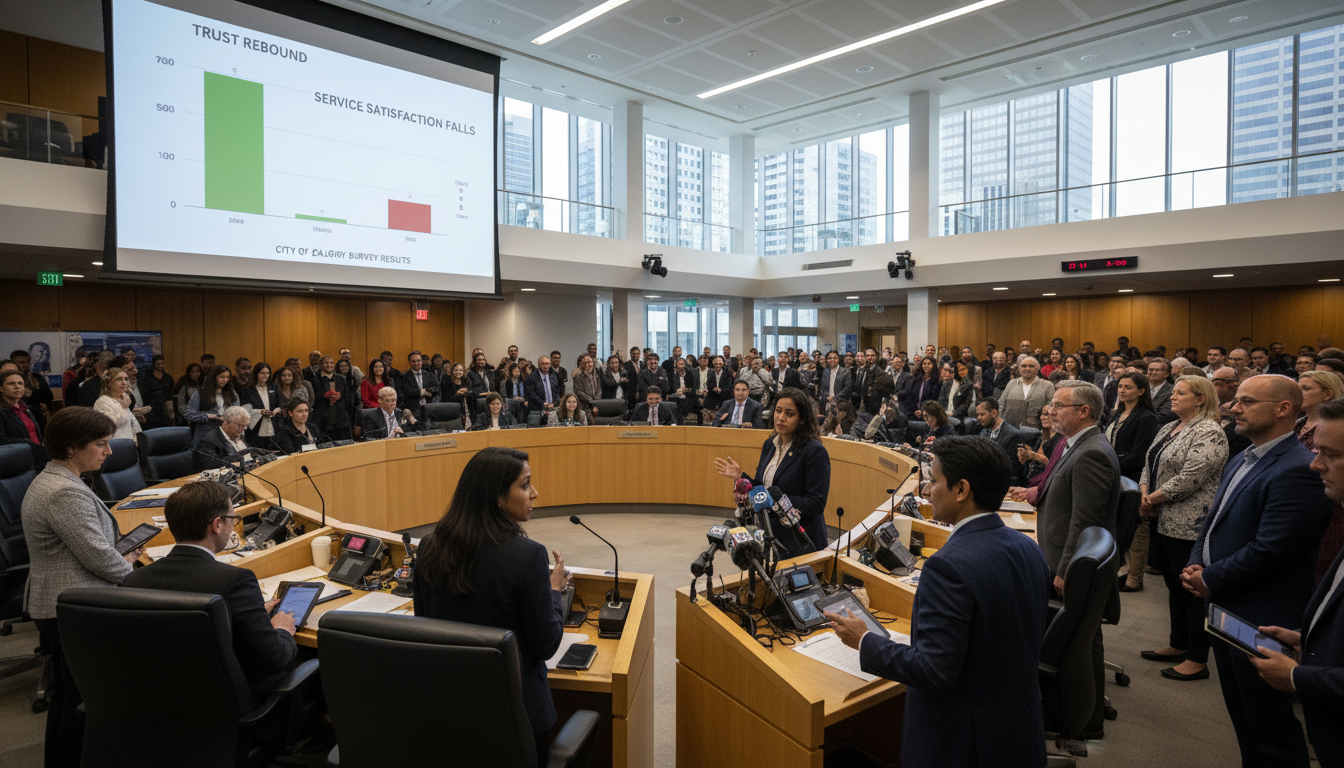
Calgary spring citizen survey shows trust in city hall rose to 54% while satisfaction with services fell to 62%. Ipsos polled 2,500 Feb 17–Mar 16, 2026.
The City of Calgary’s latest spring citizen survey found a notable uptick in public trust in municipal government even as satisfaction with the city’s services edged downward. The Calgary spring citizen survey, conducted by Ipsos between Feb. 17 and Mar. 16, 2026, reports 54 per cent of respondents say they trust the City of Calgary, while overall satisfaction with services and programs dropped to 62 per cent. City officials will present the full survey results to council on May 5, 2026, as they weigh priorities heading into the summer budget cycle.
Trust in City Hall Rises to 54%
The survey shows trust in the City of Calgary at 54 per cent, a rise from previous reporting periods according to city communications. Mayor Jeromy Farkas attributed the improvement to the new council’s direction, saying the figures better reflect the current administration after more than six months in office. City staff noted the trust metric has been affected by changes in the questionnaire, which limits direct comparison with earlier waves, although the upward trend is clear in the latest data.
City communications also emphasized that renewed confidence does not erase areas requiring attention. Respondents flagged a series of service-specific concerns while still expressing increased optimism about municipal leadership. The report’s authors stress that rising trust offers an important foundation for addressing service shortfalls through targeted investment and policy changes.
Overall Satisfaction with City Services Falls to 62%
Despite higher trust, satisfaction with the overall level and quality of city services declined to 62 per cent, a five-point decrease from the previous fall survey. The survey evaluated 15 distinct city services and programs, revealing a mixed picture of public contentment across municipal responsibilities. City leaders say the decline highlights where immediate operational and communication efforts may be needed to meet resident expectations.
Officials caution that a single aggregate score masks variation between individual services, with several scoring well above the city average and others performing markedly worse. The survey’s margin of error is ±2.00 percentage points, based on the 2,500 telephone interviews, reinforcing that the declines are statistically meaningful. Council members have signalled they will use the findings to inform near-term budgeting and service delivery priorities.
Fire, Waste and Parks Lead Service Ratings
The Calgary Fire Department earned the highest satisfaction rating in the survey at 90 per cent, leading all municipal services evaluated. Waste and recycling services followed at 78 per cent, with parks and recreational spaces rated at 77 per cent, reflecting steady appreciation for core public-safety and cleanliness services. City officials highlighted the strong performance of front-line emergency and maintenance services as evidence of operational resilience.
Survey respondents credited consistent performance, visible crews, and rapid emergency response for their high ratings of fire services. Parks and waste services benefited from regular maintenance and frequent public contact points that shape perceptions of municipal competence. These top-performing areas contrast sharply with services that scored below the 50 per cent satisfaction threshold.
Water Service Concerns Linked to Bearspaw Feeder Main
Satisfaction with water services dropped to 51 per cent in the spring survey, reflecting public concern after a second rupture of the Bearspaw feeder main within two years. The pipe carries roughly 60 per cent of the city’s drinking water and required emergency repairs and interim measures following the most recent break. City crews are working on a replacement line the municipality expects to complete by the end of 2026, and council has approved major feeder-main upgrades as part of capital planning.
Mayor Farkas pointed to increased investment in the water system and said the delivery of a replacement main this calendar year should restore confidence. City staff acknowledged the visibility of water disruptions has heightened public sensitivity to infrastructure risk and pledged more frequent updates on repair timelines and contingency plans. The survey result underscores the reputational impact that highly visible service failures can have even when long-term remedies are under way.
Transit Satisfaction Low as Safety and Funding Concerns Persist
Calgary Transit registered among the lowest satisfaction ratings in the survey, with fewer than half of users expressing satisfaction with the service. Two-thirds of Calgarians reported using transit, but transit riders in particular expressed concerns about safety, reliability and timely responses to complaints. The survey noted both users and non-users share similar views on many experience measures, though users are less confident that their concerns are addressed promptly.
City staff have pointed to a series of investments intended to reverse the trend, including a transit safety strategy and a recent $9-million pilot to increase officer presence during peak travel hours. Councillors approved a $76-million funding boost in the previous budget aimed at improving frequency, purchasing new buses, and expanding the low-income transit pass program. Transit leadership says continued funding and a RouteAhead update to council later this week will be central to plans to raise satisfaction and meet expectations for a fast, frequent network.
Rider Voices and Local Measures of Safety
On-the-ground reporting on transit attitudes highlighted safety as a dominant theme for many users and non-users. Some riders told reporters they avoid certain stations or travel times because they do not feel safe, while others said targeted improvements like the addition of a convenience store at Bridgeland LRT station contributed to a greater sense of security. Calgary Transit director Sharon Fleming acknowledged the survey findings and pointed to the funding gap that remains the primary barrier to expanding service and enhancing on-board and station safety.
Transit advocates say a combination of sustained funding, better staffing, and concentrated safety measures will be needed to shift public perception. The city’s low-income transit pass and fleet investments are seen as positive steps, but officials concede that rebuilding rider trust will take measurable progress on frequency and visible safety outcomes. Council briefing materials scheduled for this week are expected to outline how recently approved funds will be directed to short-term improvements and longer-term network planning.
Economic and Quality-of-Life Measures Show Modest Gains
The spring survey found 76 per cent of respondents rate their overall quality of life as good, a five-point increase from the previous survey. Views of Calgary’s economy were cautiously optimistic, with 60 per cent describing the local economy as good and 74 per cent saying Calgary is a great place to build a life. Two-thirds of respondents also said the city is a great place to make a living, while 54 per cent believe Calgary is on track to be a better city in 10 years.
Those figures suggest residents balance service complaints with broader positive feelings about the city’s direction and opportunities. City economic development officials pointed to job growth, new business openings and major investments as factors that may underpin improving sentiment. The results paint a picture of cautious optimism, tempered by pragmatic concerns about specific municipal services that affect daily life.
Survey Methodology and Next Steps for Council
Ipsos Public Affairs conducted the survey by telephone, interviewing 2,500 Calgarians between Feb. 17 and Mar. 16, 2026, with a margin of error of ±2.00 percentage points 19 times out of 20. The City of Calgary commissions two surveys each year — a spring and a fall wave — and staff say the series is intended to track shifts in public sentiment and to inform council decision-making on service levels and capital priorities. City administration will present the full survey findings to council on May 5, 2026, where elected officials are expected to discuss funding, service delivery and communication strategies.
Council members have already indicated the survey will feed into upcoming budget deliberations and operational planning. Staff briefings accompanying the survey will outline proposed timelines for service improvements, investments in long-term infrastructure and performance indicators to measure progress. Municipal leaders say the data provides a roadmap for prioritizing resources to address the services with the largest gaps between expectation and experience.
The spring citizen survey provides Calgary’s municipal leaders with a mix of encouraging signs and clear challenges as they set priorities for the year ahead. It shows rising trust in the city’s political leadership while highlighting service areas that require focused attention, especially water infrastructure and transit safety and reliability.
