
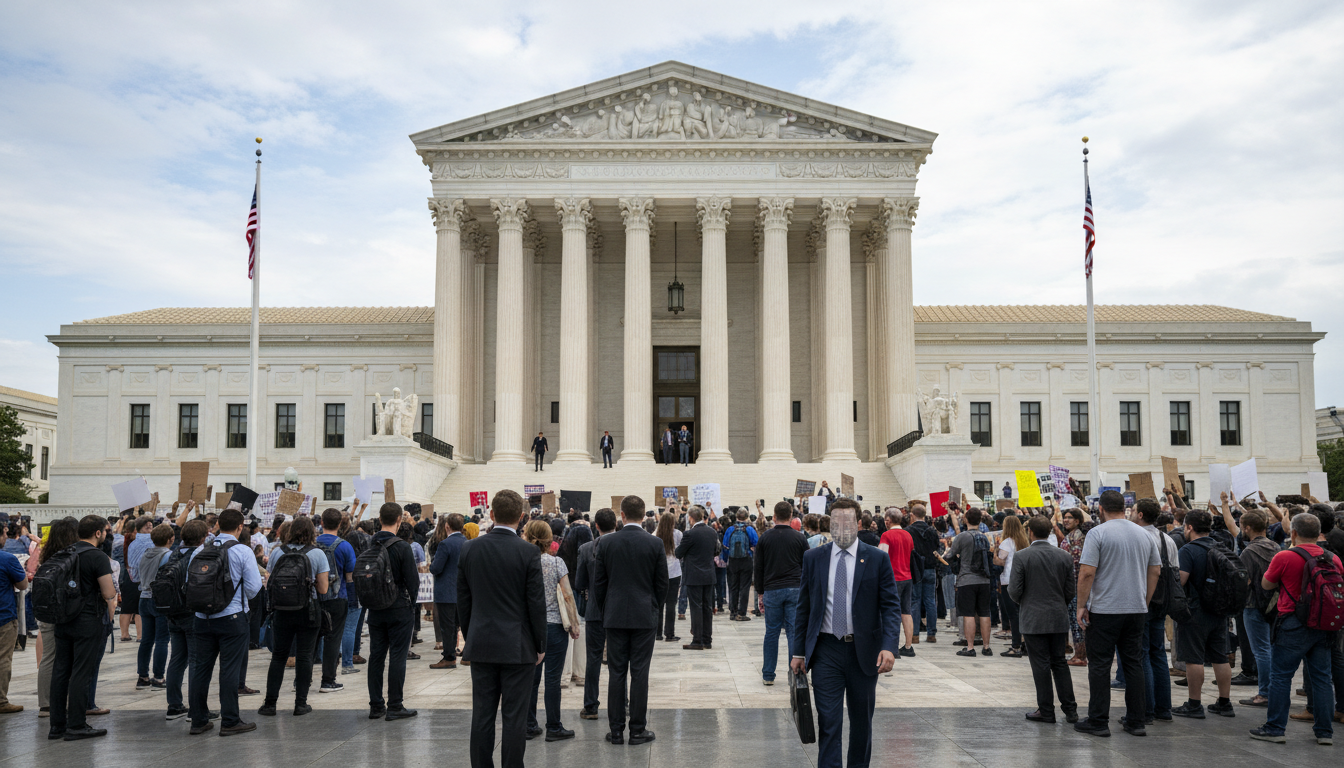
Supreme Court temporarily restores telemedicine access to mifepristone
Supreme Court pauses a 5th Circuit order, temporarily allowing mifepristone to be prescribed via telemedicine and dispensed by mail while legal challenges proceed.
Supreme Court issues one-week administrative stay
The United States Supreme Court on Monday temporarily reinstated a rule permitting mifepristone to be prescribed through telemedicine and mailed to patients, pausing a 5th US Circuit Court of Appeals order that had narrowed access nationwide. Justice Samuel Alito issued an administrative stay that will remain in effect for one week while the court reviews emergency filings from the drug’s manufacturers.
Alito directed Louisiana to respond to the manufacturers’ requests by Thursday and indicated the interim pause would expire on May 11 unless the court extends it or issues a definitive ruling. The action returns the earlier Biden-era FDA regulation to effect for the short term, allowing clinicians to resume remote prescribing and pharmacies to ship the medication in affected jurisdictions.
5th Circuit decision and Louisiana’s challenge
The 5th Circuit moved to reimpose an older federal requirement that patients receive an in-person clinician visit before obtaining mifepristone, following a lawsuit filed by the Republican-led state of Louisiana. The appeal court’s action came after a lower federal judge in Louisiana had paused proceedings while federal regulators reviewed the change.
Louisiana’s suit contends that the 2023 FDA modification, which removed the in-person dispensing requirement, is illegal and undermines state restrictions on abortion. The state argues the rule conflicts with its own abortion ban and has pressed the courts to roll back the FDA’s eased access.
What the stay means for telemedicine and mail dispensing
For the duration of the administrative stay, clinicians may continue to prescribe mifepristone during telehealth appointments and pharmacies may ship the drug to patients across state lines in jurisdictions previously affected by the 5th Circuit order. The pause aims to maintain access to medication abortion while the Supreme Court considers the manufacturers’ emergency appeals.
Pharmacies, telemedicine providers, and patients may interpret the stay as a temporary reprieve rather than a final decision, since the Supreme Court’s administrative pause simply preserves the status quo while the underlying legal disputes proceed. Providers and patients are likely to watch for any further orders or a full court ruling that would set longer-term policy.
Manufacturers and federal regulators in the litigation
The manufacturers Danco Laboratories and GenBioPro intervened to defend the FDA’s 2023 rule easing access to mifepristone, filing emergency requests with the Supreme Court after the 5th Circuit blocked the regulation on May 1. The companies argue that maintaining telemedicine and mail access is essential to patient safety and continuity of care.
Federal agencies are also involved: the 2023 rule was adopted during the administration of former President Joe Biden, and the federal government has opposed Louisiana’s challenge. The current administration signalled concerns about safety reviews while defending the regulatory framework that allowed remote access to the drug.
Political reactions and legislative implications
The court action immediately drew partisan responses on Capitol Hill, underscoring abortion’s continued role as a central issue in national politics. Senate Majority Leader Chuck Schumer called the development welcome but warned that the legal and political battle will continue, while Republican critics urged Congress to consider new restrictions on mifepristone.
Senator Josh Hawley, among others, reiterated calls for a broader legislative ban on the pill, citing disputed safety concerns. Advocates for reproductive rights, including the American Civil Liberties Union, praised the Supreme Court’s temporary pause and urged the justices to reject what they called an “attack” on access to reproductive health care.
Medical context and the role of mifepristone
Mifepristone, first approved by the Food and Drug Administration in 2000, is used in combination with misoprostol to provide medication abortions, a method that now constitutes the majority of abortions in the United States. Health-care providers and public health organizations have cited clinical studies and FDA oversight in support of the drug’s safety when used according to established guidelines.
The dispute over dispensing practices reflects broader tensions between federal regulatory authority and state-level abortion restrictions that intensified after the Supreme Court’s 2022 decision overturning Roe v. Wade. Since that ruling, several states have introduced near-total bans or strict limits, increasing reliance on regulatory and legal battles over how medication abortion can be accessed.
The Supreme Court’s move to pause the 5th Circuit’s reinstatement of an in-person dispensing requirement temporarily preserves access to mifepristone by telemedicine and mail while key legal questions about FDA authority and state power are litigated further.
