
Precision Drilling Keeps Middle East Rigs Operating as Strait of Hormuz Stays Closed
Precision Drilling has seven active contract rigs in Kuwait and Saudi Arabia and reports strong North American demand while managing evacuation readiness and higher operating costs.
Operational status and on-the-ground precautions
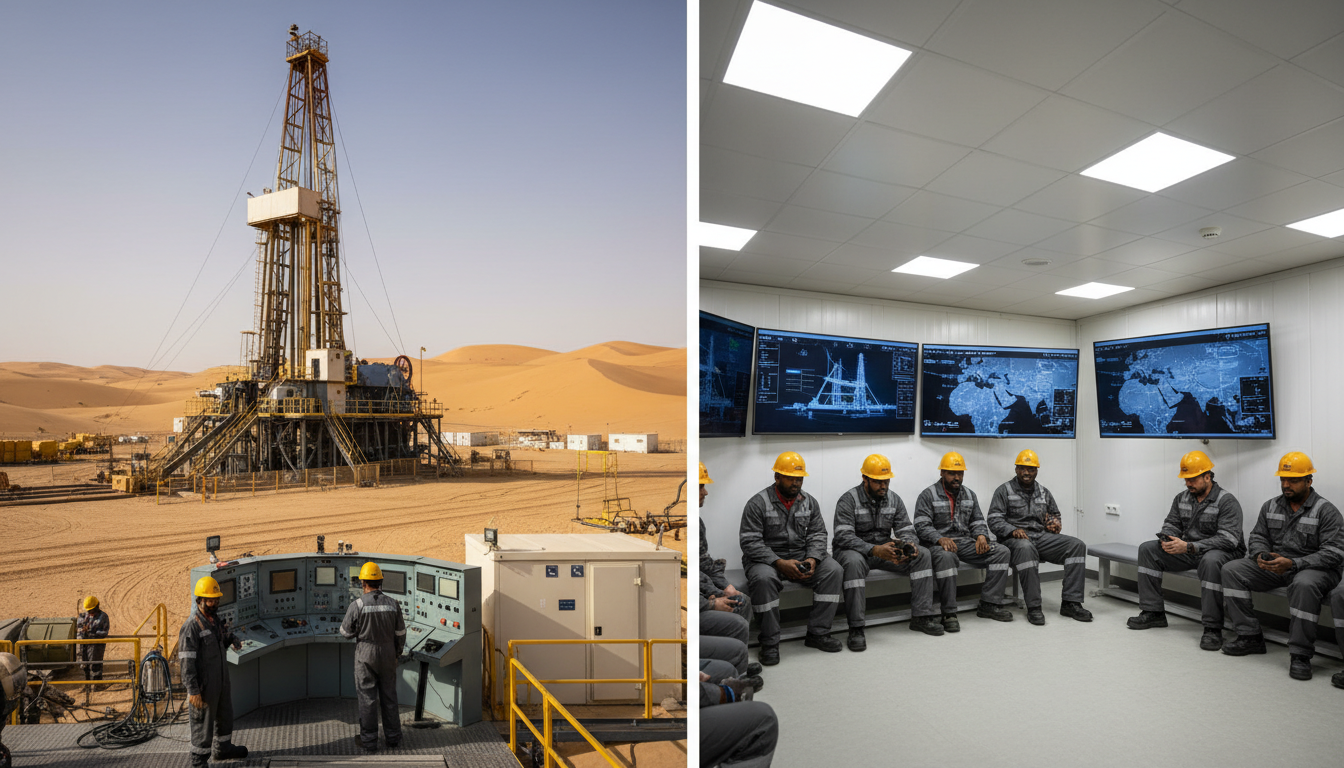
Precision Drilling says it continues to operate four rigs in Kuwait and three in Saudi Arabia while keeping non-essential personnel out of the region.
Company chief executive Carey Ford told reporters crews remaining on site are supported by regional leadership and standby evacuation buses, with operations paused at times when nearby missile or drone activity elevated risk.
Rigs have been placed on temporary shutdowns when threats approached drilling fields, and the company reports no conflict-related injuries to date.
Logistical challenges persist, including reduced commercial flights that extend rotation cycles for field crews and increase the company’s need to monitor security conditions continuously.
Impact of Strait of Hormuz closure on shipping and operations
The company and local operators are still operating against the backdrop of an effectively closed Strait of Hormuz, a critical shipping lane for global oil flows.
The closure has trapped seafarers and complicated marine logistics for facilities that rely on Gulf shipping, increasing uncertainty for coastal pipeline and export operations.
Precision’s regional leaders say some coastal infrastructure sustained damage earlier in the conflict, but there have been no new strikes in recent weeks and damage assessments are ongoing.
The continued closure of Hormuz, however, keeps upward pressure on risk premia for crude shipments and on operators’ contingency planning.
Financial performance and North American demand surge
Precision Drilling reported first-quarter revenues of $526 million, a 6 per cent increase driven by rising drilling activity in Canada and the United States.
The company averaged 79 active rigs in Canada during the quarter, up from 74 a year earlier, and 37 rigs in the U.S., an increase from 30 in 2025.
Executives say higher commodity prices and geopolitical uncertainty have sharpened global focus on energy security, making Canadian and U.S. basins more attractive to customers.
Precision described the quarter as its busiest first quarter in over a decade despite broader industry softness, with North American revenues growing by $24 million in the U.S. and $13 million in Canada.
Contracts, costs and the regional outlook
Precision’s Middle East contracts extend through 2027 and 2028, providing a multi-year revenue stream even as short-term security concerns persist.
The company disclosed a one-time $2 million reactivation cost for a Saudi rig and noted that some operational costs in the region have risen due to contingency measures and logistical disruptions.
Management expects active rigs in Canada to rise by roughly 20 per cent this summer versus last year, driven largely by oil-directed activity responding quickly to price moves.
Precision’s longer-term exposure to North American markets and multi-year overseas contracts give the company a mix of stability and increased near-term revenues amid the energy shock.
Safety protocols and crew management
Precision has moved non-essential staff out of the region while maintaining a skeleton team of regional leaders and essential rig crews to keep contracts active.
Evacuation buses and rapid-response plans are staged at rig sites, and the company remains in near-constant contact with customers and field leadership to anticipate escalations.
Crew rotations, typically two to four months, have been disrupted by fewer flights and tighter airport schedules, requiring some personnel to remain longer than planned.
Ford emphasized that safety and the ability to withdraw crews quickly remain the company’s top priorities as regional dynamics evolve.
Broader industry ripple effects
Industry executives say the conflict has rekindled global debates about energy security and supply diversity, boosting demand for production in stable jurisdictions such as Canada.
European, Asian, and U.S. buyers have turned increased attention to the Canadian oilpatch, a shift that has benefited drilling contractors that operate on both sides of the Canada‑U.S. border.
While the conflict curtailed some activity in the Gulf, it also redirected capital and operational focus to North American plays where seasonality and price responsiveness are better understood.
Analysts note that higher short-term profitability for contractors may coexist with ongoing volatility if the Strait of Hormuz remains closed or if regional tensions flare again.
Precision Drilling’s management says it will continue to balance contractual commitments, crew safety and rising North American demand while monitoring developments in the Gulf that could alter operational plans.
