
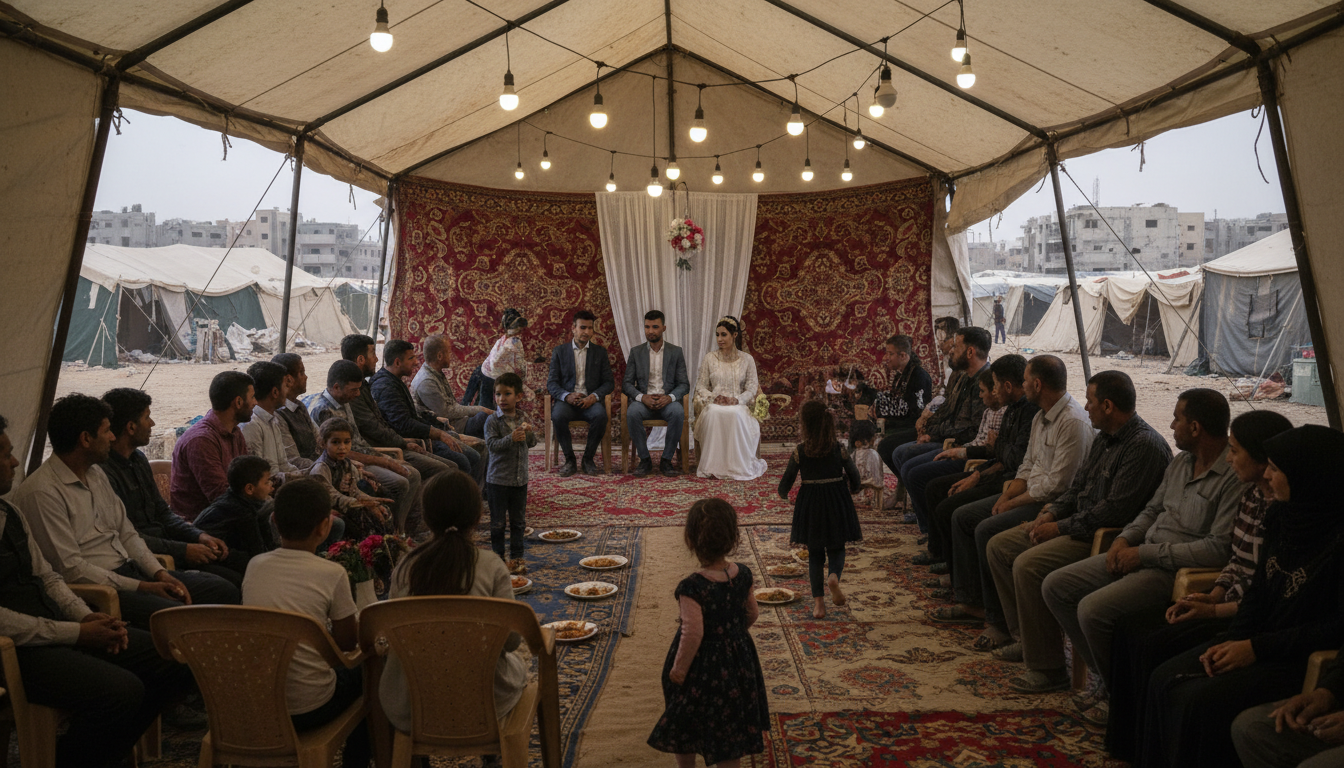
Gaza wedding in displacement tent highlights soaring costs and humanitarian strain
Gaza wedding in Deir el-Balah camp exposes soaring costs and collapsing livelihoods; couples marry in tents amid 80% unemployment and deepening poverty.
Saja al‑Masri and her fiancé are preparing to marry in a tarpaulin tent in Deir el‑Balah, a stark example of how weddings in Gaza have been reshaped by war, displacement and economic collapse. The couple, both in their twenties, have delayed and pared back plans as prices for basic items and venue rentals have risen dramatically. Their story reflects wider hardships across Gaza, where officials report unemployment and poverty have surged since October 2023.
Couple prepares a wedding in a tent
Saja, 22, and Mohammed, 27, will be married in a temporary shelter that Mohammed fashioned into a living space for them. He salvaged wood, tarpaulins and two thin mattresses to create a bedroom, a small cooking area and a makeshift bathroom.
The couple became engaged a year ago while both families were displaced, and they have been living since then in a central Gaza camp that has limited access to goods, electricity and stable income. Their plans, once imagined as a modest ceremony, have been reduced to the essentials because of the mounting cost of items now considered household basics.
Costs spike as rental and goods markets shrink
Mohammed estimates he spent thousands of shekels on the tent structure and basic fittings, and said even renting a small venue for the reception pushed him to his limit. He reported paying roughly 1,500 shekels for the shelter, several thousand more for wood and tarpaulin, and additional sums for a rudimentary bathroom. Wedding halls and new furnishings are priced far beyond what many families can afford.
Before the war, apartments and household goods could be obtained at much lower prices, and some families owned businesses or farms that provided steady income. Now, supply chains, border restrictions and the destruction of property have driven prices up while opportunities for work have collapsed, leaving prospective grooms to shoulder steep expectations with little support.
Bride’s preparations curtailed by shortages and expense
The search for a wedding dress and basic bridal services has been especially fraught for Saja, who described being unable to find affordable rental dresses and makeup services. Shops quoted rates that she and her family could not meet, and she accepted a donated dress that was worn and torn in order to proceed. Beauty salons cited expensive and scarce cosmetics, generator costs and high fuel prices as reasons for their steep fees.
Saja has put aside formal celebration to preserve what dignity she can, but she said the experience has been emotionally wrenching. She trained briefly in graphic design before the conflict interrupted her studies, and the constraints of displacement have left her confronting a future that looks very different from what she and her family once expected.
Family weighs tradition against harsh reality
Samira al‑Masri, Saja’s mother, described marrying off four daughters during the war without the joy the events once held. She said every ceremony has taken place under austere conditions: in tents, without proper furniture or meaningful gifts, and often without the ability to give the kinds of dowries and household items families once considered standard. Her account underscores the emotional toll of maintaining cultural customs amid upheaval.
The family worries not only for daughters but also for sons who will face the same squeeze when they marry. Samira said she hesitates to begin arrangements for her adult son’s future because of the costs involved and the lack of available goods. For many households, the decision to go ahead with weddings has become a pragmatic one driven by time and circumstance rather than celebration.
Wider economic indicators frame personal stories
The personal choices of couples like Saja and Mohammed occur against an economy in collapse: local labour authorities in Gaza report unemployment rates at roughly 80 percent and extreme poverty reaching the majority of the population. Markets offer fewer goods, and prices for furniture, appliances and rental spaces have risen multiple times above their pre‑war levels. Families who once relied on small businesses or farms find those assets destroyed or inaccessible.
Humanitarian agencies and local officials say these pressures have made traditional ceremonies unfeasible for most residents, forcing alternatives such as tent weddings and simplified household starts. The limited availability of electricity, fuel and building materials compounds the challenge, making even basic preparations costly and logistically difficult.
Saja and Mohammed’s decision to marry is also shaped by a sense of urgency after repeated postponements, their resolve to move forward under imperfect conditions, and the support they can still rely on from friends and neighbors. They have rented a small former cafe for the reception because larger halls are unaffordable, and they have accepted donated or secondhand items to equip their new home.
Their story captures both the resilience of families who try to maintain life rituals and the sharp erasure of normalcy that has accompanied years of conflict and displacement. As couples continue to marry in tents and improvised spaces across Gaza, those ceremonies are becoming a measure of how deeply the war has altered everyday life and traditions.
