
Boko Haram attack in Chad kills 23 soldiers on Lake Chad island
Boko Haram attack in Chad kills 23 soldiers on Lake Chad island Barka Tolorom on May 4, 2026; President Deby vows renewed operations to eliminate the threat.
Attack on Barka Tolorom military post
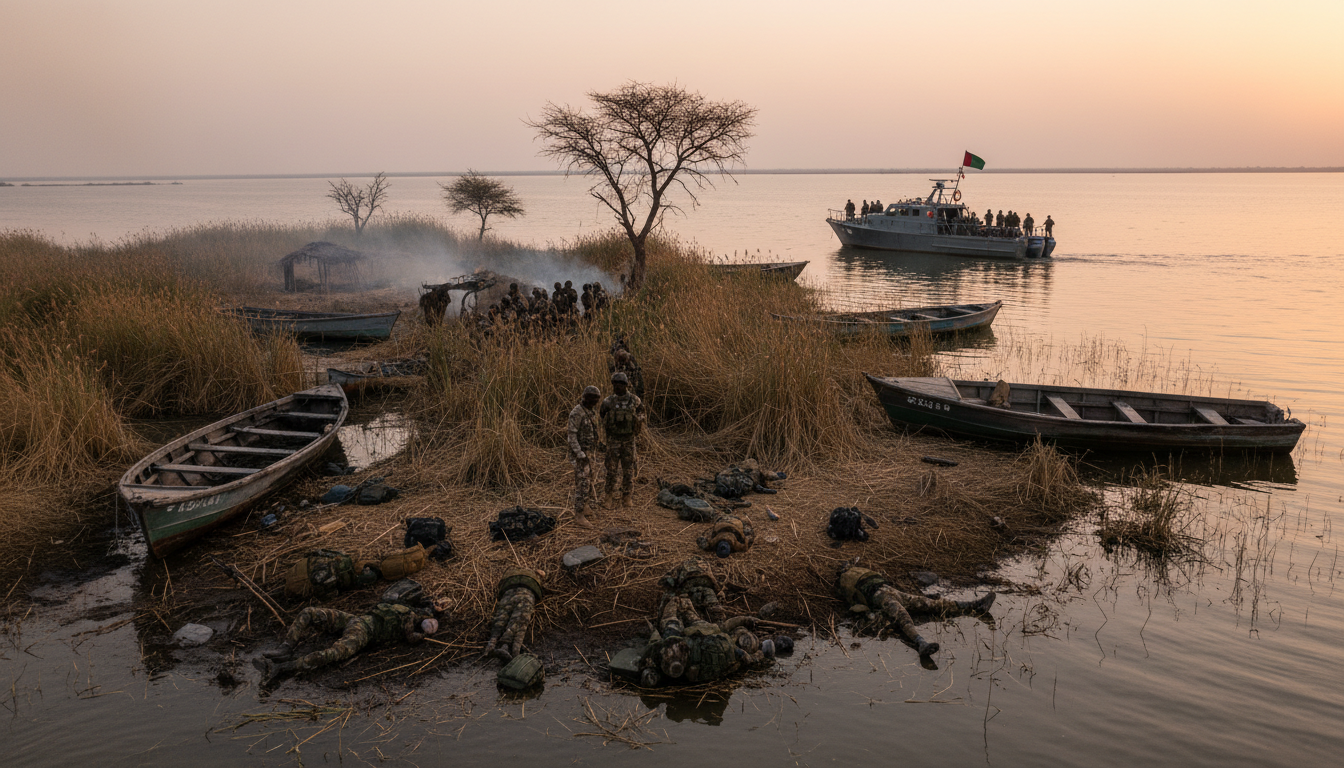
At least 23 Chadian soldiers were killed and 26 wounded after an assault on a military post on the island of Barka Tolorom in Lake Chad on the night of May 4, 2026, the Chadian armed forces said. The army identified the assailants as fighters linked to the Nigeria-based Boko Haram insurgency and said the attack was repelled after heavy fighting.
The military statement said a “significant number” of the attackers were killed during the clash and that Chadian forces retained control of the base. Local commanders reported the operation unfolded rapidly, with militants attacking from multiple directions before being pushed back.
President Deby’s response and government stance
President Mahamat Idriss Deby Itno offered condolences to the families of the fallen in a public statement and pledged to intensify the fight against the insurgents. He described the strike as a cowardly attack and said the government would pursue operations until the threat was eliminated.
Officials emphasized that the state would both investigate the circumstances of the breach and reinforce defensive positions across Lake Chad’s islands. The presidency framed the response as part of a sustained counterinsurgency campaign that remains a national priority.
Casualty figures and battlefield claims
Chadian military officials confirmed 26 soldiers were hospitalised with injuries ranging from gunshot wounds to blast trauma, and said medics were treating several in serious condition. The army declined to provide an immediate breakdown of the number of militants claimed killed but asserted that losses on the attacker side were substantial.
Independent verification of the casualty toll and militant losses was not immediately available because the island is remote and often difficult for journalists and aid agencies to reach. Analysts noted that battlefield casualty figures in the Lake Chad theatre have commonly been subject to delayed confirmation.
Pattern of attacks since October 2024
The attack is the latest in a series of deadly strikes on Chadian forces that intensified after an October 2024 ambush in which roughly 40 soldiers were killed. That incident prompted President Deby to launch a personally led two-week counteroffensive, intended to clear militant sanctuaries in the lake’s marshes and islands.
Authorities declared the offensive concluded in February 2025 and asserted that Boko Haram had no remaining sanctuary on Chadian soil. Security analysts, however, warned at the time that the group’s dispersal into difficult terrain and cross-border areas made a full eradication unlikely.
Boko Haram factions and activity around Lake Chad
Lake Chad’s islands and waterways have long been contested ground, exploited by both Boko Haram and rival splinter groups, including the ISIL-affiliated West Africa Province. In recent months the Jama’atu Ahlus Sunna (JAS) faction of Boko Haram has mounted a string of kidnappings and attacks on forward army positions, particularly on islands and along the Nigerien shoreline.
Security officials say the dense reeds and network of channels provide militants with cover for movement and staging, complicating surveillance and interdiction efforts. Cross-border dynamics involving Cameroon, Niger and Nigeria also allow fighters to shift locations quickly when pressed by national forces.
Regional security implications and cooperation challenges
Chad lies at a strategic junction where the borders of Cameroon, Niger, Nigeria and Chad meet, and instability on the lake has repeatedly spilled across those boundaries. The recurrence of high-casualty attacks underscores enduring gaps in regional coordination, intelligence sharing and logistical capacity among Sahel and Lake Chad Basin states.
International partners have offered training and equipment in recent years, but officials say sustainable security requires combined operations, improved maritime patrols, and investment in infrastructure to reach remote island garrisons. Analysts caution that military pressure alone will not eliminate the insurgency without parallel efforts addressing governance and local grievances.
Impact on civilians and the broader economy
Although the May 4 attack targeted a military installation, civilians who live and farm on Lake Chad’s islands face heightened risk from recurring strikes and retaliatory operations. The lake region already endures economic strain, and displacement or interrupted fishing and farming seasons can deepen hardship for communities that depend on the waterway.
Chad remains fragile despite natural resource wealth, with long-standing governance challenges, periodic rebellions and economic stagnation keeping development indicators low. Security shocks reverberate through markets and public services, stretching a state that has repeatedly relied on military responses to contain armed groups.
The assault on Barka Tolorom marks a sharp reminder that militant groups retain the capacity to mount lethal operations inside Chad despite previous counteroffensives, and officials say they will redouble efforts to secure islands and waterways across the Lake Chad basin.
