
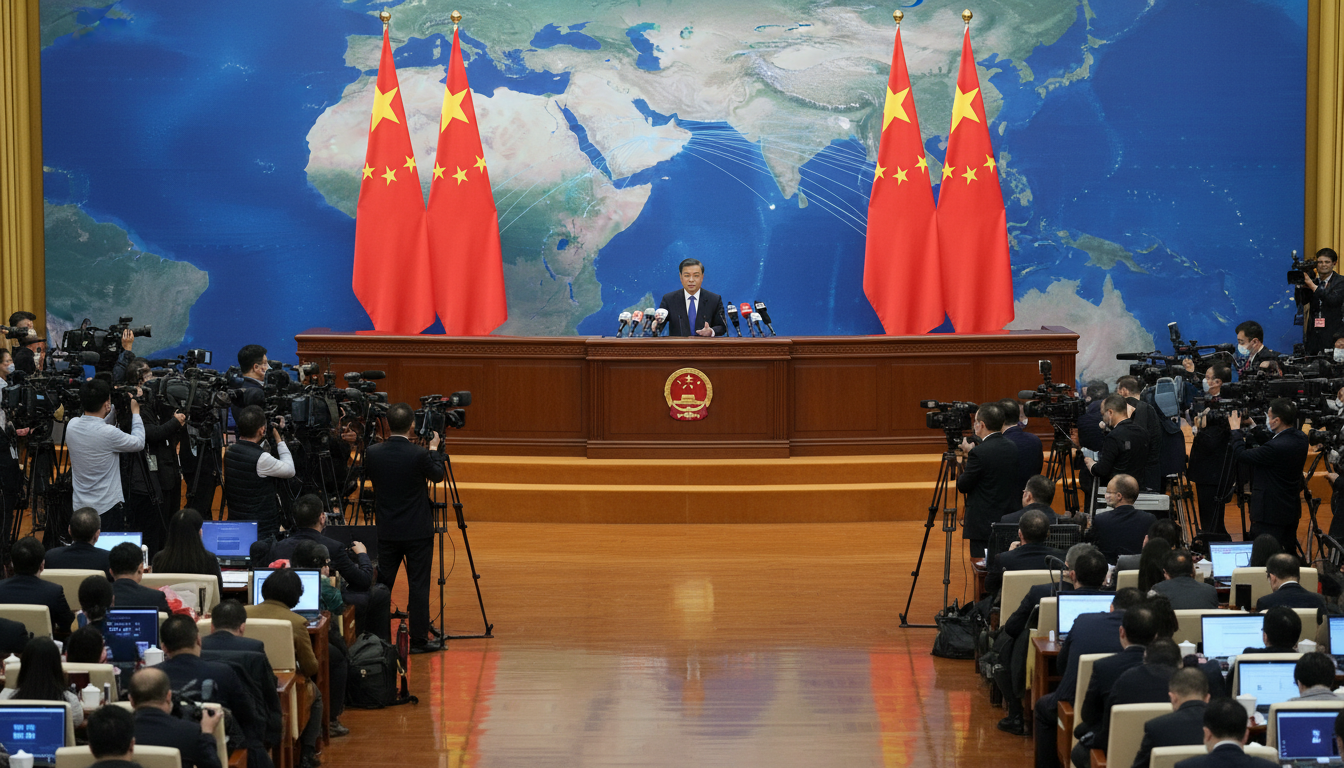
China urges reopening of the Strait of Hormuz as Wang Yi meets Iran envoy in Beijing
China pushed for the reopening of the Strait of Hormuz and an immediate end to hostilities after Foreign Minister Wang Yi met Iran’s top diplomat Abbas Araghchi in Beijing, Xinhua reported Wednesday.
Wang Yi presses for cease-fire and safe passage
China’s foreign minister told Iran’s visiting envoy that stopping the war and restoring safe passage through the Strait of Hormuz are urgent priorities, according to a summary released by Xinhua.
Wang Yi framed a comprehensive cessation of hostilities as necessary to prevent renewed fighting and to preserve space for negotiations.
The Chinese statement stressed the international community’s broad concern over the blockade and urged the parties involved to respond to calls for reopening the vital shipping lane.
Beijing signals economic alarm over disrupted shipping
Chinese officials have expressed growing worry about the economic fallout from disrupted maritime traffic and surging energy costs tied to the Strait of Hormuz blockade.
Xinhua’s account noted Beijing’s concern that the standoff has pushed oil prices higher and created broader economic shocks that affect global trade flows.
Chinese leaders have highlighted how the interruption to tankers and commercial shipments threatens China’s energy security and industrial supply chains.
Iran reassures on diplomacy and negotiations
Abbas Araghchi, the first senior Iranian official to visit Beijing since the conflict began in late February, told Chinese hosts that Tehran remains committed to diplomatic channels.
Araghchi briefed Wang on ongoing efforts to end the war, including talks mediated by Pakistan, and described Iran’s negotiating posture as serious and steadfast.
His visit was presented by Tehran as proof that diplomacy remains a parallel track to military defence.
International pressure and U.S. responses
The meeting in Beijing followed public appeals from U.S. officials urging China to press Iran to lift its effective blockade of the Strait of Hormuz.
President Trump said he briefly paused a U.S. escort operation for commercial ships amid signs of progress toward an agreement with Iran, while U.S. lawmakers signalled pressure on Beijing to use its leverage.
Senator Marco Rubio publicly urged China to tell Iranian representatives directly that continued closures are isolating Tehran and harming economic partners, including China.
Beijing balances between Tehran and Washington
China’s approach has been cautious: it has encouraged an end to hostilities while avoiding direct entanglement in the conflict.
Beijing reiterated support for Iran’s right to peaceful nuclear development without nuclear weapons and affirmed China’s backing for Iran’s national sovereignty and security.
At the same time, Chinese authorities have pushed back against U.S. pressure, reportedly instructing domestic companies not to comply with certain U.S. sanctions on firms that buy Iranian oil.
Diplomatic calendar and the wider summit context
The Wang–Araghchi meeting comes as Beijing prepares for high-level engagements with the United States, where leaders are expected to discuss the Iran conflict and reopening the Strait of Hormuz.
Chinese officials framed the talks as part of a broader diplomatic effort to reduce tensions before upcoming bilateral meetings between the two capitals’ leadership.
Observers say Beijing is seeking to protect economic interests, preserve geopolitical space, and demonstrate relevance in brokering stability in a key international waterway.
China’s messaging to Tehran combined calls for an immediate halt to hostilities with reminders that reopening the Strait of Hormuz is in the shared interest of the international community.
Both sides portrayed the meeting as constructive: China pressing for negotiations and safe maritime transit, and Iran asserting its commitment to diplomatic solutions while defending its national interests.
Regional and global energy markets will likely monitor subsequent contacts closely, as any movement toward reopening the strait could ease price pressures and reduce economic uncertainty.
For now, Beijing’s public stance underlines a pragmatic mix of economic concern, diplomatic engagement, and careful distance from direct involvement in the fighting.
