
Timmy the Stranded Whale Transported Toward North Sea in Hopes of Atlantic Release
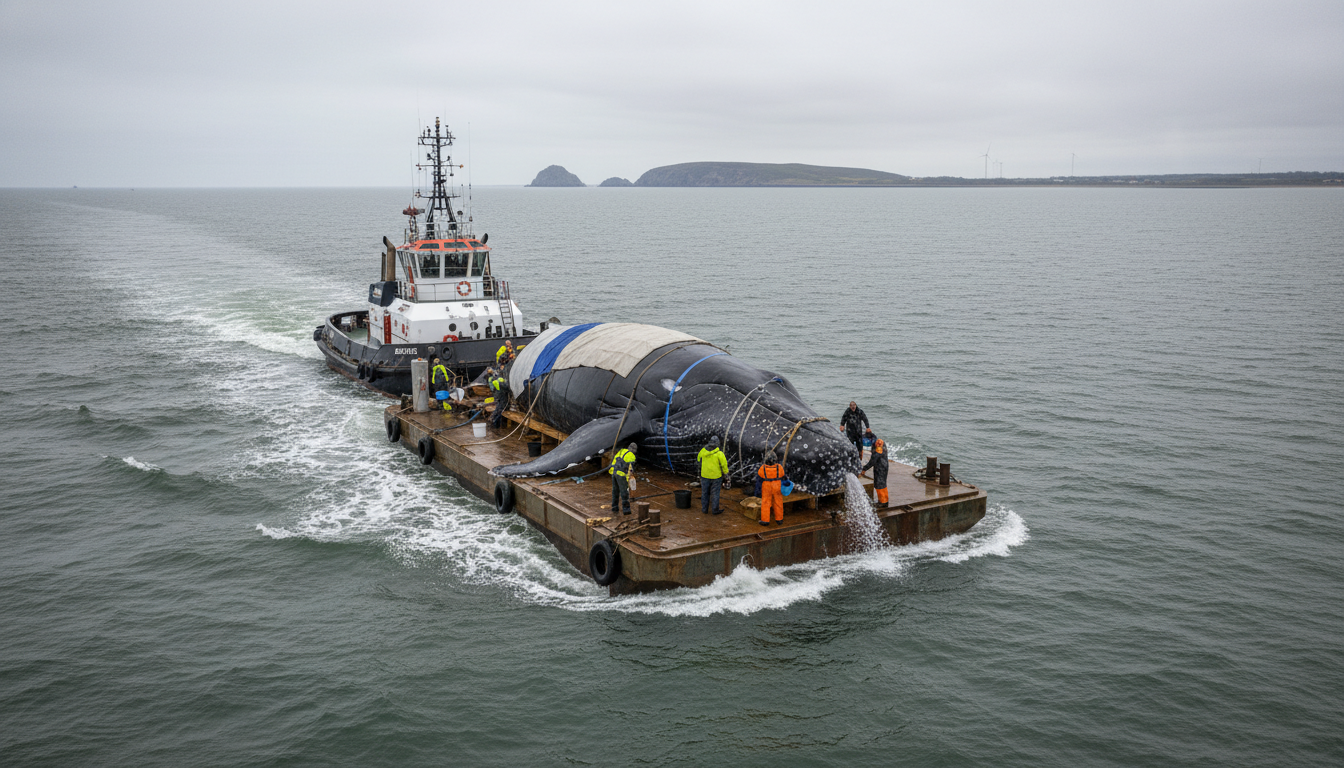
Humpback Timmy the stranded whale was loaded onto a barge off Germany’s Baltic coast and towed toward the North Sea as rescuers plan a release to the Atlantic.
Timmy the stranded whale began a carefully managed sea transfer on April 29, 2026, as teams moved the humpback away from the shallow Baltic waters where it had been trapped for weeks. The animal was secured on a specialized barge and is being towed under escort toward the North Sea, where rescuers hope it will swim onward into the Atlantic. Authorities say the operation aims to reduce the risk of re-stranding and to give the whale the best chance of returning to deep waters.
Barge Transport Begins Toward North Sea
The decision to transport Timmy by barge followed days of assessment by marine veterinarians and rescue specialists who monitored the whale’s condition. Moving a large marine mammal on a vessel is complex and was chosen after teams concluded that a controlled tow offered the safest path out of shallow coastal areas. The barge is accompanying the whale with a support fleet to manage navigation, weather changes, and any immediate medical needs.
The tow proceeded under restricted maritime traffic and with coordination from local port authorities to keep the route clear. Rescue personnel positioned buoyancy supports to keep Timmy stable and hydrated, while crews prepared contingency plans for any sudden health deterioration. Officials emphasized a slow, steady pace to reduce stress and avoid abrupt shifts that could harm the animal.
Why Timmy Became Stranded
Rescuers believe a combination of navigational error and changing water conditions led the humpback into the shallow Baltic coast. Humpback whales typically favour deeper, cooler waters, and the Baltic’s narrow entrances and variable salinity can be disorienting for large cetaceans. Experts noted that once a whale moves into restricted bays, turning back can be physically difficult, increasing the risk of prolonged stranding.
Human activity and shifting prey distribution may also play a role in such incidents, though investigators stressed that a single definitive cause is often hard to establish. Pathology exams planned after release may offer additional clues about Timmy’s health and whether illness contributed to the initial stranding.
Rescue Teams and International Coordination
The operation brought together German coastguards, local wildlife agencies, and independent marine mammal specialists to provide technical and veterinary expertise. Neighboring countries’ maritime authorities were alerted to ensure a clear corridor as the tow approached the North Sea, reflecting the cross-border nature of marine rescue efforts. Volunteers from conservation groups supported logistics on shore and coordinated public safety to keep curious onlookers at a safe distance.
Officials said real-time communication between vessels and shore teams was critical to adjust plans as weather and sea conditions evolved. The multi-agency approach allowed specialists to combine resources, from cranes and pumps to medical monitoring equipment, while maintaining a single command structure for decision-making.
Onboard Care and Veterinary Assessment
Veterinarians accompanied Timmy throughout the barge journey, conducting periodic checks and administering supportive care when needed. Measures included keeping the whale’s skin moist, monitoring respiration and responsiveness, and providing nutritional support where appropriate. The team avoided invasive procedures while en route, reserving full assessments for calmer conditions once the whale reached deeper water.
Rescue vets prepared to perform further examinations after the planned release, including ultrasound and blood sampling if the whale allowed. Those post-release checks are intended to confirm the animal’s fitness to re-enter open ocean and to detect any infections or injuries that might hamper survival.
Navigational and Environmental Challenges
Towing a large whale across varying seas required careful navigation planning to avoid storms, strong currents and busy shipping lanes. The Baltic Sea’s shallow topography and narrow passages challenge large vessels, making timing and route selection crucial to keep Timmy safe. Rescue coordinators monitored weather systems and adjusted speed and routing to minimize exposure to rough conditions.
Environmental considerations also factored into the plan, with teams maintaining buffer zones to reduce acoustic disturbance and prevent further stress. The presence of other marine life and local fisheries was mapped to reduce collision risks and to ensure that the corridor remained as undisturbed as possible.
What Comes Next for Timmy and Coastal Communities
If the release into deeper North Sea waters proceeds as planned, rescuers will continue to track Timmy to confirm the whale moves away from vulnerable coastlines. Radio tags or visual monitoring will provide short-term data on the animal’s direction and condition, helping scientists gauge the success of the intervention. Local authorities have urged patience and warned that post-release monitoring may show the whale altering course before ultimately entering the Atlantic.
Coastal communities that witnessed the rescue have expressed relief and a renewed focus on responding to future strandings. Officials said the operation will inform updated protocols for large whale interventions, including equipment needs and interagency coordination improvements. Lessons learned from Timmy’s case are expected to be shared across European marine rescue networks.
Timmy’s transfer illustrates the growing complexity of marine rescues as changing ocean conditions intersect with human activity, and it underscores the technical skill required to move a large cetacean safely. Rescuers remain guardedly optimistic that the humpback will continue into the Atlantic and regain its health, while scientists prepare to analyse data from the operation to help prevent and manage future strandings.
