
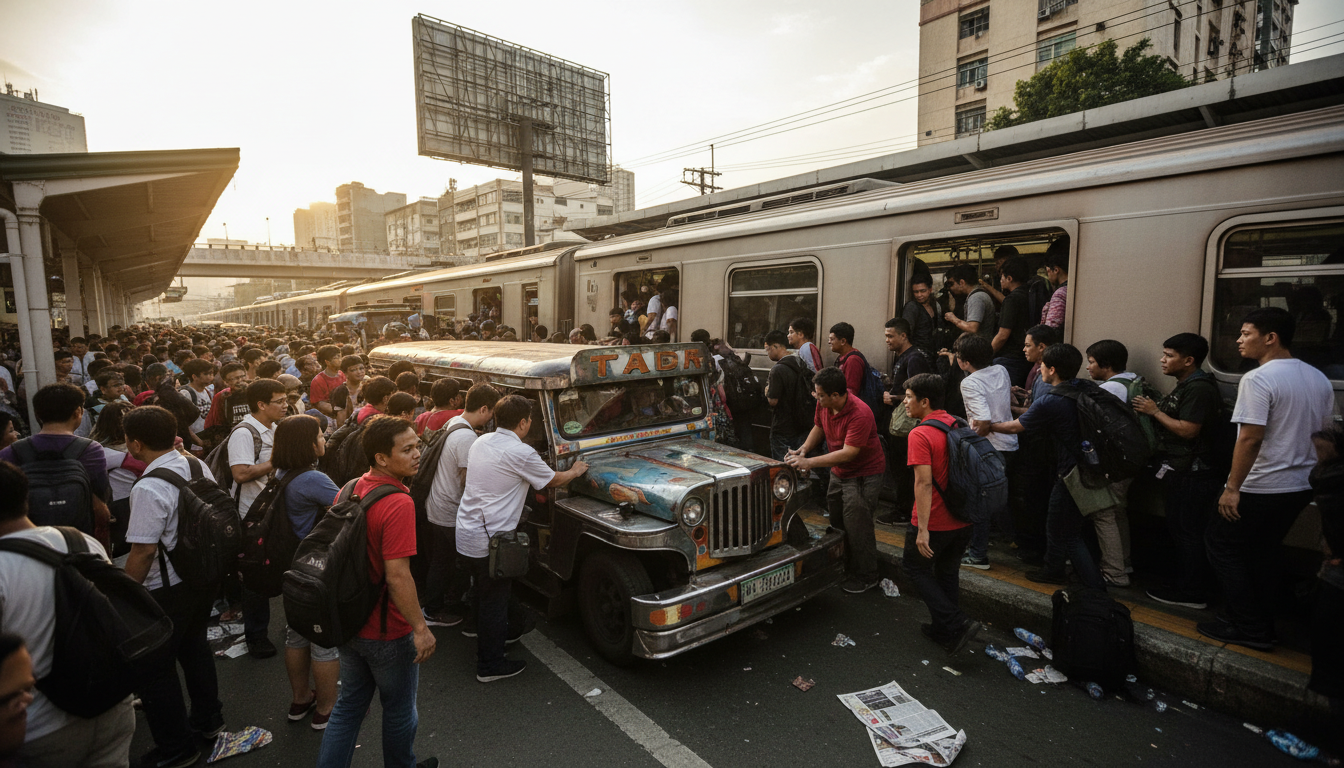
Fuel crisis forces Philippine commuters onto overcrowded trains and jeepneys
Fuel crisis forces Philippine commuters into overcrowded trains and jeepneys as pump prices double, prompting longer trips, schedule changes and housing shifts.
Commuters across Manila and other urban centres in the Philippines are facing dramatically altered daily trips as a global fuel crisis sharply raises pump prices and pushes many drivers off the road. The fuel crisis has made private vehicle use prohibitively expensive for some, sending a wave of former motorists onto trains, buses and traditional jeepneys and creating severe crowding during peak hours. Workers and students report longer travel times, unpredictable waits and the physical strain of travelling in packed conditions. The shift is reshaping commuting patterns, housing decisions and workplace routines in the country’s busiest corridors.
Fuel spike doubles pump prices, pushing drivers to public transit
Retail fuel prices in the Philippines have climbed sharply in recent weeks, more than doubling at some pumps compared with months earlier, according to commuters and local fuel retailers. That increase has led many drivers to abandon daily car trips in favour of lower-cost options such as motorcycles, mass rail transit and jeepneys, the small, shared public vehicles common in the Philippines. For many households the savings are decisive: public transit commutes are now often half the cost of driving. The price surge is being blamed by residents on a wider global energy disruption tied to conflict in the Middle East.
Trains and jeepneys jammed during rush hour
Stations and main thoroughfares now see sustained, heavy congestion during morning and evening peaks, with commuters describing packed carriages and lines that stretch far beyond platforms. Transit users say they are often unable to board the first few trains or jeepney runs and must wait longer or squeeze into already-full vehicles. Operators have struggled to match the sudden rise in passenger numbers with additional services, and travelers report that waiting times have grown less predictable. The resulting overcrowding has turned routine commutes into physically uncomfortable and sometimes chaotic ordeals.
Commuters change routes, schedules and daily routines
Many workers have adapted by combining modes of transport or shifting travel times to avoid the worst crowds, trading cost savings for longer trips. Some commuters now take motorcycles to transit hubs, then transfer to trains and jeepneys to complete their journeys, while others are staying later at work or near campuses to escape peak crushes. Students and employees say travel that used to include quiet reading or study time has become standing-room-only periods with little opportunity for personal tasks. For several commuters, the increased travel time has reduced evening leisure and family time.
Housing decisions shift as people seek shorter commutes
Rising transport costs are prompting households to reconsider where they live, with a noticeable uptick in interest for rentals and condos nearer to business districts and schools. Workers who once tolerated long drives now prioritize proximity to offices to recoup lost time and avoid crowded transit corridors. Real-estate agents in some urban areas report increased inquiries from workers seeking smaller, more affordable units closer to employment centres. For many, the calculus balances higher rents against the financial and time costs of extended commutes under the fuel crisis.
Physical and mental toll on daily riders
Commuters describe not only physical discomfort from being packed into hot, crowded vehicles but also growing stress and exhaustion from unpredictable travel. Students said the commute has eroded the only quiet time they previously used for study, while office workers reported arriving home later and with less energy for family life. Some travellers carry spare clothing or water to manage heat and sweat after long standing journeys. Health experts warn that sustained overcrowding and heat exposure can worsen fatigue and increase illness risks during prolonged commuting seasons.
Public reaction and calls for relief from employers and government
Passengers and community leaders are urging both employers and government agencies to ease the strain by adopting flexible work hours, expanding remote work options and increasing public transport capacity. Companies are being asked to stagger start and end times to spread rush-hour demand, while advocacy groups call for subsidies or temporary measures to cushion vulnerable commuters. Transit officials face pressure to boost service frequency, deploy additional vehicles and improve crowd management at major stations and terminals. Many commuters say they simply want short-term relief until fuel markets stabilise.
Social media feeds are filled with images and videos showing packed platforms and interior shots of crowded jeepneys and train cars, amplifying public attention to the crisis. Those posts have become a way for commuters to document daily challenges, exchange tips for less-crowded routes and press authorities for action.
The sudden shift from private vehicles to mass transit driven by the fuel crisis has exposed vulnerabilities in the Philippines’ urban transport systems and forced a widespread rethink of daily life for millions of residents. As families, employers and policymakers seek immediate and longer-term responses, commuters continue to adapt in real time, hoping for more affordable and reliable travel in the weeks ahead.
