
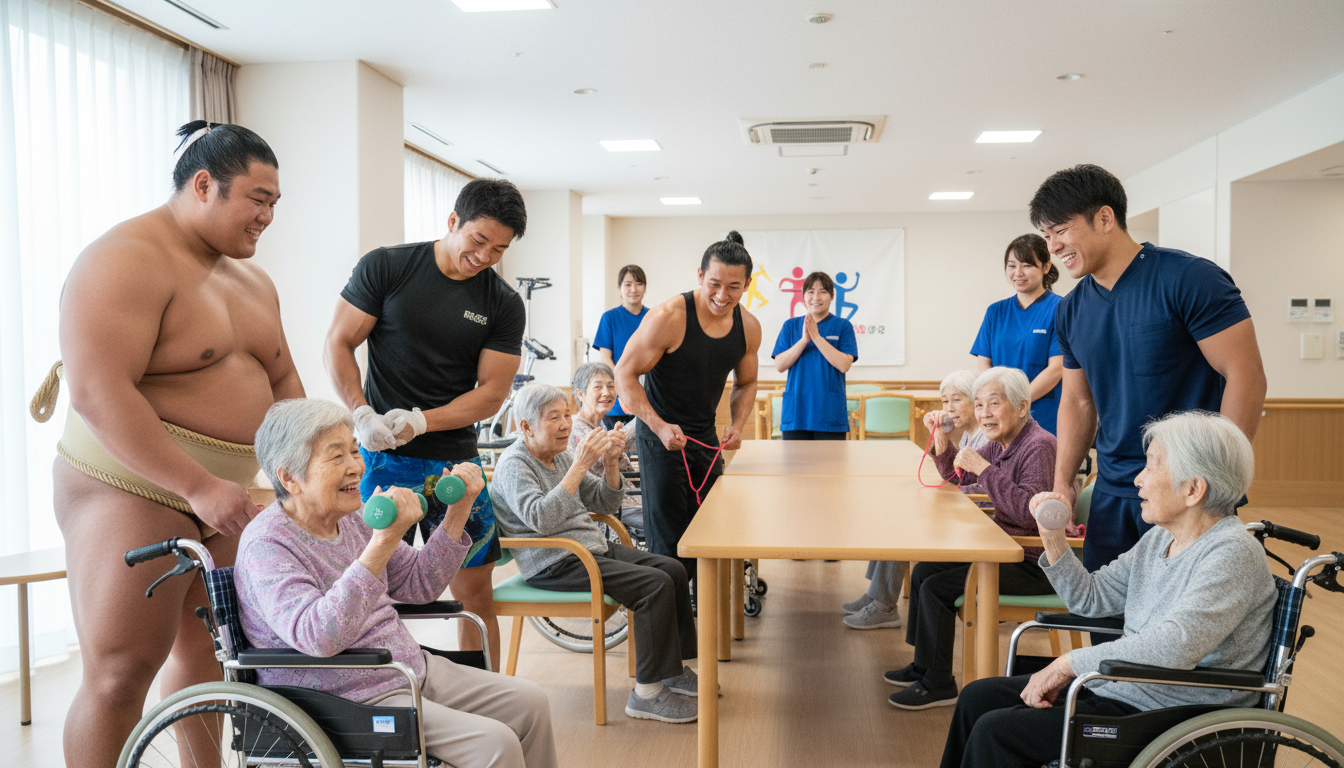
Japan Nursing Homes Recruit Bodybuilders, Sumo Wrestlers and MMA Fighters to Fill Care Gaps
Japan nursing homes recruit bodybuilders, sumo wrestlers and MMA fighters to address severe staffing shortages, offering steady pay, training and gym memberships to new hires.
Japan’s long-term care facilities have begun hiring unconventional recruits — including bodybuilders, sumo wrestlers and mixed martial arts fighters — to help with the physical demands of elder care and to plug widening staffing gaps. Facilities say the hires provide muscle for heavy lifting and physical support while receiving training in caregiving tasks. The move reflects growing pressure on care providers as Japan’s population ages and the pool of qualified care workers remains limited.
Bodybuilders, sumo wrestlers and MMA fighters join care teams
Several care homes across Japan have advertised positions aimed at physically strong applicants, citing the need for personnel who can assist with patient transfers and mobility. Recruiters have promoted benefits such as steady wages and gym memberships to attract athletes and fitness professionals who often face uncertain incomes. Managers say the combination of strength and workplace stability can help improve daily care logistics in understaffed facilities.
Facility administrators emphasize that these hires are not substitutes for trained nurses or certified care workers but are intended to augment teams where lifting and transfers require extra manpower. Officials report that many traditional care tasks remain under the responsibility of trained staff, while stronger recruits support physically taxing duties. The approach aims to reduce workplace injuries among regular staff and to maintain residents’ mobility and dignity.
Nursing homes turn to physical strength to ease lifting demands
Care centers say rising numbers of residents needing assistance with standing, turning and bathing have made physical strength a valuable asset on the floor. Lifts and mechanical aids help, but staff shortages and tight budgets mean facilities sometimes rely on human strength to accomplish transfers safely. Operators argue that adding physically capable employees can lower the immediate risk of falls and lift-related injuries for both residents and caregivers.
Critics warn that relying on strength alone is insufficient without proper training in safe transfer techniques and the use of assistive equipment. Occupational health specialists underscore that correct procedures and teamwork are essential to prevent harm, and that ad hoc solutions cannot replace systematic investments in training and equipment.
Facilities offer steady pay, gym memberships and training
To entice athletes accustomed to gig work or part-time instruction, some care homes have bundled steady monthly pay with perks such as complimentary gym access and fitness support. These incentives aim to convert short-term fitness careers into more stable employment while leveraging recruits’ interest in maintaining physical conditioning. Facilities say the arrangement can be mutually beneficial: athletes gain reliable income and career pathways, and homes gain employees with the stamina for demanding shifts.
Most operators also state that recruits undergo basic caregiving training, covering topics such as hygiene, infection control and safe transfer protocols, before working with residents. The goal is to bridge athletic experience with caregiving competence, though training duration and depth vary by facility and local regulations.
Care training and resident safety become priorities
Health and elder-care experts emphasize that any new worker entering the sector must be supervised and certified to perform clinical or personal care tasks. Safe patient handling protocols, use of mechanical lifts and resident-centered care planning are cited as non-negotiable elements to protect vulnerable residents. Observers note that physical strength should complement, not replace, technical skills and empathy required for quality long-term care.
Family members and advocacy groups have voiced cautious optimism while urging transparency about training standards and staffing ratios. They want assurances that residents will continue to receive the same level of professional oversight and clinical care.
Policy makers and care experts assess the approach
Local and national authorities face mounting pressure to address workforce shortages through multiple strategies, including recruitment drives, wage increases, immigration policy adjustments and expanded training programs. Some policymakers view the recruitment of athletes as a short-term coping mechanism rather than a solution to structural workforce deficits. Analysts say it may ease immediate operational challenges but does not eliminate the need for systemic reforms and better career incentives for care workers.
Experts recommend evaluating early pilots and collecting data on outcomes such as resident safety, staff injury rates and employee retention. That evidence could inform whether similar incentive packages and recruitment tactics should be scaled or modified.
Implications for Japan’s long-term care workforce
Japan’s population remains one of the world’s oldest, and demand for long-term care is expected to grow in coming years. Creative recruitment efforts reflect both the urgency of staffing gaps and the limited options available to some care providers. Observers caution that the sustainability of such hires depends on comprehensive training, supportive supervision and a broader strategy to professionalize and stabilize the care workforce.
If combined with stronger pay structures, clearer career ladders and investments in assistive technology, nontraditional hires could become part of a multi-pronged response to labor shortages. Without those complementary measures, facilities risk cycling through short-term fixes without achieving lasting workforce resilience.
Japan’s experiment with recruiting athletes into nursing homes underscores the broader challenges confronting elder care in aging societies, where ingenuity must be balanced with safeguards for residents and workers alike.
