
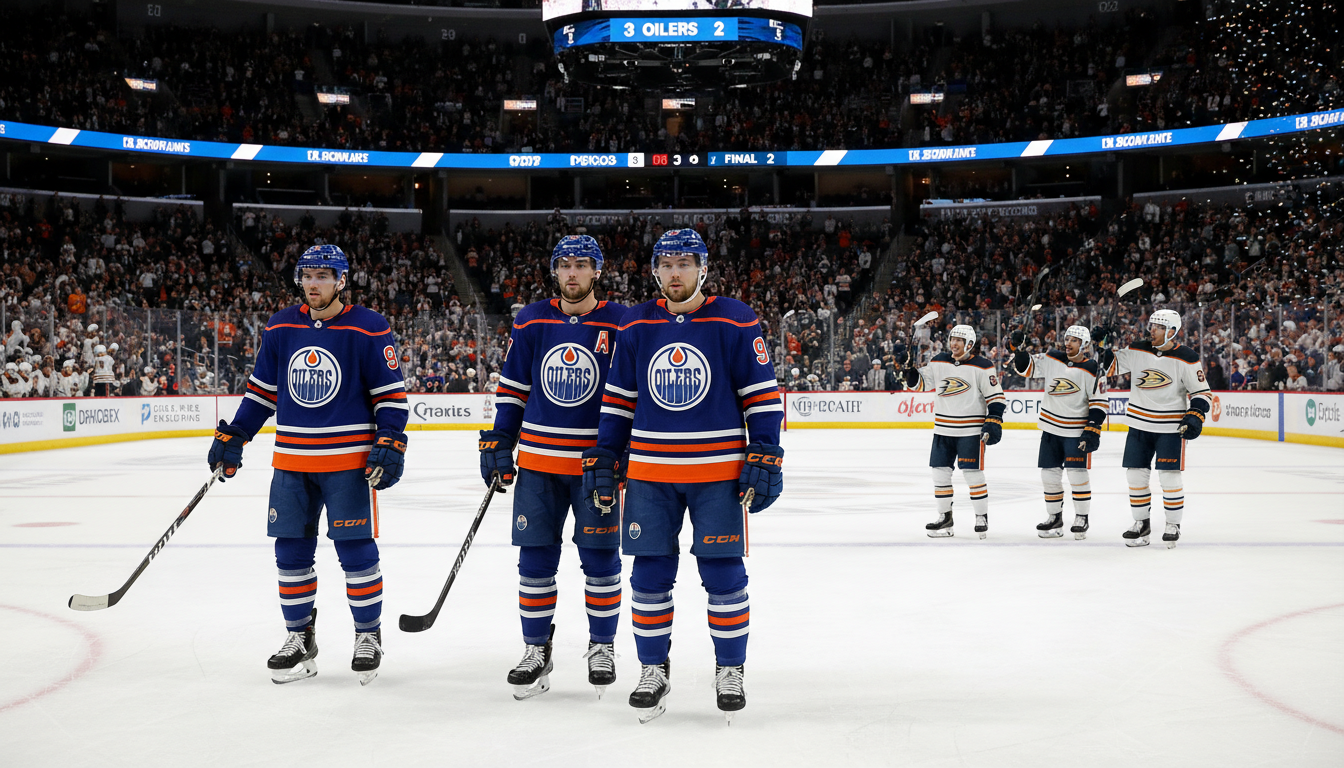
Oilers Game 6 in Anaheim: Edmonton faces elimination on April 30, 2026
Edmonton Oilers Game 6 vs Anaheim Ducks sees the Oilers visit Anaheim on April 30, 2026, trailing 3-2 in the first-round series and needing a win to stay alive.
Opening summary of the matchup
Edmonton travels to Anaheim for Game 6 of the NHL first-round series on April 30, 2026, with the Oilers trailing 3-2 and facing elimination.
A decisive victory in Game 5 returned momentum to Edmonton, but the team must replicate that performance on the road to force a seventh game.
Anaheim holds the series edge after winning three of the first five games, while Edmonton’s 4-1 win in Game 5 interrupted a three-game skid and put pressure back on the Ducks.
The outcome of Game 6 will determine whether the series returns to Edmonton for a winner-take-all Game 7 or concludes at Honda Center.
How the series reached this point
Edmonton opened the series with a victory in Game 1 on April 20, 2026, but Anaheim responded by taking three straight games to seize control.
The Oilers’ Game 5 triumph stemmed from tighter defensive play and improved execution on the power play, reversing a trend that had tilted the series in Anaheim’s favor.
Anaheim’s wins in Games 2 through 4 showcased depth scoring and goaltending that challenged Edmonton’s usual tempo-based attack.
Special teams swings and a few timely saves have been decisive in the close games that defined this series so far.
Key player matchups and narratives
The matchup between Edmonton’s top forwards and Anaheim’s defensive pairings will be central to the result in Game 6.
Edmonton will look for its leading scorers to regain the consistency that drove them through the regular season.
Goaltending is another focal point; the starter for Anaheim has delivered steady numbers when the Ducks needed them most, while Edmonton’s netminder produced a strong Game 5 performance to keep his team in the series.
How each goalie handles rebounds, traffic in front of the crease, and early lookaways on the rush could swing momentum in a tight game.
Anaheim’s depth forwards have contributed at key moments, creating match-up problems on the forecheck and on the penalty kill.
Edmonton’s role players must sustain physical play in the corners and on the walls to create space for the top-six attackers.
Coaching adjustments and tactical themes
Both head coaches have had to adapt repeatedly across the five games, altering defensive structures and matchup deployments.
Edmonton’s coaching staff emphasized a simpler puck management approach in Game 5, reducing turnovers and limiting odd-man rushes that Anaheim had exploited earlier.
Anaheim has leaned on tactical zone exits and aggressive neutral-zone pressure to disrupt the Oilers’ breakout attempts.
Special-teams coaches on both sides have tweaked units to capitalize on opponent tendencies, with the power play and penalty kill likely to be decisive again in Game 6.
Line juggling, defensive reassignments and situational deployments on late-game faceoffs will also attract attention from both benches.
How each coach balances risk and reward in overtime scenarios — should they arise — will reflect their confidence in goaltending and depth scoring.
Anaheim’s home-ice environment and its influence
Playing at Honda Center gives Anaheim the advantage of last-change and a partisan crowd willing to lift the team in pivotal moments.
The Ducks’ playoff return for the first time since the 2017–18 season has re-energized the fan base, with the arena atmosphere adding an extra layer of pressure for the visiting Oilers.
Home-ice matchups on the boards, defensive zone draws and line matchups are easier to manage for the home team, and Anaheim’s ability to capitalize on that edge has shown in key stretches.
Edmonton must win physical battles along the boards and block shots to mitigate the Ducks’ home-ice momentum.
Travel fatigue and time-zone adjustments are also factors when a team travels across the continent late in the regular season or into the post-season.
The Oilers’ support staff will aim to minimize those effects with recovery protocols and pre-game routines tailored to keep players sharp.
Statistical edge and special teams breakdown
Special teams have played a significant role in the series, with power-play conversions and penalty-killing efficiency swinging outcomes in several games.
Edmonton’s power play found its stride in Game 5, converting opportunities at a higher clip while limiting Anaheim’s chances with disciplined zone entries.
Shot metrics and expected-goal totals have often favored the team that controlled the middle of the ice and limited high-danger opportunities.
Tracking heat maps and slot control across the series shows the team that clears rebounds and wins battles in front of the crease tends to win tight playoff contests.
Faceoff percentages in both the offensive and defensive zones have shaped possession and transition opportunities in this series.
Teams that win the special-teams faceoffs and control the puck coming out of the zone tend to generate more scoring chances and dictate tempo.
If Edmonton wins: scenarios and implications
A Game 6 victory in Anaheim would force a decisive Game 7 back in Edmonton and flip momentum dramatically in the Oilers’ favor.
Winning on the road under elimination pressure would underscore resilience and could provide a psychological edge heading into a winner-take-all contest.
Home crowd dynamics at Rogers Place would then become a critical variable, with travel recovery and preparations compressed into a short turnaround.
Coaching staffs would be pressed to evaluate matchups, potentially returning to the lineup combinations and strategies that worked earlier in the series.
Special teams adjustments and late-game deployment of veteran players would likely shape a Game 7 narrative.
If Edmonton advances, the victory would extend their playoff life and preserve their recent record of avoiding series losses outside the Stanley Cup Final since the 2022–23 season.
If Anaheim closes the series: outcome and broader impact
Should Anaheim win Game 6 at Honda Center, the Ducks would clinch the series and advance to the second round for the first time in nearly a decade.
A series-clinching road or home win would validate Anaheim’s regular-season adjustments and signify a significant moment in the franchise’s rebuild.
For Edmonton, a loss would mark an earlier-than-hoped exit and prompt evaluation of roster construction, health, and depth at the forward and defensive positions.
Such an outcome could revive discussions around offseason strategies, goaltending stability and ways to better protect leads in short playoff series.
Players who distinguished themselves for Anaheim across the five games would gain postseason momentum and likely draw focus from second-round opponents.
Veteran leaders on both teams would be assessed for their playoff impact and their ability to influence critical moments under intense pressure.
What fans and broadcasters are watching
National and regional broadcasters will emphasize the key tactical matchups, player health updates and late scratches ahead of puck drop.
Fans will follow line changes, special-teams personnel and how each team manages the early minutes when playoff games often swing on attention to detail.
Social and local media coverage tends to amplify micro-narratives — a blocked shot, a controversial call, or a locker-room remark — so both organizations will be mindful of messaging and player availability.
Market expectations differ: Anaheim seeks to sustain a rare postseason run, while Edmonton aims to avoid a premature end to a season with high expectations.
Looking beyond Game 6: longer-term perspectives for both clubs
A short series victory can accelerate a club’s development and change offseason priorities for the winner and the loser.
Playoff success for Anaheim could validate management’s roster decisions and speed the team’s return to consistent contention.
For Edmonton, the result may trigger focused offseason moves targeting depth scoring, defensive balance and goaltending insurance.
Front-office leaders will weigh performance trends across the series, combining analytics and scouting reports to shape future decisions.
Player development paths — from prospects on the cusp to veterans whose roles shift in the post-season — will be re-examined based on what unfolded in this matchup.
Both teams will extract lessons about situational play, the importance of discipline, and the adjustments necessary to succeed deeper in the playoffs.
Edmonton’s salary-cap situation, contract statuses and trade-market realities will factor into how aggressively the club pursues changes should the season end in Game 6.
Anaheim’s management will also confront cap and personnel considerations if the Ducks advance, balancing the desire to bolster the roster with maintaining the chemistry that carried them through the first round.
The final paragraph in this article reflects the immediate stakes: a victory keeps Edmonton’s playoff hopes alive and sends the series back to Alberta for a high-stakes Game 7.
A Ducks win would end Anaheim’s long wait for a multi-round postseason run and propel the franchise into the next phase of its spring campaign.
