
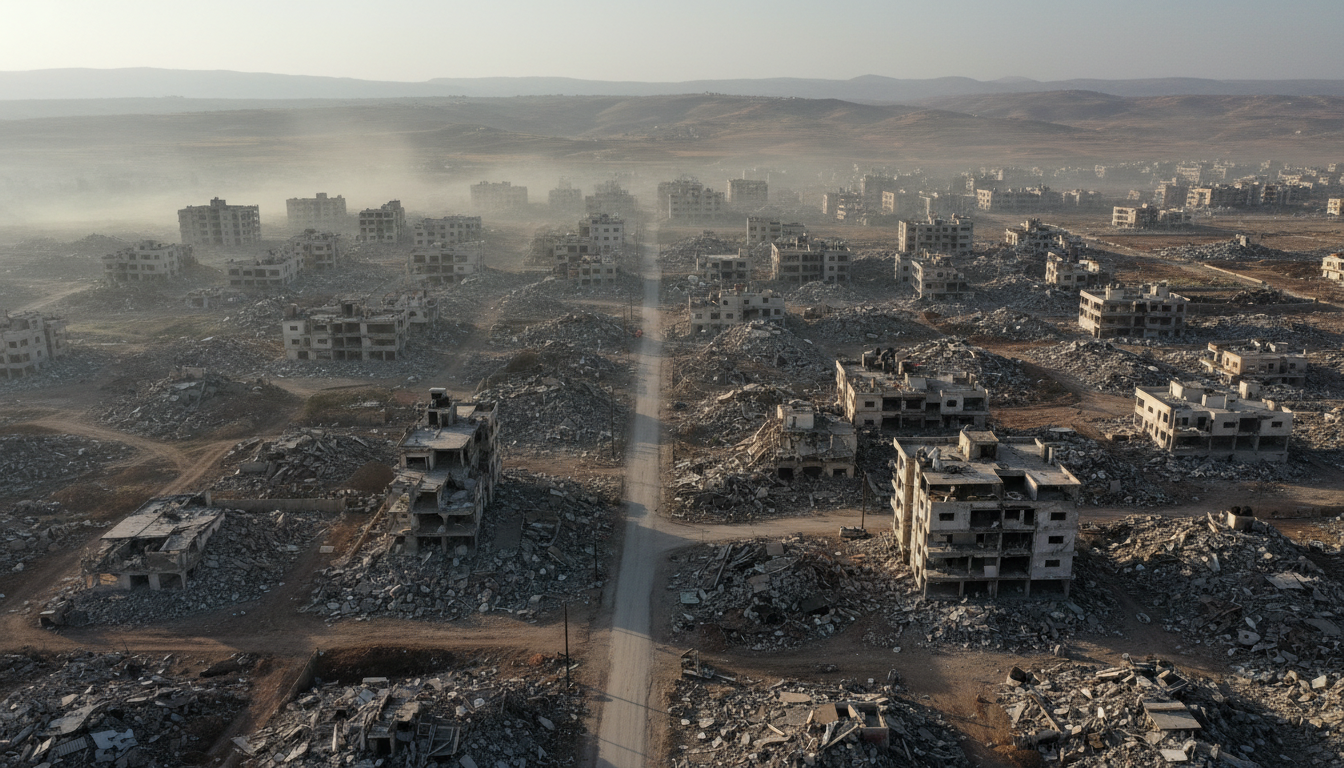
Southern Lebanon flattened: Bint Jbeil and border towns reduced to rubble in renewed Israeli offensive
Satellite and eyewitness evidence show widespread destruction across southern Lebanon as Israeli forces deepen operations near the border.
The town of Bint Jbeil and scores of nearby villages in southern Lebanon lie in ruins nearly two months after Israel relaunched a ground offensive aimed at pushing back Hezbollah, according to satellite imagery, local testimony and independent verification. Entire streets, homes and businesses have been reduced to rubble, with popular cafes and community facilities among the structures demolished, leaving residents displaced and uncertain if — or when — they will be able to return.
Bint Jbeil left in ruins
Residents and videos from the area show rows of flattened buildings in Bint Jbeil, a town just miles from the Israeli frontier that has been identified as a Hezbollah stronghold. Drone footage and on-the-ground images depict collapsed facades, crushed vehicles and streets indistinguishable from ash-strewn landscapes. Survivors who fled to Beirut describe carrying only a few belongings and watching neighbourhoods that took decades to build be erased in a matter of weeks.
Satellite imagery and verification
An analysis of Copernicus Sentinel satellite imagery, together with photos and videos verified by major news organisations, documents widespread demolitions across at least two dozen municipalities near the border. The images show not only destroyed homes but damage to schools, hospitals, government offices and mosques, indicating a campaign that has affected both civilian infrastructure and state facilities. Observers say the scale and pattern of destruction is visible across contiguous swathes of territory rather than limited isolated strikes.
Scale of casualties and displacement
Lebanon’s health ministry reports thousands of deaths linked to the strikes and more than a million people displaced from their homes, creating one of the largest internal displacements in the country’s recent history. Bridges, gas stations and water systems have been damaged or rendered inoperative, complicating humanitarian access and relief efforts for those now sheltering in Beirut and elsewhere. A U.S.-mediated cease-fire has been extended through mid-May even as strikes and demolitions continue to reshape the southern landscape.
Tactics resemble Gaza operations, witnesses say
Military analysts and visual investigators note that some demolitions in southern Lebanon mirror tactics used by Israeli forces in Gaza, including controlled demolitions carried out by troops and large-scale razing with bulldozers and excavators. Amnesty International investigators documented soldiers placing explosives inside structures and detonating them remotely, a method that sends plumes of dust and leaves long stretches of shattered concrete and twisted rebar. Such techniques have left entire streets looking like moonscapes and rendered many neighbourhoods uninhabitable.
Legal concerns and responses
Human Rights Watch and other legal experts warn that the deliberate destruction of civilian property without clear military necessity can amount to a war crime, and they have called for transparent investigations into targeted demolitions and damage to essential services. Video circulated online showed an excavator destroying solar panels that powered a town’s water station near Debl, prompting Lebanon’s state news agency to flag the loss of critical utilities. The Israeli military has said its forces operate in accordance with international law and that demolitions target structures used for military purposes, and it reported internal disciplinary measures after inquiries into specific incidents.
Sectarian geography and strategic aims
Satellite comparisons reveal a stark geographic contrast in the extent of damage: many majority-Shiite villages near the border show far heavier destruction than neighbouring predominantly Christian or Druze towns. Officials in Israel describe the operation as creating a several-mile-deep “buffer zone” they intend to hold until the perceived threat from Hezbollah is contained. Hezbollah denies embedding military assets within civilian areas, and analysts warn that protracted occupation of border zones will complicate any rapid return of displaced populations.
For families who fled, the loss is both material and existential: ovens, classrooms, small businesses and family graves have been swallowed by rubble, and many displaced people report relying on messages from friends who remain in the south to learn what is left of their homes. Nabil Sunbul, who worked in a bakery in Bint Jbeil, told visitors he fled to Beirut with a few belongings and a feeling of anger and sorrow; another displaced mother described living in a stadium tent after a home she and her husband built two decades ago was destroyed. With basic services crippled and access limited, residents and relief agencies say the humanitarian needs remain acute while prospects for return depend on political and security developments that remain uncertain.
