
US agents killed in Mexico were not authorised to operate, Mexican government says
Mexico says two US agents killed in a crash in Chihuahua were not authorised to operate in the country, prompting a probe into foreign activity and sovereignty.
Mexican government says agents lacked authorization
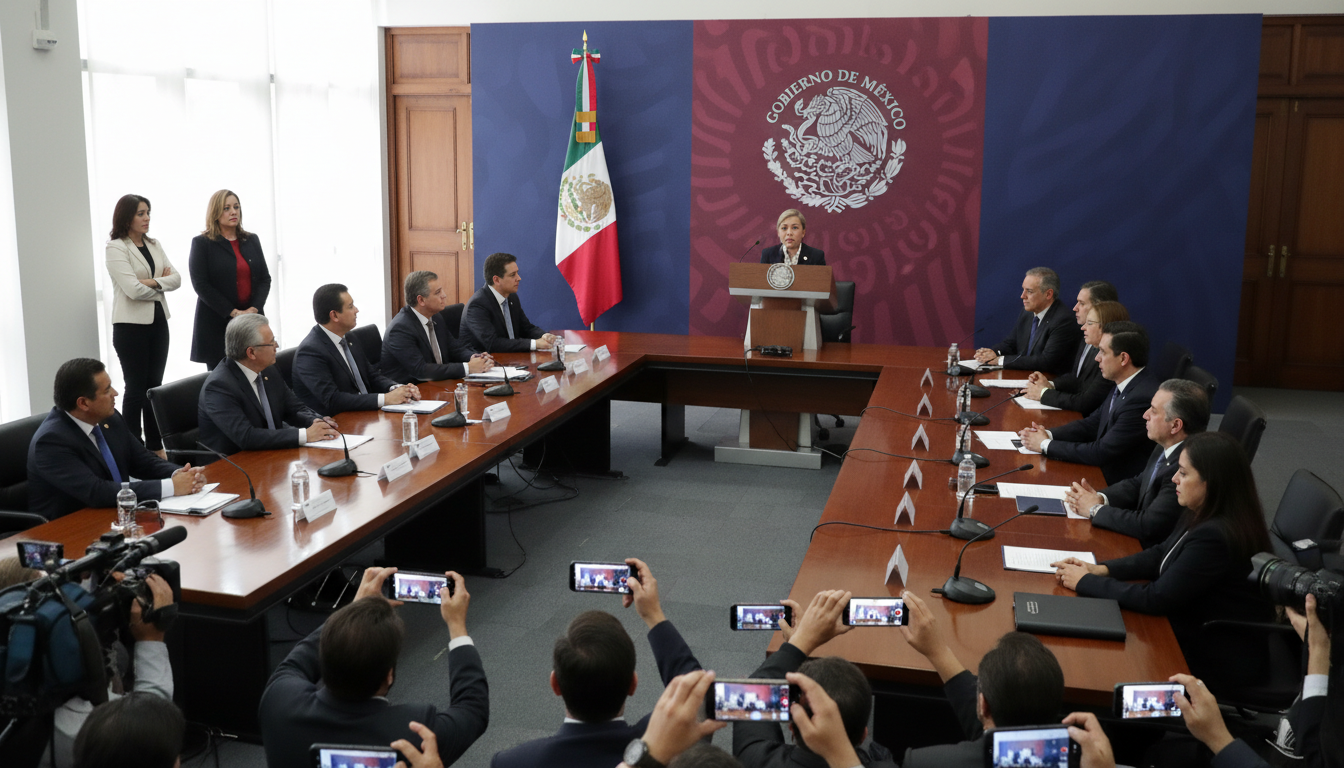
Mexico’s security cabinet announced that two US citizens killed in a car crash linked to an anti-narcotics operation in Chihuahua were not formally authorised to carry out operational activities on Mexican soil.
The statement said one of the Americans had entered Mexico as a visitor and the other held a diplomatic passport, noting neither had the federal accreditation required for foreign agents.
Officials framed the announcement as a defense of national sovereignty and said investigations would determine whether domestic laws were violated.
Details of the crash and operation in Chihuahua
Authorities say the two US agents died in a vehicle accident last Sunday during activity connected to a raid against a drug trafficking group in northern Chihuahua.
Two Mexican officials were also killed in the same incident, heightening concern inside Mexico about the nature and oversight of the operation.
Local authorities have opened inquiries into the circumstances of the crash, while federal investigators are examining the chain of command and operational coordination.
Conflicting descriptions from US and Mexican officials
The United States described the deceased as embassy personnel, with Ambassador Ronald Johnson characterising them as staff attached to the diplomatic mission.
Chihuahua’s attorney general referred to the two as “instructor officers” from the embassy who were reportedly engaged in routine training work with Mexican counterparts.
Mexican spokespeople say these accounts conflict with the absence of official accreditation to conduct operations, prompting further scrutiny of how the Americans were participating.
President Sheinbaum orders probe under national security law
President Claudia Sheinbaum has instructed authorities to investigate whether Mexico’s national security law was breached by the involvement of foreign nationals in the raid.
Under that law, foreign agents must obtain federal authorisation to operate and cannot engage directly with local officials without formal approval, according to government statements.
Sheinbaum said the military had not been aware that non-Mexicans were participating and stressed that such matters should not be taken lightly by the Mexican public.
Mexico calls for measured cooperation and respect for sovereignty
Mexico’s security cabinet affirmed that the government welcomes intelligence sharing, institutional coordination and technical collaboration with the United States, but insisted such cooperation must rest on mutual trust.
The statement reiterated that any foreign involvement in security operations must follow Mexican procedures and obtain prior authorisation from federal authorities.
Officials emphasised that preserving sovereignty is central to bilateral engagement even as both countries seek to combat transnational organised crime.
Broader regional context and policy tensions
The incident comes amid an era of increasingly assertive US policy toward narcotics trafficking and regional security, a posture that has at times provoked controversy in Latin America.
Observers note that the line between intelligence-gathering, law enforcement support and direct operational involvement can be legally and politically fraught when it crosses national borders.
Mexican leaders have repeatedly rejected the presence of foreign military forces on their territory, and this episode places fresh pressure on both capitals to clarify protocols for joint action.
Diplomatic and legal questions remain as investigators in Mexico and representatives from the US embassy continue to discuss the facts surrounding the crash and the agents’ presence.
Both governments face domestic demands for transparency: Mexican officials are under pressure to show they protected sovereign authority, while US representatives must explain the status and role of their personnel.
The outcome of Mexico’s probe will shape future cooperation on drug-trafficking investigations and could prompt new, stricter procedures for foreign participation in security operations.
