
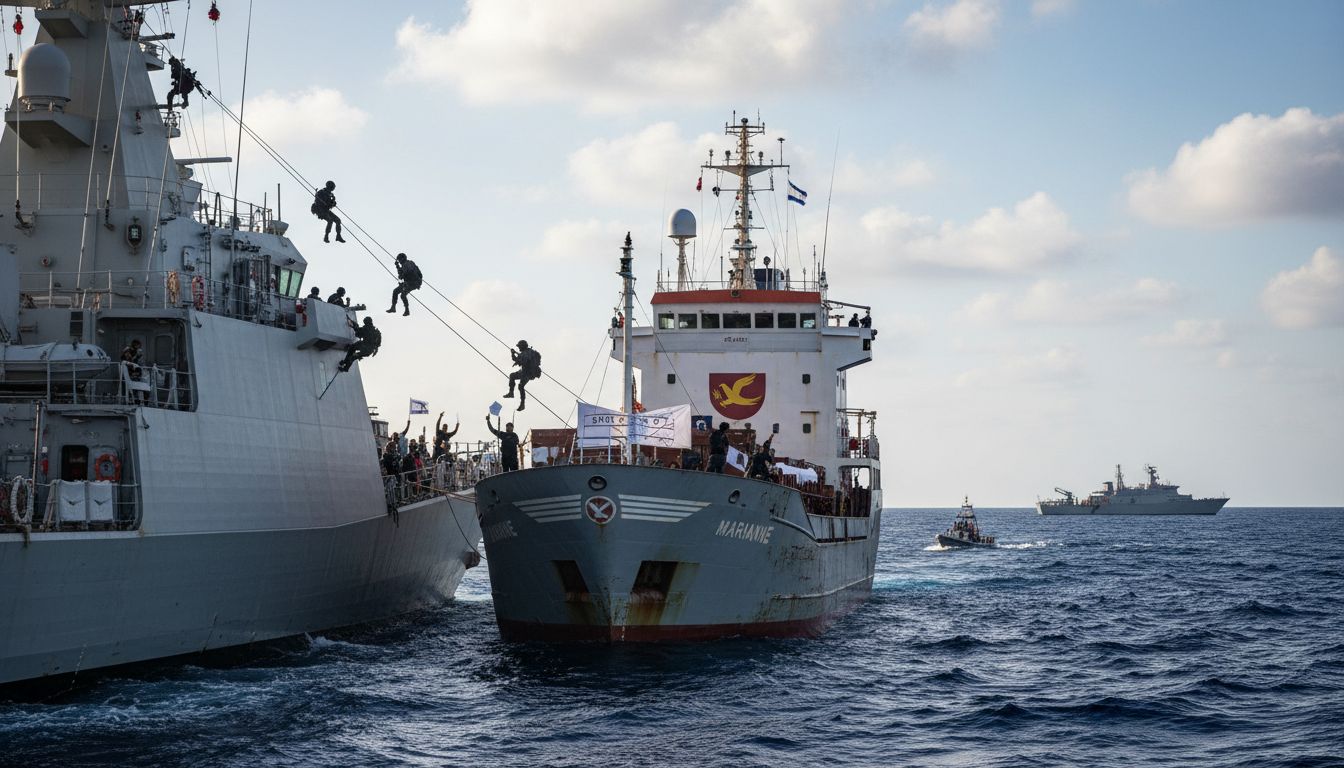
Israel intercepts Gaza-bound aid flotilla in international waters
Israelian navy boards multiple vessels from Barcelona convoy, organizers say; incident raises fresh legal and diplomatic questions over maritime blockade.
A Gaza-bound aid flotilla was intercepted in international waters on April 30, 2026, when Israeli forces boarded several vessels that had sailed from Barcelona, the protest group behind the mission said. The group said the convoy was carrying activists and supplies intended to draw attention to restricted access to Gaza. The operation marks the latest confrontation over Israel’s naval blockade, a recurring flashpoint in regional maritime disputes.
Israeli Forces Board Multiple Vessels
The protest group said Israeli military personnel boarded multiple boats in the flotilla while the vessels were en route through waters the organizers described as international. Organizers released video and photographs showing crews and passengers as uniformed personnel moved across decks. Details about detentions, inspections or the seizure of cargo were not immediately available from independent sources.
Departure from Barcelona
Organizers said the convoy left Barcelona earlier this month as part of a coordinated campaign to challenge the naval restrictions on Gaza. Photographs accompanying their statement showed a fleet of small craft flying red, black, white and green flags, a visual the organizers said was intended to signal solidarity with Palestinians in Gaza. The vessels carried a mix of maritime activists and what the organizers described as humanitarian supplies for distribution once access was secured.
Claims by Organizers
The group that organized the voyage framed the sailing as a peaceful challenge to what it called an “unlawful” blockade that inhibits humanitarian aid flows. They said their aim was to deliver supplies and draw international attention to conditions inside Gaza rather than to provoke violence. The organizers also pointed to a history of similar maritime initiatives and said they would publicize the full details of the boarding, including any detained participants, when information becomes available.
Maritime Law and International Waters
Incidents involving ships in international waters typically raise complex questions about jurisdiction and the legality of interdiction under maritime law. Blockade operations have been the subject of legal debate for years, and state actions at sea are often evaluated against both customary international law and bilateral arrangements. Legal experts say key issues include the location of the interception, the nature of the cargo, and whether neutral vessels are lawfully subject to seizure.
Regional and Diplomatic Implications
Past flotilla confrontations have prompted responses from governments, international organizations and rights groups, who often call for transparent investigations and the protection of civilian participants. In similar episodes, diplomatic protests and demands for accountability followed quickly, underscoring how maritime incidents can reverberate beyond the immediate actors. At the time of reporting, official responses from regional governments and international bodies to this specific boarding had not been released.
Humanitarian Access and Gaza Conditions
Efforts to send aid to Gaza by sea and by land have repeatedly highlighted the broader humanitarian challenges facing the territory, including restrictions that affect the flow of food, medicine and reconstruction materials. Organizers of maritime missions argue these actions expose impediments to relief operations and press for broader corridors for humanitarian assistance. Humanitarian agencies have long urged predictable, secure access for aid deliveries to reduce civilian suffering irrespective of political disputes.
The boarding adds to a string of high-profile maritime confrontations that have kept the issue of Gaza’s access at the center of international debate. Organizers promised further documentation of the incident and said they would seek legal and diplomatic channels to press their case. Authorities on all sides are likely to face questions about how and why the operation unfolded in international waters and what steps will follow to address detainees, cargo and broader access concerns.
