
Trump ‘hellhole’ remark about India draws sharp rebuke from New Delhi
India rebukes Trump’s ‘hellhole’ remark after he reposted on Truth Social Michael Savage’s comment; New Delhi calls it ‘uninformed’ and ‘in poor taste’.
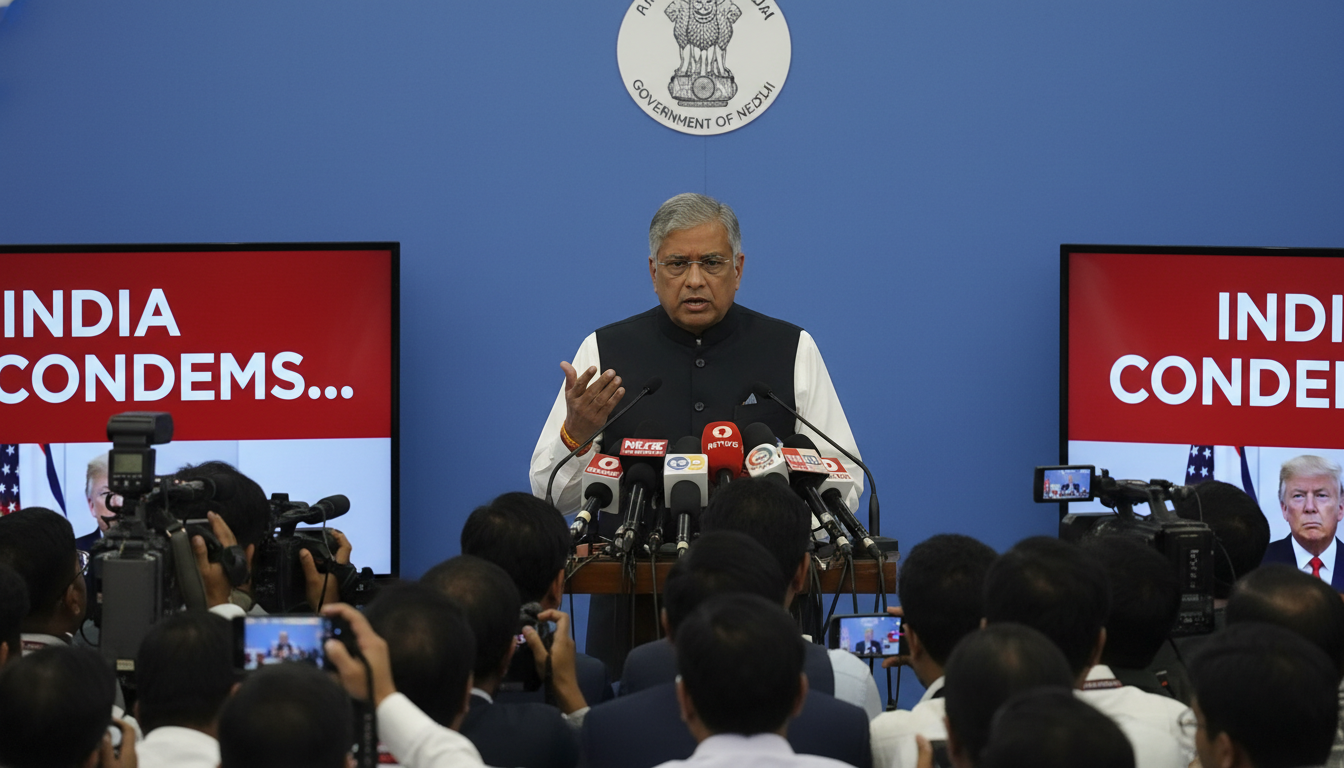
India’s foreign ministry on Friday rejected a remark circulated by former U.S. president Donald Trump that referred to India as a “hellhole,” calling the statement uninformed and at odds with the countries’ long-standing relationship. The comment, originally made by conservative radio host Michael Savage and reposted by Trump on his Truth Social account on April 23, 2026, prompted swift diplomatic and political pushback in New Delhi. Indian officials and opposition politicians described the language as offensive and unrepresentative of bilateral ties between the two democracies.
Ministry of External Affairs responds
A spokesperson for India’s Ministry of External Affairs, Randhir Jaiswal, said the remark was “obviously uninformed, inappropriate and in poor taste.”
Jaiswal added that such language “certainly do not reflect the reality of the India–US relationship, which has long been based on mutual respect and shared interests,” framing the response as a defence of official ties rather than an escalation of rhetoric.
What Trump shared and the original comment
Trump did not author the line himself but reposted Savage’s message without comment on April 23, amplifying the broadcaster’s criticism of U.S. birthright citizenship.
Savage’s post argued that per the current system a baby born in the United States becomes an instant citizen and could facilitate family migration “from China or India or some other hellhole on the planet,” a formulation that explicitly named India as an example.
Political backlash in India
The main opposition Congress party called the remark “extremely insulting and anti-India” and said it “hurts every Indian,” urging Prime Minister Narendra Modi to raise the matter with the U.S. president and register a formal objection.
The reaction underscored the sensitivity in New Delhi to public commentary about India from foreign political figures, and highlighted how diaspora politics and domestic partisan dynamics can converge when high-profile remarks are shared internationally.
Diaspora numbers and social context
Indian government figures indicate roughly 5.5 million people of Indian origin live in the United States, making the community one of the largest Asian-origin groups in the country.
Officials and community leaders in both countries have in recent years emphasised the economic and cultural contributions of Indian Americans, noting their role in trade, technology and academia, and framing attacks on India as harmful to bilateral people-to-people ties.
Bilateral relations and trade backdrop
Trump and Prime Minister Modi maintained warm personal ties during Trump’s first term, but relations later encountered friction amid a round of U.S. tariffs imposed last year; many of those measures were rolled back this year.
Negotiations are ongoing between New Delhi and Washington on a trade instrument intended to prevent renewed tariff increases and to expand market access, a process that officials say could be complicated if diplomatic tensions deepen.
U.S. response and broader implications
The U.S. Embassy in New Delhi sought to temper the fallout by noting the president has previously called India “a great country with a very good friend of mine at the top,” reiterating official appreciation for the relationship.
China’s Foreign Ministry did not immediately comment, signalling a cautious approach from other capitals as the episode unfolded, while analysts warned that rhetoric of this type can strain diplomatic efforts even when governments seek to compartmentalize public statements.
Trump’s amplification of the comment comes amid a pattern of provocative language used by the former president toward foreign nations and immigrant groups, including recent remarks targeting Somali immigrants and his widely reported 2018 reference to certain countries as “s**thole countries.”
This episode places a spotlight on the interplay between social media, former leaders’ platforms and formal diplomacy, with New Delhi publicly rejecting the characterization and Indian political leaders urging a formal response from the highest levels of government.
