
BMO Field Temporary Stands Draw Criticism and Praise Ahead of FIFA World Cup 2026
Temporary stands at BMO Field add 17,756 seats for FIFA World Cup 2026, drawing criticism and praise as Toronto prepares for May 9 and June 12 match dates.
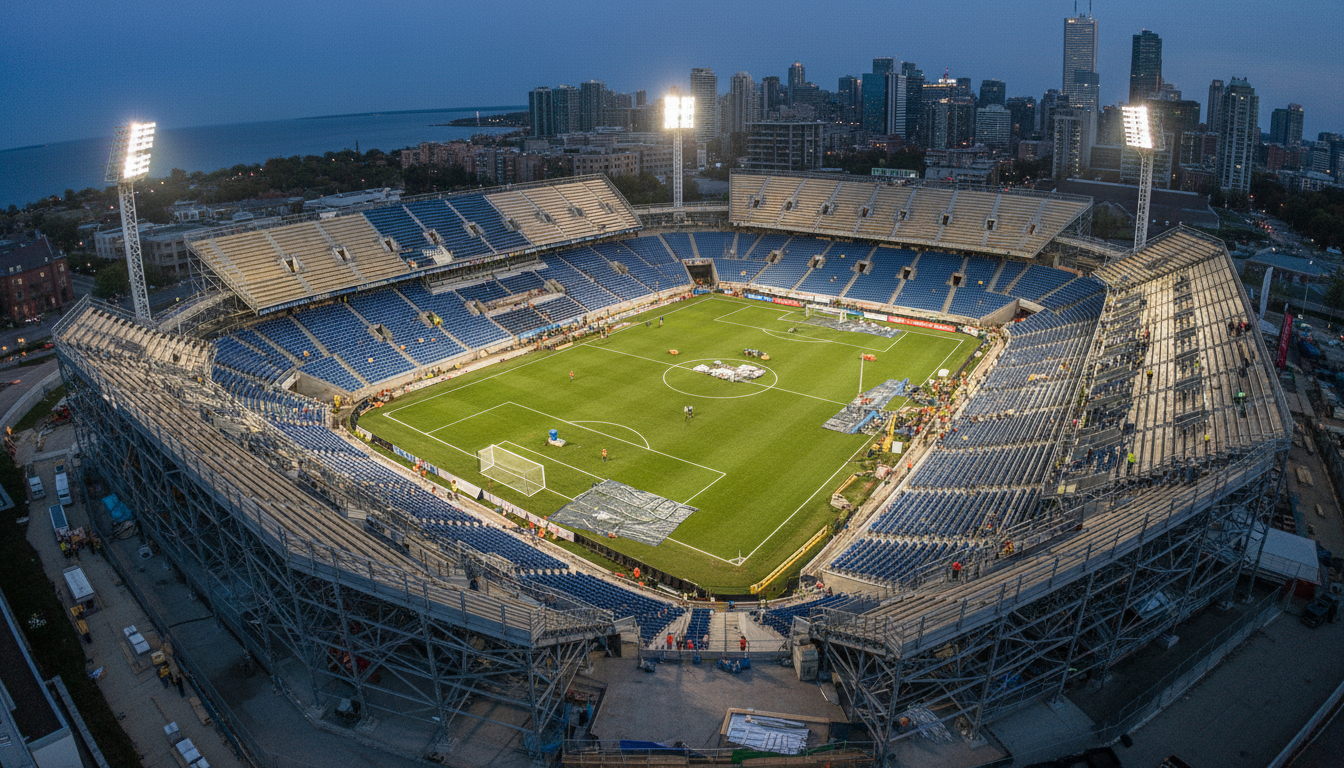
Toronto’s decision to add temporary seating to BMO Field has ignited a polarized public debate as the city prepares to host World Cup matches this summer. The BMO Field temporary stands, totaling 17,756 additional seats on two large end-of-stadium structures, will increase capacity for the tournament but have been described by some observers as visually jarring. Organizers and stadium managers say the modifications are necessary and short-term, while critics argue the exterior appearance damages the city’s image ahead of a global event.
Scope of the temporary additions
The temporary works add 17,756 seats to BMO Field, which has a baseline capacity of about 45,000 and is the smallest of the 16 World Cup venues in Canada, Mexico and the United States. Structures have been erected at both ends of the pitch to accommodate the higher demand for tournament fixtures. Stadium operators and event planners emphasize that these seating modules are modular and designed specifically for short-term use during the competition.
Public reaction and social media outcry
Reaction has been swift and often sharp, with social media posts and content creators calling the look “embarrassing” and likening the scaffolding to makeshift amusement-park structures. Some commentators have labeled BMO Field the least attractive of the tournament venues based on exterior photos of the temporary stands. Others, including many fans, stress that appearances matter less than the experience inside the stadium and the opportunity to host high-profile matches.
MLSE and project team response
Maple Leaf Sports & Entertainment, the stadium operator, has defended the work and pointed out extensive recent renovations valued at nearly $160 million. Project managers say the temporary elements should be judged in context and that the upgrades are focused on functionality and fan capacity for the World Cup. MLSE officials also note that the temporary seating will be removed after the tournament and that the permanent stadium footprint remains unchanged.
FIFA’s visual treatment and logistics
FIFA has plans to visually mask the scaffolding with branded canvases featuring the organization’s and the city’s colours, a move aimed at improving the external presentation for visiting spectators and broadcast audiences. Organizers say the coverings will be in place during matches to provide a cleaner visual impression from the outside, and that sightlines and safety standards have been carefully evaluated. The temporary seating was engineered to meet international event requirements for access, egress and crowd management.
Fans’ first look and early events
Toronto FC supporters will be among the first to experience the expanded configuration when the temporary sections are used for a home match on May 9 against Inter Miami, a fixture that is expected to draw global attention. The Canadian national team’s opening Toronto match is scheduled for June 12, giving local fans time to assess the matchday atmosphere before the World Cup begins. Some attendees described the prospect as thrilling, noting the chance to see international stars and to welcome visitors from around the world despite reservations about the stadium’s exterior look.
Context from sports media and past tournaments
Sports journalists point out that temporary seating has precedent at previous World Cups and major events, where host cities have sometimes had to retrofit venues to meet tournament requirements. Analysts say ideal solutions vary by city and stadium; in some cases temporary additions are unavoidable to create properly scaled venues in dense urban locations. While critics frame the BMO Field temporary stands as a public-relations misstep, other observers argue the measures are pragmatic and focused on delivering capacity and safety for a singular, high-demand event.
Public conversation about the stands has also touched on comparisons with stadiums in the United States and Mexico, where some venues were built or upgraded with different design priorities. Local supporters emphasize the unique nature of Toronto’s waterfront and exhibition grounds, which impose constraints that influence how additional seating can be installed.
The city and event partners face a short window to refine public messaging and visual presentation ahead of the first match that will use the temporary stands. Organizers are balancing a need to meet FIFA’s technical specifications with a desire to preserve Toronto’s civic image during weeks of intense international scrutiny. As the May and June fixtures approach, more fans will form their own impressions when they enter the stadium rather than judge it from afar.
The debate around BMO Field’s temporary stands underscores the competing priorities of hosting a major international tournament: maximizing capacity and accessibility while managing aesthetics and local expectations. As the stadium prepares to welcome thousands of visitors, organizers say the temporary structures are a functional compromise that will be dismantled when the World Cup concludes.
