
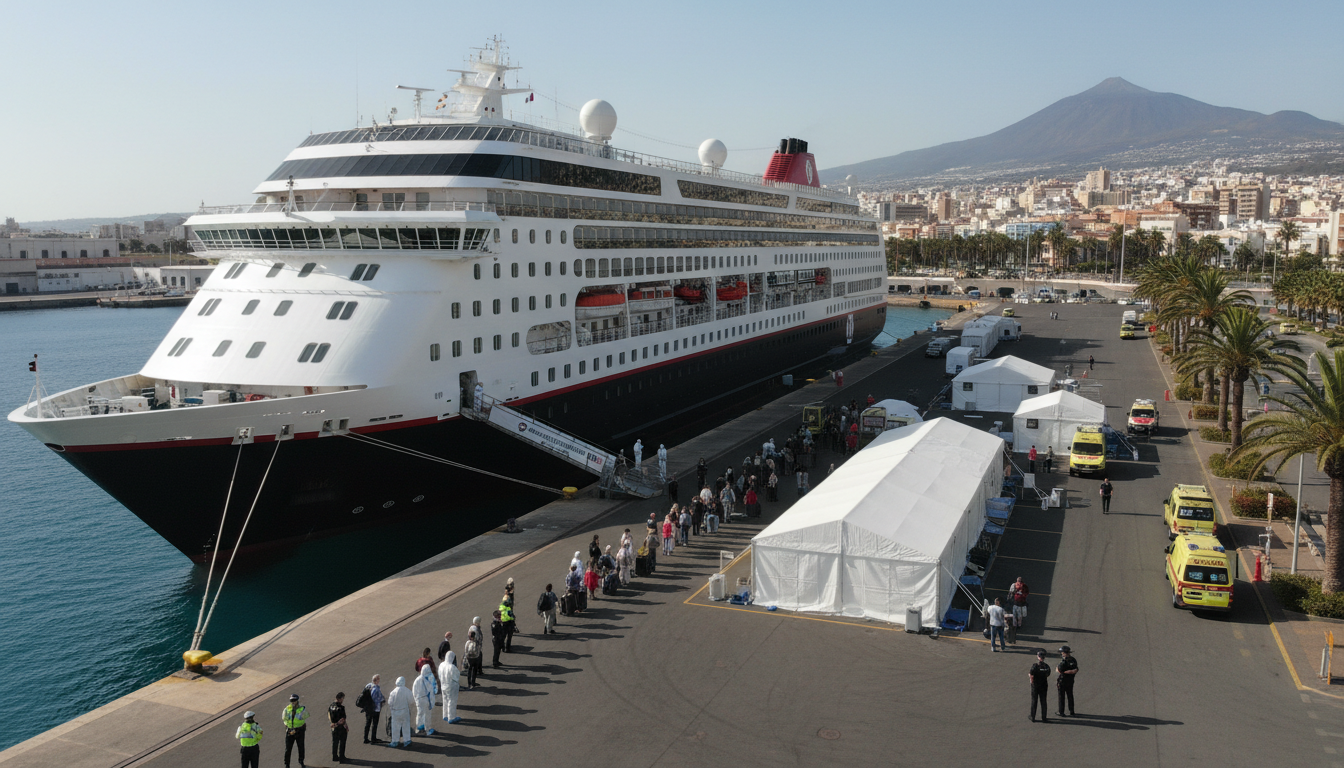
Hantavirus on MV Hondius: ship docks in Tenerife as passenger evacuations prepare to begin
Hantavirus on MV Hondius draws international response as passengers prepare to be repatriated from Tenerife after cases linked to the Andes strain; Canada reports four citizens aboard.
The expedition cruise ship MV Hondius, where recent hantavirus cases were identified, has departed Cape Verde and is scheduled to arrive in Tenerife, Spain, where authorities plan a staged evacuation of passengers beginning next week. Spanish officials say all passengers will remain aboard until flights are ready to repatriate them to their home countries, and a joint health-and-evacuation operation will be put in place at the port of Granadilla. The situation has prompted coordinated action by the World Health Organization, European agencies and national health services while countries organize transport and follow-up for returning travellers.
Tenerife arrival and evacuation plan
The Spanish Interior and Health ministries confirmed the Hondius will berth in Granadilla, Tenerife, despite opposition from some local authorities. Officials said an integrated team will assess passengers and facilitate repatriation, with the process to prioritize those fit to travel and provide medical care where needed.
EU member states have been asked to assume responsibility for their nationals, with possible logistical support from the European Commission, while arrangements for non-EU citizens are being prepared. The government indicated that passengers will not disembark until flights are organized and medical safeguards are in place.
Ship itinerary and onboard medical support
Oceanwide Expeditions, the vessel’s operator, reported the Hondius left Praia, Cape Verde, with 88 passengers and 59 crew representing 23 nationalities aboard. The company said additional medical professionals boarded for the sea transit to Tenerife to ensure continuous care during the crossing.
Three people — two crew and a close contact — were flown out earlier from Cape Verde on air ambulance flights and remained under medical supervision en route to hospitals in Europe and Africa. Authorities stressed that medical evacuation decisions have been based on clinical need.
Confirmed cases, evacuations and transfers
Health authorities have recorded several confirmed hantavirus infections linked to the voyage, and three deaths have been reported among passengers since the cruise began. Patients evacuated from the ship have been admitted to hospitals in different countries, and contact tracing is under way for those who shared transport or flights with the affected individuals.
KLM notified Dutch health services that a passenger who later died after developing hantavirus boarded a flight from Johannesburg to Amsterdam but was disembarked before departure. Dutch authorities said they are contacting airline passengers as a precautionary measure while hospitals in the Netherlands, Germany, Switzerland and South Africa continue to manage cases and contacts.
Andes strain and human-to-human transmission concerns
Laboratories have identified the hantavirus strain involved as the Andes lineage, which is notable for its capacity for person-to-person transmission in some outbreaks. Swiss and South African officials confirmed detection of the same strain in patients linked to the cruise, prompting heightened surveillance and testing among contacts.
The World Health Organization has said that, based on current evidence, the global risk remains low but recommended continued vigilance and precautionary measures to reduce the likelihood of further spread. The European Centre for Disease Prevention and Control urged a cautious approach while investigations into the outbreak’s origins and transmission chains continue.
International coordination and public health response
The WHO, national public health agencies and the cruise operator have coordinated evacuations, medical transfers and diagnostic testing for passengers and crew. Medical centres in the Netherlands and Germany reported readiness to receive evacuated patients, and the LUMC in Leiden and hospitals in Düsseldorf and Geneva were named as referral centres for specialized care.
Officials emphasized that some early cases may have been infected before boarding the ship and that subsequent transmission likely occurred onboard. Authorities continue to map the ship’s port calls and passengers’ recent travel histories to establish where initial exposures happened.
Canadian officials and citizens on board
Canadian foreign and health ministers confirmed that four Canadian citizens are among those aboard the MV Hondius and that, as of the most recent update, there are no known infections among Canadians on the vessel. Global Affairs Canada has deployed consular staff to be present when the ship docks to assist citizens during disembarkation and repatriation.
Canadian public health agencies are working with international partners to monitor the situation and assess any potential risk to the domestic population, describing the current public health risk to Canada as low. Officials advised Canadians with recent travel on the cruise or contact with disembarked patients to follow local health guidance and seek medical assessment if symptoms develop.
The MV Hondius incident underscores the challenges of managing infectious disease events on international cruise voyages, particularly when cases involve strains like the Andes lineage that can transmit between people. Health authorities and governments continue to coordinate medical care, contact tracing and safe repatriation for passengers while monitoring for any further developments.
