
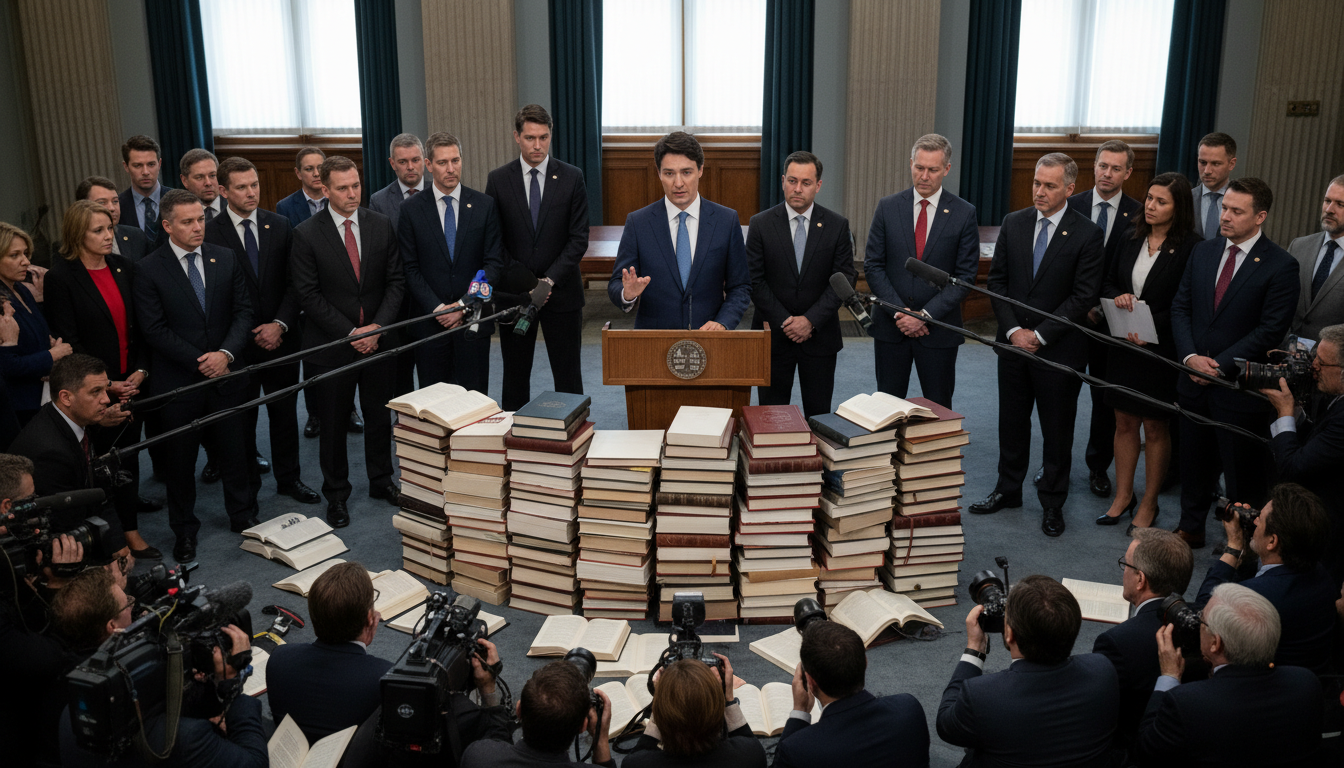
Book ban dispute escalates as critics accuse government of sweeping censorship
Government book ban drawn criticism as critics say it targets diversity and privacy, raising legal and community concerns across Canada.
Opponents of the government’s recent directive say the measure amounts to the largest book ban in Canadian history and warn it will have wide-reaching consequences for libraries and readers. They contend the policy allows officials broad authority to challenge or remove materials that address LGBTQ+ topics, anti-racism, or environmental issues, and could open the door to scrutiny of borrowing records. The allegation has intensified debate over censorship, privacy and democratic accountability in public institutions.
Critics Call It a Historic Restriction on Materials
Civil liberties advocates and library stakeholders characterized the policy as unprecedented in scale, arguing it goes beyond routine content review and into systemic removal of books. They maintain the language of the directive grants ministers or their delegates power to question an array of subjects, which critics say equates to a formalized book ban. Those groups warned that the implications extend beyond individual titles and could reshape collection development for years.
Concerns About Targeted Content and Community Impact
According to opponents, the scope of vulnerable materials includes books on queer identities, anti-racism education and environmental advocacy, areas that often serve marginalized or at-risk readers. They say removing such works risks erasing perspectives that support youth, immigrants, Indigenous people and other communities. Local librarians report heightened anxiety among staff and patrons over access to diverse viewpoints and safe spaces for exploration.
Privacy Risks Over Patron Records Highlighted
A central critique focuses on potential incursions into patron privacy, with critics noting the directive’s wording might permit requests for borrowing data or other patron information. Privacy advocates warned that even inquiries with benign intent can chill library use and deter people from seeking information. Libraries traditionally protect borrower confidentiality; any deviation could provoke legal challenges and a loss of public trust.
Legal Questions and Charter Implications Raised
Constitutional lawyers and legal observers say measures that restrict access to published works or permit official review of patron activity could engage Charter protections for freedom of expression and privacy. They note that while governments can regulate content in narrow circumstances, sweeping policies that disproportionately affect protected viewpoints could face judicial scrutiny. The possibility of litigation has been flagged by those tracking the dispute, who expect rights-based arguments to surface if enforcement continues.
Library Associations and Educators Amplify Objections
National and provincial library associations, as well as many educators, have voiced alarm at the directive’s potential to undermine professional acquisition standards and educational goals. Those groups emphasize libraries’ role in providing balanced collections and supporting curricular needs, arguing that politicized removal of materials undermines educational autonomy. Educators also warn of classroom impacts if texts used to teach history, civics or social studies are suddenly constrained.
Calls for Transparency, Oversight and Independent Review
In response to the controversy, critics are demanding clearer criteria, public reporting on challenges and independent oversight to prevent arbitrary censorship. Advocacy groups are calling for transparent procedures that include stakeholder consultation, explicit privacy safeguards and clear appeals processes for disputed items. Many proponents of reform say a framework built in partnership with librarians and legal experts would better protect both community standards and individual rights.
The debate over the government’s approach to contested materials has now moved from policy memos into the public square, with communities, legal experts and cultural organizations weighing the consequences. As disputes continue to unfold, observers say the balance between protecting vulnerable groups and preserving democratic freedoms will be central to how the controversy is ultimately resolved.
