
Russian attack in Ukraine kills more than 20 ahead of Victory Day cease-fire
Russian attack in Ukraine kills more than 20 in strikes on three cities ahead of a Victory Day cease-fire; rescue teams respond and world leaders condemn.
A Russian attack in Ukraine on Tuesday, May 5, 2026, struck three cities and killed more than 20 people while injuring dozens, Ukrainian officials said. The strikes came after Moscow announced a temporary cease-fire timed to its Victory Day observances on May 9, prompting questions about the pause’s credibility. Emergency crews worked through the day to pull survivors from rubble and treat the wounded as authorities tallied the initial human toll.
Casualties Reported in Three Cities
Local officials reported fatalities and dozens of injuries in at least three urban centres, with the toll still rising as rescue operations continued into the evening. Hospitals in the affected areas received waves of patients with blast wounds and shrapnel injuries, and some facilities were forced to reroute incoming ambulances due to damage. Civil defence units said search teams were combing through collapsed buildings and scorched streets to account for missing residents.
Timing Near Victory Day Cease-Fire Announcement
Russian authorities had declared a cease-fire tied to Victory Day, the May 9 holiday that marks the Soviet victory in World War II, yet the attacks occurred after that announcement was made public. The timing raised immediate concerns among diplomats and analysts about whether Moscow intended the pause to be limited or selective. Kyiv officials characterized the strikes as a deliberate escalation that undermines any near-term prospects for de-escalation.
Extent of Damage and Rescue Operations
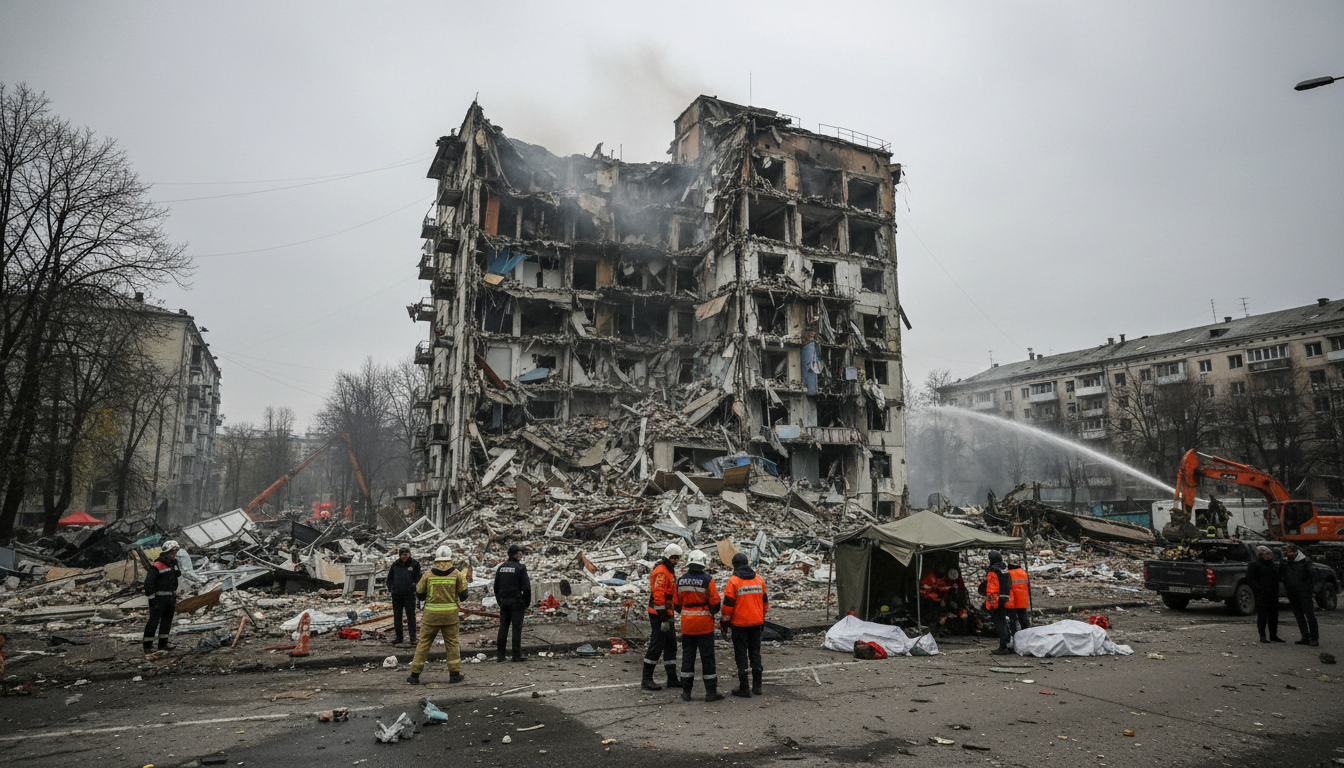
Photographs and on-the-ground descriptions described large sections of buildings reduced to rubble, vehicles burned or overturned and streets littered with debris. Firefighters and medics worked under challenging conditions to extinguish flames and extract survivors, while temporary triage centres were set up to handle the influx of casualties. Local authorities warned that utility disruptions and unstable structures posed continuing risks to both civilians and first responders.
Ukrainian Government and Military Response
The Ukrainian government condemned the attacks and said it would investigate the incidents while coordinating an intensified civil defence response to protect civilians. Military spokespeople said forces were on heightened alert in affected regions and were repositioning assets to bolster air defences and secure critical infrastructure. Kyiv also called for international support to document the strikes and to assist with emergency medical and humanitarian needs.
International Reactions and Condemnations
International leaders and multilateral organisations issued immediate condemnations of the violence, describing attacks on population centres as unacceptable and urging restraint. Diplomatic sources indicated talks were underway among Western partners to coordinate a response, focused on humanitarian assistance and further condemnation at institutional forums. Several capitals underscored the need for accountability and the protection of civilians under international humanitarian law.
Humanitarian Concerns and Civilian Impact
Humanitarian organisations warned that the strikes would increase needs for shelter, medical supplies and emergency food in the affected districts, and called for safe corridors to assist injured and displaced civilians. Local aid groups reported families fleeing neighbourhoods hit by shelling, adding pressure on already stretched municipal services. Officials highlighted the particular vulnerability of the elderly and children, many of whom lost access to power, water and communications in the immediate aftermath.
Cease-Fire Credibility in Question
Analysts said the apparent contradiction between a announced cease-fire and subsequent strikes could erode trust and complicate any future negotiations aimed at reducing violence. Observers noted that cease-fire declarations that are not backed by verifiable measures often fail to protect civilians or halt hostilities. The sequence of events on May 5 is likely to factor into diplomatic discussions over monitoring mechanisms and the conditions under which pauses in fighting can be sustained.
The situation remained fluid into the evening as authorities continued to assess casualties and damage, and as emergency teams planned next steps for search, recovery and relief. International agencies and neighbouring states signalled readiness to support humanitarian operations while diplomats prepared further statements condemning the attacks and calling for measures to prevent additional civilian losses.
