
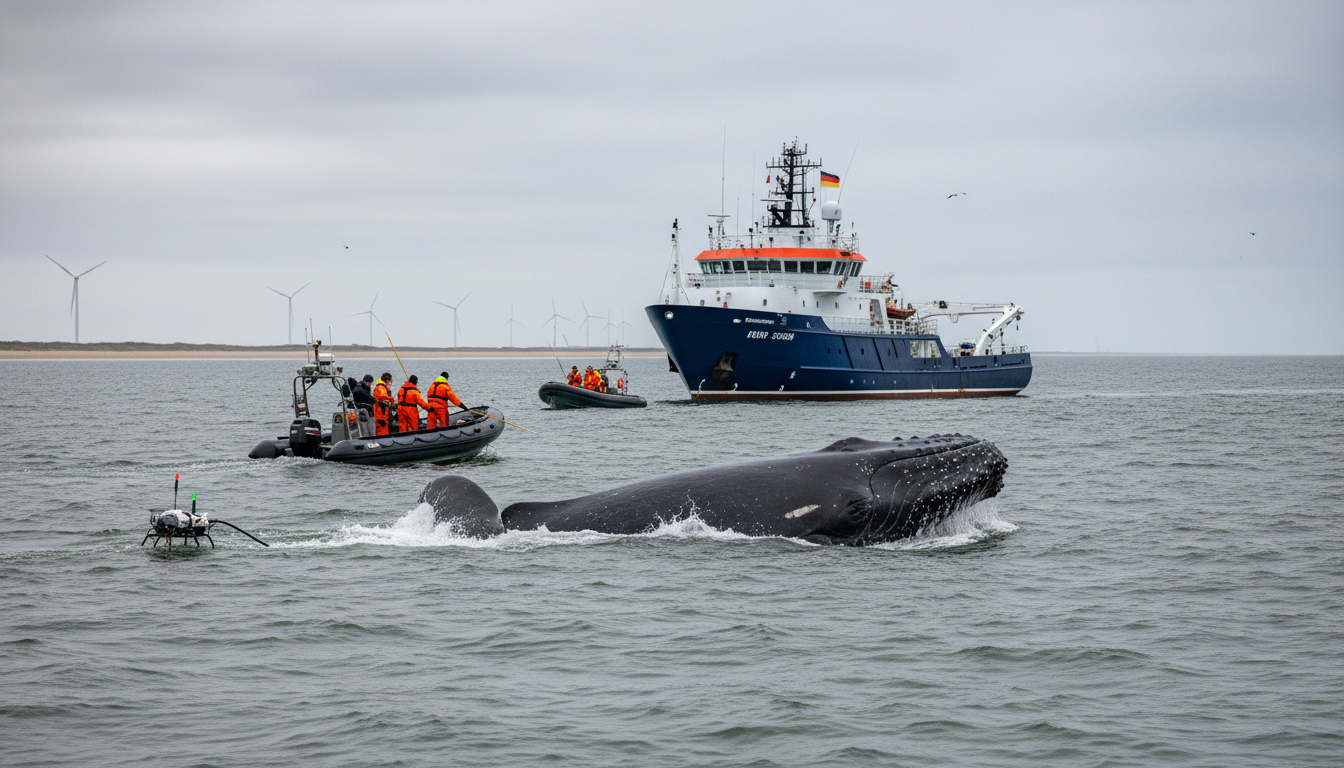
Timmy the stranded whale freed and released into the North Sea
Timmy the stranded whale was freed after weeks trapped in shallow German waters and released into the North Sea on May 2, 2026, following a complex multinational rescue effort.
Rescue operation and timeline
After being discovered in unusually shallow coastal waters off Germany, Timmy the stranded whale became the focus of an intensive rescue campaign that lasted several weeks. Local authorities said teams worked around the clock to keep the humpback stable while assessing options for refloatation and transport. The operation culminated on May 2, 2026, when rescuers moved the animal into deeper water and released it into the North Sea.
Authorities described the effort as a coordinated response involving maritime crews, marine biologists and veterinary specialists. Weather windows and tidal conditions dictated the rescue timetable, forcing teams to wait for safe conditions before attempting the final release. The prolonged effort drew attention from conservation groups and the public, who followed updates as the operation progressed.
Effort to free Timmy
Rescuers initially focused on preventing further injury and dehydration while the whale remained in shallow water. Personnel used pontoons and small craft to support the animal and to provide continuous monitoring of its breathing and body condition. As the rescue plan evolved, crews prepared specialized lifting and flotation equipment to move Timmy to deeper water when a safe tidal window arrived.
Transport into open water was described as logistically complex and required careful coordination between vessels and on-the-water crews. Observers noted the use of a containment platform that allowed rescuers to stabilize the animal during movement. Once the team reached suitable marine depths in the North Sea, the whale was guided from the container and allowed to swim free under close supervision.
Veterinary assessment and care
Veterinarians on site conducted regular health checks throughout the rescue operation to evaluate Timmy’s condition and readiness for release. Medical teams monitored respiration, body temperature and hydration, and provided supportive care to address sores and muscle strain from prolonged stranding. Those assessments were decisive in determining that Timmy could be returned to the sea rather than moved to a rehabilitation facility.
Post-release monitoring protocols were planned before the final operation, with biologists prepared to track the whale’s behaviour after it returned to open water. Experts stressed that immediate post-release checks are critical to identify any signs of distress or renewed stranding. The decision to release followed a consensus among rescuers that Timmy was sufficiently strong to resume natural movements.
Impact on shipping and local communities
The rescue unfolded in a busy stretch of coastal waters and required temporary traffic adjustments to ensure safety for both vessels and the whale. Port authorities coordinated with rescue teams to limit commercial traffic during the critical phases of the operation. Local fishers and residents, many of whom volunteered or observed from shore, expressed relief when Timmy was finally freed.
The event highlighted tensions between marine wildlife conservation and commercial maritime activity, with some experts calling for expanded protocols to detect and respond to strandings earlier. Local officials said they will review the operation to identify lessons that could speed responses in future incidents and reduce risks to both animals and people.
Monitoring and follow-up plans
Following the release into the North Sea, conservation teams confirmed that monitoring would continue for days to weeks to track Timmy’s recovery and movements. Where feasible, teams plan to use noninvasive observation and, if necessary, tagging methods to confirm the whale has rejoined migratory routes. Data gathered during the follow-up period will inform assessments of Timmy’s long-term prognosis.
Researchers emphasized that many freed large whales can recover fully if they avoid immediate re-stranding and find sufficient food. Nevertheless, prolonged time in shallow water can leave lingering injuries or weakened condition, making close observation important. Officials said they will remain on alert and ready to intervene should Timmy show signs of renewed trouble.
Timmy the stranded whale’s release on May 2, 2026, drew international attention and underscored the complexity of rescuing large marine mammals in populated seas. The coordinated response of marine crews, veterinarians and local authorities ultimately returned the humpback to open water, while follow-up monitoring aims to ensure the animal’s continued recovery and safety.
