
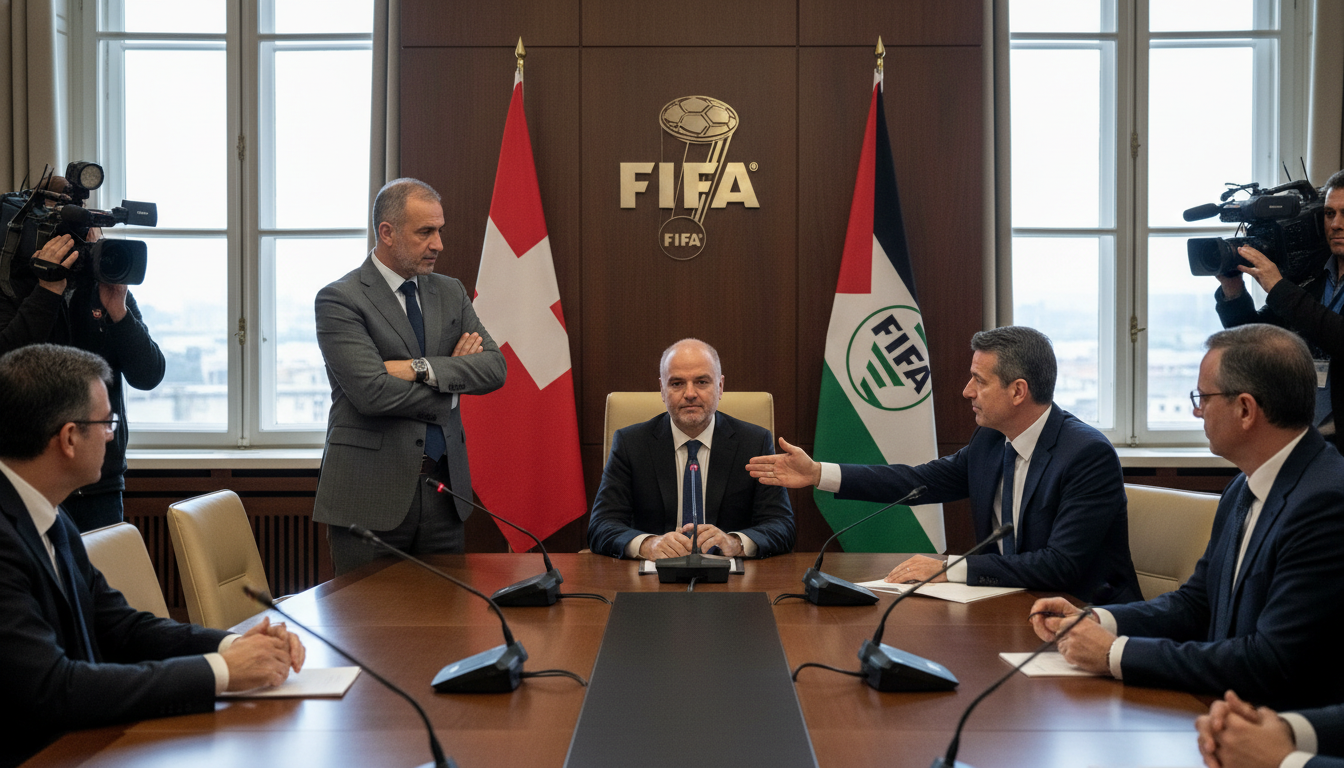
Palestine FA president refuses handshake with Israeli counterpart at FIFA congress
At FIFA’s annual congress on May 1, 2026, Palestine FA president Jibril Rajoub declined to shake hands with his Israeli counterpart after an invitation from FIFA president Gianni Infantino, a move that highlighted ongoing tensions between the two associations. The incident, witnessed by delegates and media at the meeting, brought sport diplomacy back into the spotlight and underscored how political disputes can surface at global football governance events.
Handshake declined during FIFA annual meeting
During the plenary session of FIFA’s congress on May 1, 2026, Gianni Infantino invited representatives of the Palestinian and Israeli football associations to approach each other and shake hands. Palestine FA president Jibril Rajoub stepped forward but ultimately refused to engage in a handshake with the Israeli official, prompting immediate attention from delegates and journalists in attendance. The brief but pointed encounter lasted only moments, yet it quickly became the defining image of the session.
Rajoub’s explanation to assembled media
After the exchange, Rajoub provided an explanation to reporters for his decision not to shake hands, describing the refusal as a considered stance rather than a spontaneous gesture. He framed his actions within the broader context of Palestinian concerns and the political realities that shape relations between the two associations. Rajoub’s comments emphasized that football does not operate in a vacuum and that symbolic acts at high-profile events carry political meaning for those affected.
Infantino’s appeal for unity and neutrality
FIFA president Gianni Infantino had called for the handshake as a public demonstration of sport’s capacity to build bridges, reiterating FIFA’s stated commitment to neutrality and inclusion. Infantino’s invitation mirrored long-held policy positions that sport should seek to transcend political divisions and foster dialogue among member associations. The attempt to stage a conciliatory gesture underscored FIFA leadership’s ongoing push to use major gatherings to promote unity within the global football family.
Reactions from member associations and delegates
Delegates at the congress reacted with a mix of silence, murmurs and discreet commentary, reflecting the sensitivity of the moment. Some member associations privately acknowledged the complexity of staging rapprochement in public, while others expressed support for efforts to keep football channels open as a means of communication. Observers noted that reactions in the room underscored deep divisions that cannot be resolved by a single symbolic act, and that any progress would require sustained, multilateral engagement.
Sport diplomacy and the Palestinian-Israeli context
The refusal to shake hands illuminated the persistent overlap between sport and politics in the Palestinian-Israeli context, where historical grievances and security concerns frequently shape diplomatic and sporting interactions. Football has at times served both as a platform for cooperation and as a stage for protest, depending on the broader political climate. Analysts say incidents at governance gatherings often reflect wider tensions and can influence debate over scheduling, hosting, and international fixtures involving the associations.
Possible implications for FIFA policy and future talks
The episode is likely to reinvigorate discussions within FIFA about how the organisation balances its neutrality with pressures from member associations and international stakeholders. Questions arising from the incident include how FIFA mediates between rival members, the role of symbolic gestures in diplomacy, and the mechanisms available to protect sport from being co-opted by political disputes. While no immediate disciplinary actions were announced at the congress, officials said the matter could prompt further internal conversations on conflict resolution and engagement strategies.
Observers also suggested the incident could spur targeted dialogue between football administrators, diplomats and civil-society actors who see sport as a potential vehicle for confidence-building. Long-term progress, however, would depend on concrete measures that address underlying grievances beyond the symbolic level, participants at the congress noted.
The handshake refusal at FIFA’s May 1, 2026 congress served as a stark reminder that football governance remains entangled with geopolitical realities, and that efforts to foster unity through sport must reckon with deeply held positions and complex history.
