
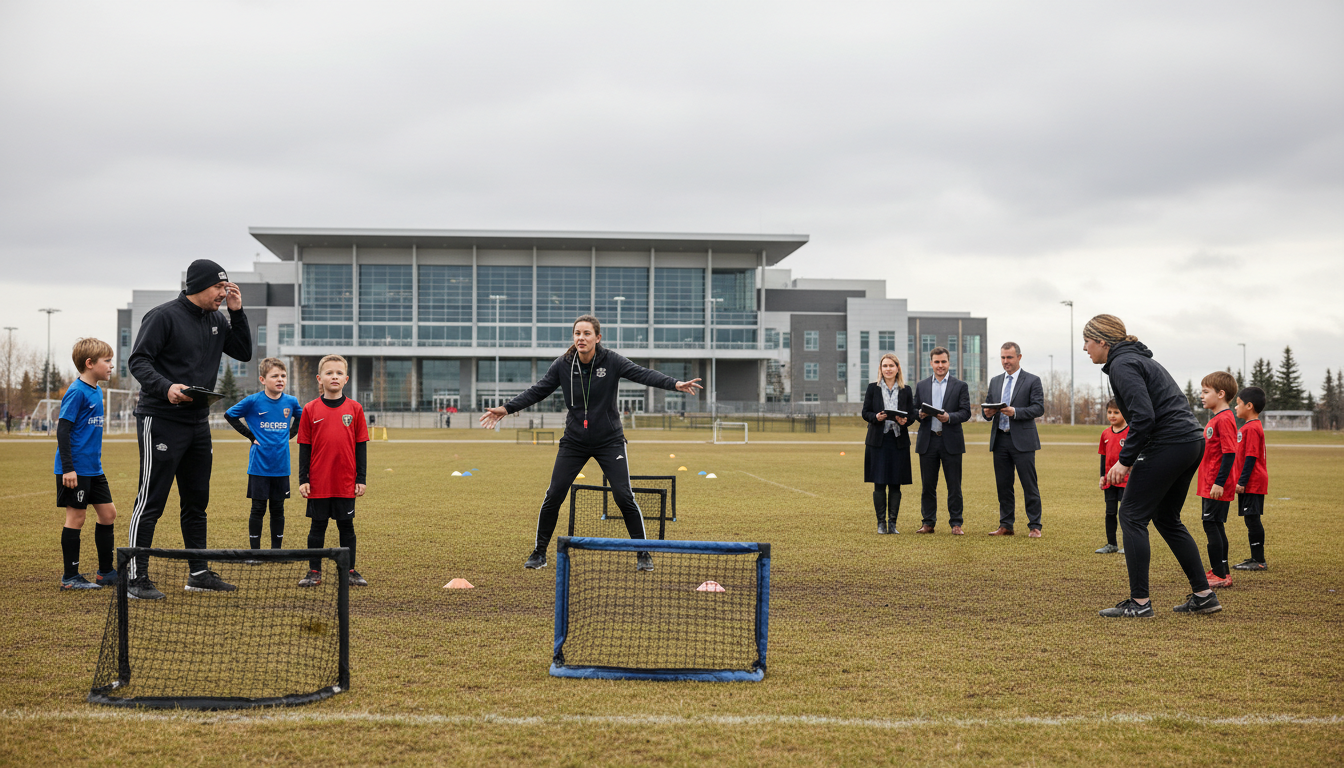
Volunteer coaches drive Edmonton’s youth sports — but training gaps worry experts
Volunteer coaches are the backbone of youth sports in Edmonton, but growing participation and limited training are prompting calls for better support from clubs and municipalities.
Across Edmonton, volunteer coaches staff teams, manage budgets and keep fields playable, while juggling full-time jobs and family life. As more families sign up children for club soccer, baseball and hockey, gaps in coaching education and uneven access to certified instructors have raised concerns about player development and safety. Community leaders and experienced coaches say the system depends on goodwill but needs more consistent training, resources and oversight to ensure young athletes get quality instruction.
Volunteers keep leagues running
Volunteers operate as coaches, managers and administrators for the majority of community teams, often stepping in because paid staff are scarce. Many parents who volunteer do so to keep costs down and to ensure their children can play, accepting responsibilities that range from running practices to organizing travel.
That reliance is practical but fragile: coaches commonly balance day jobs with evenings on the sideline, and recruitment remains an annual challenge for local associations. Programs that rely on unpaid labour struggle when parents cannot commit the time, leaving some teams shorthanded or inexperienced at critical developmental stages.
Coaching experience and player development
Coaches with deep technical backgrounds warn that inconsistent instruction undermines development at the grassroots level. Professionals who have coached at university and semi-professional levels say volunteers are often excellent in organizational roles but may lack sport-specific training to conduct progressive practices.
The result can be a tendency toward repetitive drill-based sessions rather than game-like activities that build decision-making and technical repetition. Without structured, purposeful practice, players risk missing foundational skills that become harder to correct later in adolescence, according to coaches who work on talent identification and performance testing.
Certification gaps and resource allocation
Formal coaching pathways exist, but they can be costly and demanding to maintain. Several sport organizations require licences that involve online modules, in-person clinics and periodic renewals; those requirements can push volunteers toward older, elite teams where their investment feels most worthwhile.
This dynamic leaves grassroots age groups staffed by less-experienced instructors, even while the technical demands of sports such as baseball and hockey require precision teaching. Associations report difficulty convincing volunteers to take on certification and ongoing education when they are already stretched for time and money.
Practice design and coaching quality
Experts advocate for practices that are purposeful, stimulating and fun, emphasizing game-based learning that increases touches on the ball and forces players to solve problems in real time. Simple adjustments — like small-sided games or multiple goals to encourage creativity — can dramatically improve skill acquisition compared with long lines and cone drills.
Veteran coaches also stress the importance of emotional environment: consistent messaging, encouragement, and allowing players to make mistakes are seen as critical to confidence and development. Over-coaching from the bench and excessive criticism, by contrast, can stifle learning and enjoyment.
Local programs and support options
Some provincial and local organizations provide resources for volunteer coaches, offering clinics, online modules and mentorship opportunities designed to bridge knowledge gaps. Baseball and hockey associations, for example, outline age-specific requirements and recommend coach-to-player ratios to protect safety and quality of instruction.
Community leaders are exploring ways to scale those supports and make them more accessible, including subsidized courses, peer-mentoring programs and targeted outreach to recruit new volunteers. Where associations have invested in coach education, clubs report better retention and more confident volunteers who are willing to stay involved season after season.
Cities, volunteers and field maintenance
The role of volunteers extends beyond coaching to include field upkeep and logistical tasks that municipalities increasingly expect community groups to handle. With budget pressures on municipal recreation departments, volunteers often find themselves responsible for grooming diamonds, mowing fields and ensuring facilities are ready for play.
City officials and volunteer coordinators acknowledge that sustaining this model requires investment in volunteer training and tools, not only to improve coaching quality but also to protect the long-term viability of local sport infrastructure. Collaborative approaches between clubs and municipalities are being discussed as a way to share responsibilities more equitably.
Despite the concerns, many parents and volunteers say they are motivated by a desire to give back and to preserve affordable access to sport. But coaches, sport developers and civic leaders agree that goodwill alone is insufficient; targeted investment in coach education, easier access to certification and stronger community partnerships are needed to ensure Edmonton’s young athletes receive consistent, high-quality instruction as participation continues to grow.
