
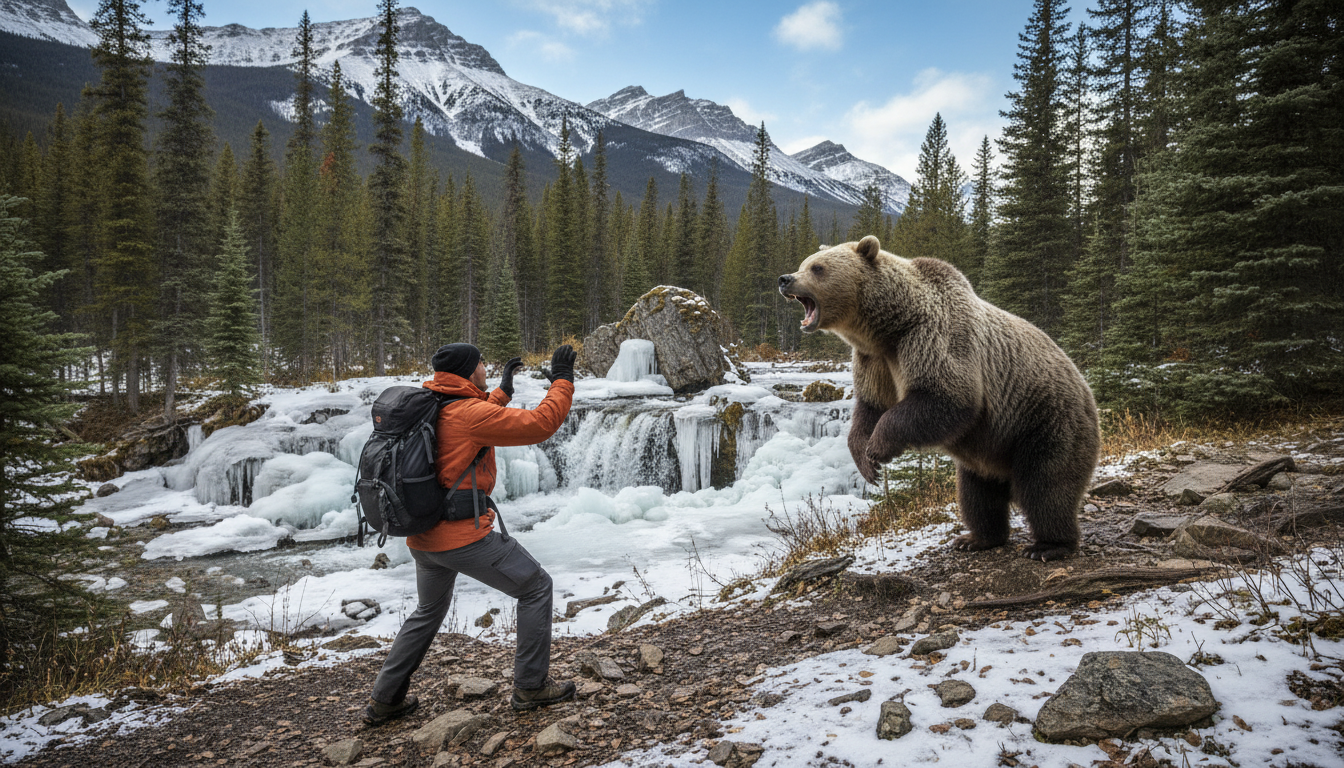
Grizzly bear bluff-charges hiker near Troll Falls in Kananaskis
Grizzly bear bluff-charged a hiker near Troll Falls in Kananaskis on May 4, 2026, prompting Alberta Parks to issue warnings for multiple nearby trails. The hiker was not physically injured, officials said.
Hiker Bluff-Charged Near Troll Falls
A hiker was narrowly missed by a grizzly bear on May 4, 2026, when the animal charged and came within roughly one metre of the person on the Troll Falls trail. Alberta Parks and Forestry reported the incident on its website and confirmed the hiker avoided contact.
The agency said the encounter occurred despite an existing advisory for the area, and emphasized that bears can be encountered at any time. The proximity of the encounter — about four feet — prompted immediate public safety notifications.
Bear Warning Issued for Troll Falls, Sunburst and Stoney Trails
Following the incident, officials issued a bear warning for Troll Falls, Sunburst and Stoney Trails and surrounding areas “until further notice.” The advisory covers trails that are heavily used by day hikers and families, particularly during the spring shoulder season.
Troll Falls is a short, popular route that leads to a series of waterfalls below the Mount Nakiska ski area, while the Sunburst Trail lies in close proximity. Park managers urged visitors to avoid unnecessary travel on affected routes until conditions are reassessed.
Expert: Likely Protective Behaviour, Not Predatory
John Clarke, a former Alberta wildlife officer who now runs the Canadian Bear Safety Authority, said the behaviour observed — a bluff charge that stopped short of contact — often signals defensive intent rather than predation. He suggested the bear was likely protecting cubs or defending a carcass or cache of food.
Clarke advised hikers to retreat calmly, create distance and ready their bear spray when confronted by such displays. He also warned that bears which follow people after an initial encounter present a higher risk and require a different response.
Seasonal Foraging and Habitat Factors
Wildlife experts note that in early May grizzly bears are actively foraging for spring vegetation such as orchids, dandelions and new grass shoots, as well as small mammals like ground squirrels. The animals may also investigate avalanche chutes and other landscape features where winter-killed carcasses can provide concentrated food sources.
Those foraging habits, combined with lingering snow and limited available forage, can increase the likelihood of bruins and people crossing paths in the backcountry. Parks staff said habituated bears — individuals accustomed to seeing people — have been observed in parts of Kananaskis, heightening management concerns.
Safety Guidance from Alberta Forestry and Parks
Alberta Forestry and Parks reiterated basic bear-safety measures for anyone planning recreation in the region: travel in groups, make plenty of noise, keep dogs leashed and secure attractants such as food and garbage. Visitors are asked to look and listen for signs of bears and to defer travel in areas with active advisories.
Park officials also stressed the importance of carrying and knowing how to use bear spray as a primary deterrent. They advised that making space for the animal, avoiding sudden movements toward it, and retreating on established routes are the safest immediate responses to bluff charges.
Management Debate and Recent Policy Changes
The encounter comes as some rural municipalities in Alberta have urged the province to reinstate a grizzly hunt, citing growing threats to people and livestock. Alberta ended a commercial grizzly hunt two decades ago following declines in populations, but officials say numbers have since shown signs of recovery in some regions.
In 2024 the province implemented a limited policy allowing the targeted removal of grizzly bears judged to be “problematic” by qualified personnel. That measure was presented as a narrowly applied tool for addressing specific human-wildlife conflict incidents rather than a broad reopening of hunting.
Trail Use, Reporting and Ongoing Monitoring
Park authorities are monitoring the area and advised the public to check for updates before heading into Kananaskis Country. Hikers and local users were asked to report fresh sightings or encounters to provincial staff so wildlife managers can assess whether additional closures or mitigations are necessary.
Local recreation groups said they understand the need for caution, and urged trail users to respect advisories to reduce risk for both people and bears. Officials emphasized that proactive reporting helps managers balance public access with long-term conservation and safety goals.
Visitors should remain vigilant and plan trips with the potential for wildlife encounters in mind, particularly during spring when bears are increasingly active.
