
Leon Draisaitl’s injury-plagued series forces Edmonton to find new ways to win
Sportsnet video spotlights Leon Draisaitl’s limited impact after an injury-hit series and examines how the Oilers must adapt scoring and strategy to advance.
Edmonton’s season momentum is under pressure after Leon Draisaitl emerged from an injury-plagued series noticeably constrained in effectiveness. A recent Sportsnet video flagged the issue and framed it as a turning point for the team, arguing the Oilers must find alternative ways to win while their top forward works back to full strength. The situation has prompted a tactical reassessment across the roster and put added emphasis on depth players and special teams.
Injury-hit series limited Draisaitl’s impact
Across the recent series Draisaitl showed signs of restricted mobility and reduced on-ice influence, a contrast to his regular-season form. That diminished presence meant fewer scoring opportunities from Edmonton’s top line and heavier defensive attention on his linemates.
Analysts noted the drop in sustained offensive pressure when Draisaitl was less able to drive play into the opponent’s zone. The combination of physical limitation and strategic adjustments by opponents created a cascade that affected shifts, puck possession, and the team’s transition game.
Coaching staff pressing for tactical adjustments
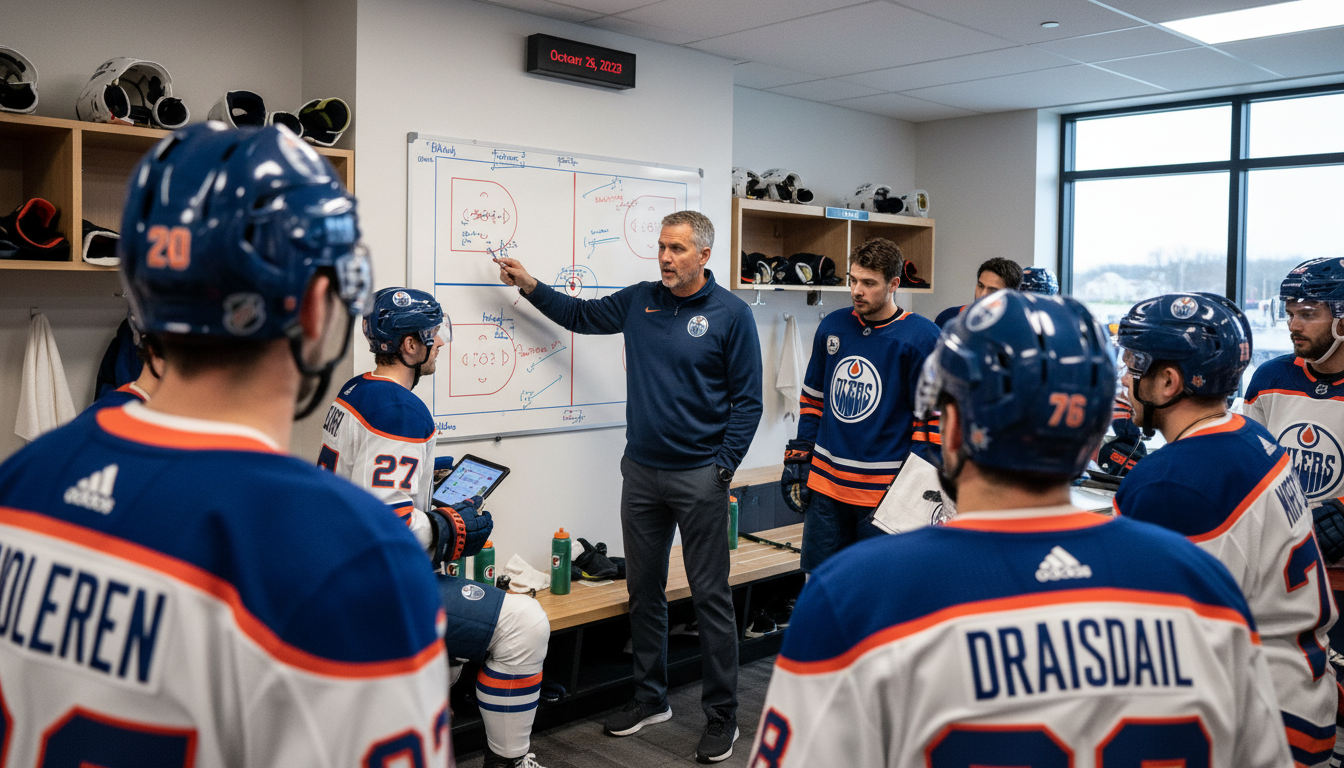
Coaches have signaled a need to reconfigure tactics to compensate for limited production from their star forward. The emphasis in team meetings has shifted toward structured entries, quicker puck movement, and varied zone-attacking patterns to create chances without relying solely on one player.
These adjustments are aimed at preserving offensive balance while protecting Draisaitl from exposure as he ramps back toward full capability. Coaching staff appear to be prioritizing matchup management and possession metrics to limit lapses when the top line is neutralized.
Depth scorers must step up in Draisaitl’s absence
With Draisaitl unable to influence the game as consistently, the onus falls on Edmonton’s supporting cast to generate secondary scoring and clutch plays. Players from the bottom two lines and the power-play units are being asked to increase shot volume and traffic to the net.
A pronounced uptick in contributions from depth forwards would reduce pressure on the top-six and force opponents to defend more broadly. Managers and coaching personnel are evaluating line combinations that can produce balanced scoring while maintaining defensive responsibility.
Special teams take on added importance
When a key playmaker is limited, penalty kill and power-play performance become critical swing factors in any series. The Oilers’ special teams are being scrutinized for opportunities to tilt short shifts in their favor and to compensate for five-on-five scoring gaps.
Improved execution on the power play, with emphasis on quicker puck movement and precise net-front presence, would create higher-percentage looks even if Draisaitl’s usual playmaking role is reduced. Conversely, a reliable penalty kill can blunt opponent momentum swings and keep games within reach.
Medical outlook and management of Draisaitl’s workload
Team medical staff are reportedly monitoring Draisaitl closely, balancing the urgency of playoff timing against the longer-term need for recovery. Load management during practices and strategic shift timing in games are tools being used to protect the player while retaining his influence in critical moments.
Transparent communication from the team about timelines remains limited, and coaching decisions will likely reflect a day-to-day approach dictated by Draisaitl’s responsiveness to treatment and on-ice testing. The degree to which he can be relied upon for heavy minutes will shape short-term strategy.
Series implications and playoff trajectory
The inability of a top-line star to perform at peak level can reshape the complexion of a playoff series, elevating the importance of matchups and in-game adjustments. Opponents are likely to continue exploiting any physical limitations, forcing Edmonton to diversify its attack and lean on coaching adaptation.
For Edmonton to advance, the club must blend a realistic medical approach with tactical creativity, depth scoring and disciplined special teams play. How quickly Draisaitl regains form will influence the margin for error and the team’s capacity to withstand the elevated competition of postseason hockey.
Edmonton faces a critical stretch in which pragmatic roster management and strategic flexibility will determine whether the team can overcome the setbacks of an injury-plagued series and secure the wins needed to progress.
