
Senate Republicans Advance ICE Funding Resolution to Break DHS Funding Standoff
Senate Republicans passed an ICE funding resolution using reconciliation, launching work to fund ICE and CBP amid partisan fights and a June 1 deadline.
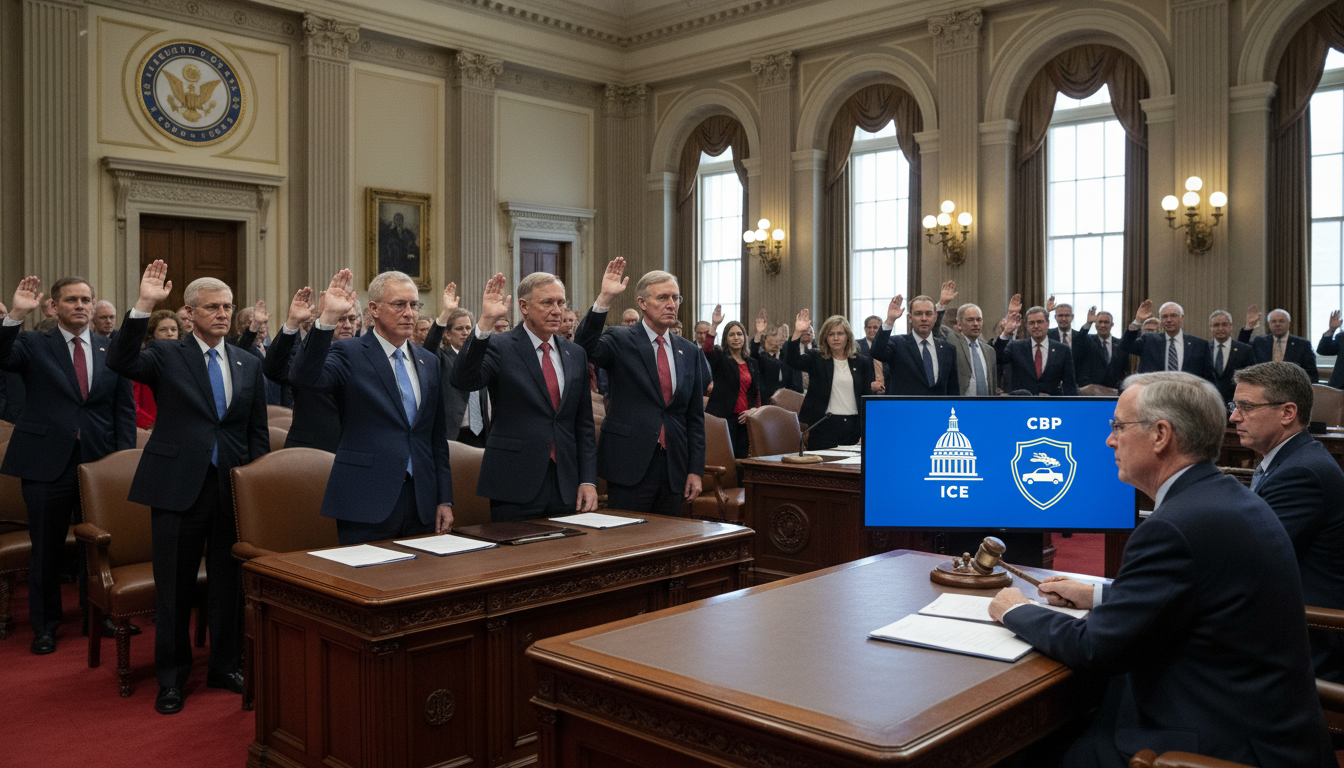
The Senate approved a Republican-backed budget resolution early Thursday that instructs committees to draft legislation to provide new funding for U.S. Immigration and Customs Enforcement (ICE) and Customs and Border Protection (CBP). The move, conducted under budget reconciliation rules that require only a simple majority, marks the first major step toward ending a months-long impasse over Department of Homeland Security (DHS) funding tied to opposition to President Donald Trump’s immigration enforcement policies.
Senate approves budget resolution for ICE and CBP
The resolution passed after roughly 50 hours of debate and a late-night series of votes, with 50 Republicans supporting the measure and two breaking ranks to oppose it. Senate Republicans used procedural rules to avoid the 60-vote threshold normally required to overcome a filibuster, allowing the chamber to proceed on the reconciliation path.
Supporters framed the resolution as a way to restore full operations at DHS and to fund border security and interior enforcement, while critics said the step effectively rubber-stamps a contentious deportation agenda. The Senate vote does not itself appropriate funds; it gives committees authority to draft the final spending bills.
Reconciliation route circumvents filibuster
Republicans pursued budget reconciliation because it permits passage with a simple majority, a critical advantage given Democratic opposition and a 53-47 GOP majority in the Senate. Reconciliation is a multi-step process that limits debate and allows committees to write changes consistent with budgetary instructions.
Senators acknowledged the trade-offs: reconciliation moves the measure forward but consumes valuable floor time and imposes strict procedural constraints on what can be included. Party leaders also signalled that the final package could raise the federal deficit by up to about $140 billion in committee instructions, though they suggested the enacted legislation might total around $70 billion to fund both agencies for several years.
Democrats force rapid amendments in vote-a-rama
After the allotted debate time expired, Democrats staged a vote-a-rama, a sequence of rapid-fire amendments designed to expose political differences and force Republicans to record positions on divisive topics. The tactic, while not stopping passage, created a public record of GOP votes on issues ranging from prescription drug pricing to insurance claim denials.
Top Senate Democrat Chuck Schumer framed the move as a chance to contrast Republican priorities with voters’ affordability concerns, saying Democrats would press for measures that lower costs for families. Several amendments won bipartisan support, including proposals to address delays and denials by health insurers and an effort to reduce prescription drug prices introduced by Senator Bernie Sanders.
Republican defections show policy divisions
The vote-a-rama produced notable GOP defections, with a small number of Republicans breaking with leadership to back consumer-oriented and health-related amendments. Those defections underscored vulnerabilities for incumbents facing difficult re-election campaigns in competitive states.
Other amendment efforts revealed sharper divides. A proposal from Senator John Kennedy to incorporate the Trump-backed SAVE America Act, which supporters say would boost election security and critics say could disenfranchise voters, failed after several Republicans opposed including it. The amendment-level fights highlighted how reconciliation’s speed does not eliminate policy controversy.
Committees to draft final funding ahead of June 1 target
With the resolution passed, Senate and House committees must translate the instructions into actual appropriations bills, a process that will require negotiation between chambers and could alter spending levels and policy riders. House Republicans must first pass their own parameters, and conferees from both bodies will need to reconcile differences on timing, scope and offsets.
Senate rules call for another round of debate when the final legislation reaches the floor, which could include an additional 50 hours of consideration and the potential for another vote-a-rama. Republican leaders signalled an aim to send a final bill to the White House by June 1, though that timeline depends on House action and the speed of committee work.
Congressional staff and agency officials warned that the current stopgap has stretched to more than two months and produced knock-on effects across government operations, including staffing disruptions at the Transportation Security Administration. While the resolution intends to restore funding certainty, the full legislative path remains complex and politically charged.
Opponents in the Senate said they would continue to press for restrictions and oversight provisions, while supporters argued the funding is essential to restore agency operations and border security. The next weeks will determine whether the reconciliation route delivers a durable solution or sets the stage for further legislative and political fights ahead of the midterm elections.
