
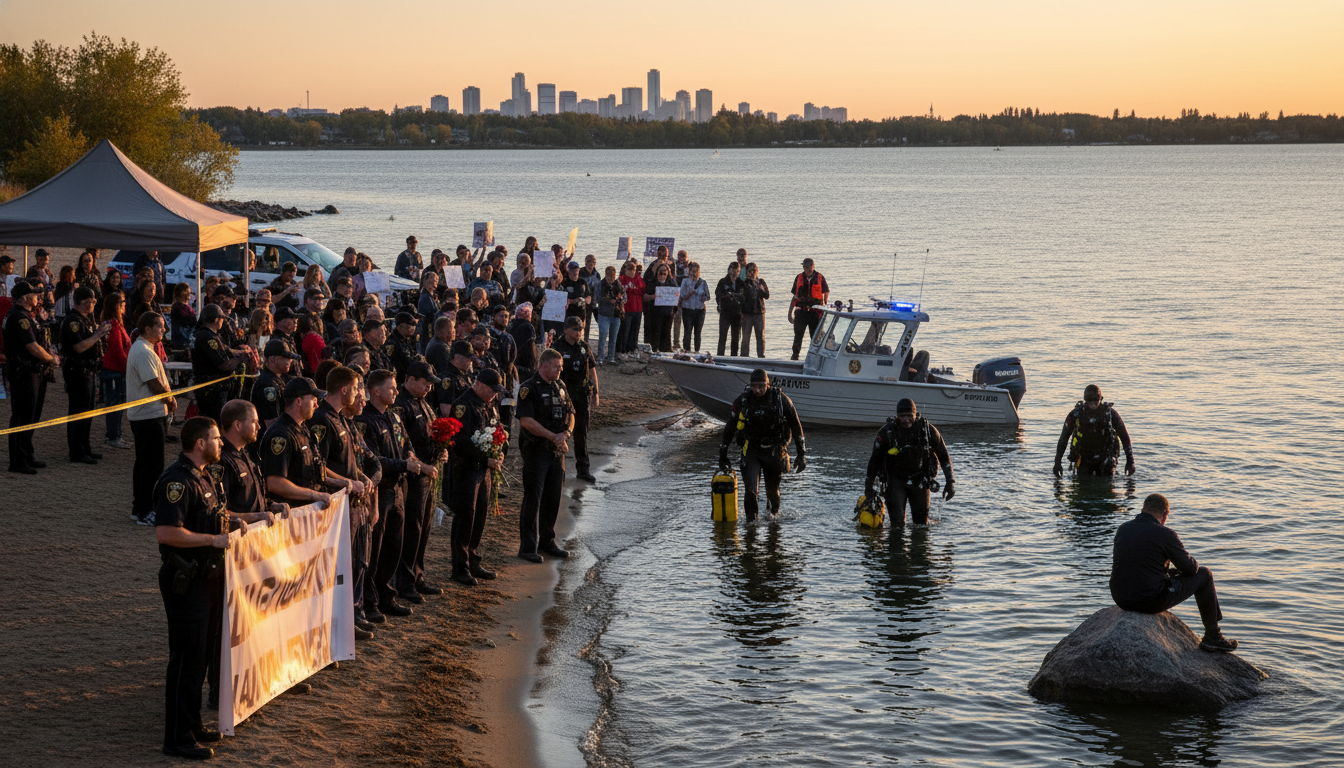
Mahogany Lake drowning: 12-year-old Damilola Afolabi laid to rest as community renews water-safety demands
Community mourns 12-year-old Damilola Afolabi after Mahogany Lake drowning; funeral held as residents call for better water safety and emergency response.
The funeral for 12‑year‑old Damilola Afolabi drew dozens of mourners on Wednesday at the Calgary Muslim Cemetery, as family and neighbours gathered after the Mahogany Lake drowning that claimed the boy’s life.
Grief was visible throughout the service, with Damilola’s father unable to contain his anguish and friends supporting the family as they processed their loss.
The death has prompted renewed calls from residents and parents in the Mahogany community for stronger water‑safety measures and a review of emergency response capabilities at the lake.
Funeral at Calgary Muslim Cemetery draws community support
Dozens of people attended the burial east of Cochrane to pay respects to the Afolabi family and to grieve with them in the days after the drowning.
Friends and relatives spoke about the family’s recent arrival from Ghana and the hope they brought to a new life in Canada.
Several attendees described the Afolabis as newcomers who were embraced by neighbours and community volunteers as they settled in the Calgary area.
Damilola’s father, overwhelmed by emotion, was aided by friends during the service, and family members delivered memories and prayers in lieu of formal statements.
Mourners recounted Damilola’s friendly nature and his eagerness to make new friends in school and the neighbourhood.
Those at the cemetery said the boy’s loss was felt deeply across the local community, where families, faith groups and neighbours have been offering support.
Chronology of the Sunday incident and emergency response
The incident occurred on a Sunday evening when emergency services received a report that a youth was missing in the water at Mahogany Lake.
Paramedics and members of the Calgary Fire Department’s aquatics team responded, interviewed witnesses and deployed trained divers into the lake to begin a search.
Officials said the lake reaches depths of more than seven metres in places and that conditions that night included very cold water and limited visibility below the surface.
According to the fire department, responders pulled the child from the water and transferred him to paramedics before he was rushed to hospital.
The fire department spokesperson reported the boy had been submerged for 43 minutes from the time 911 was called until he was brought to the surface.
Despite the rapid response and efforts by divers and EMS, the child later died in hospital.
Conditions at Mahogany Lake and local safety context
Mahogany Lake, the community’s central water feature, covers roughly 25 hectares and includes variable depths that can create dangerous conditions for swimmers.
Residents and local association materials note that surface conditions, cold temperatures and underwater visibility can change quickly, presenting risks for those who enter the water without flotation or supervision.
Those who know the lake say it is a recreational focal point for families, but it is not monitored by lifeguards and access points vary across the shoreline.
Witness accounts and first‑responder summaries emphasized how quickly someone can become imperilled in cold, low‑visibility water, even in urban settings.
The combination of depth, temperature and reduced sightlines below the surface complicated divers’ search efforts and underscores the particular hazards posed by natural and artificial lakes in residential communities.
Community leaders say that while the lake is an amenity, it requires a different safety approach than municipal pools or supervised waterfronts.
Calls from residents and parents for enhanced safety and response
The drowning has revived appeals from parents and community members for improved water‑safety infrastructure and clearer emergency planning around Mahogany Lake.
Neighbours and advocacy groups have urged the city and local associations to examine signage, physical barriers, public education on water risks, and the availability of rapid rescue capability.
Some residents specifically pointed to the need for more visible warnings about depth and cold water, as well as community programs to promote swimming competency among children.
A broader conversation is underway about whether the current emergency response model is adequate for the scale and popularity of lakes within residential developments.
Residents have asked for greater clarity on what resources the Calgary Fire Department can routinely deploy and whether additional training, equipment or on‑call capacity is required for rapid underwater rescue.
Parents in the area said they want both immediate and long‑term measures to prevent similar tragedies, including investment in community education and access to supervised swimming opportunities.
Family background, community bonds and fundraising efforts
The Afolabi family arrived in Canada from Ghana seeking improved opportunities, neighbours said, and the community rallied around them after the incident.
Damilola’s father described the boy as joyful and social, a child who formed friendships easily and brought light to those around him.
Mourners and family friends stressed the sense of loss felt not only by immediate relatives but by neighbours who had helped the family settle into their new home.
A fundraising page has been established to help the Afolabi family cover funeral and related expenses, and to provide support as they navigate the period of bereavement.
Organizers and community members involved with the fundraiser described the effort as a means to honour the boy’s memory and to relieve the family of unexpected costs during a time of profound grief.
Local faith groups and neighbours have also arranged practical support for the family, including meals and visits, to help them manage the logistical and emotional fallout of the death.
Emergency services’ account and operational limits highlighted
Authorities confirmed the timeline from the 911 call to the recovery of the child, and noted key operational challenges faced by crews during the search.
Calgary Fire Department divers reported that water temperature and low visibility made underwater search and recovery particularly difficult, factors known to slow rescue operations and complicate diver navigation.
Fire officials reiterated the technical limits of diving operations and the reality that even well‑trained teams can face prolonged searches in cold, murky water.
The department’s public account of the response has prompted discussion about resource distribution and whether investment in specialized teams should be increased citywide.
Some emergency responders and community advocates argue for enhanced preventive measures that reduce the need for high‑risk recovery missions, while others emphasize the need for faster on‑scene capabilities.
Officials and residents alike said this incident will likely feed into broader reviews of community safety planning and emergency preparedness around urban water bodies.
Local caregivers and safety advocates also pointed to the importance of teaching children basic swim and survival skills, and of making lifejackets more readily available for informal lake use.
Education campaigns and partnerships with schools, recreation centres and parent groups were identified as practical avenues to raise awareness about the risks of unsupervised or ill‑prepared water activity.
Advocates stressed that prevention and rapid detection are complementary: signage and supervision reduce incidents, while trained rescue capacity mitigates harm when incidents occur.
The sense of vulnerability felt by the family and community has been magnified by the suddenness of the loss.
During the funeral, family members spoke of the boy’s name and the joy he brought to their lives, underscoring the personal human cost behind statistics and safety debates.
Community leaders said mourning has been accompanied by a determination to press for measures that might save lives in future emergencies.
The tragedy has also drawn attention to the needs of newcomer families coping with grief and the cultural practices surrounding mourning.
Local volunteers and faith‑based organizations have stepped in to provide culturally appropriate supports and to coordinate memorial services and community remembrance.
Those assisting the family said the response will continue for weeks, as neighbours and local networks mobilize to provide both material and emotional aid.
As the community seeks answers, municipal representatives and emergency services are expected to review the circumstances and consider potential changes.
Residents have asked that any review be thorough and transparent, including clear communication about what lessons are learned and which measures will be implemented.
For many parents and neighbours, preventing further drownings is now an urgent priority that calls for collaboration among residents, the homeowners association and municipal authorities.
Damilola’s death has prompted calls for renewed public discussion about how residential lakes are planned, managed and policed from a safety perspective.
Experts in water safety say decisions about signage, patrols, physical controls and public education must be tailored to the specific risks of each site, and should involve input from people who use the water daily.
Community groups have begun compiling recommendations they say could reduce hazards at Mahogany and similar neighbourhood lakes, including clearer risk‑communication and options for supervised swimming.
The Afolabi family described their hopes for a new life in Canada as being filled with promise, a sentiment that neighbours echoed during the funeral.
Those close to the family said the boy’s energy and warmth will be remembered by friends and classmates, and that the community intends to support his parents through the months ahead.
In the wake of the tragedy, residents committed to turning grief into action by campaigning for measures they believe will make their shared spaces safer for children and families.
Community mourners and advocates said they will continue to press for concrete steps to improve safety around Mahogany Lake and other neighbourhood water features.
Their demands include clearer warnings, more community education about cold‑water risks, improved access to flotation devices and a review of emergency response provisions tailored to local needs.
For the Afolabi family and the wider neighbourhood, the hope is that the loss of a young life will galvanize change that prevents another family from enduring a similar bereavement.
The funeral concluded with prayers and expressions of solidarity, as neighbours pledged to keep the family in their thoughts and to work toward stronger protections at the lake.
Those who attended described a community in mourning but also a neighbourhood determined to act, balancing grief with a focus on practical steps to reduce future risk.
In the days and weeks ahead, residents, emergency services and municipal officials are expected to engage in discussions about what immediate and long‑term actions are necessary to enhance water safety in the area.
In memory of Damilola, neighbours and supporters say they will continue to advocate for measures that protect children and educate families about water hazards, even as they grieve the loss of a young life full of promise.
