
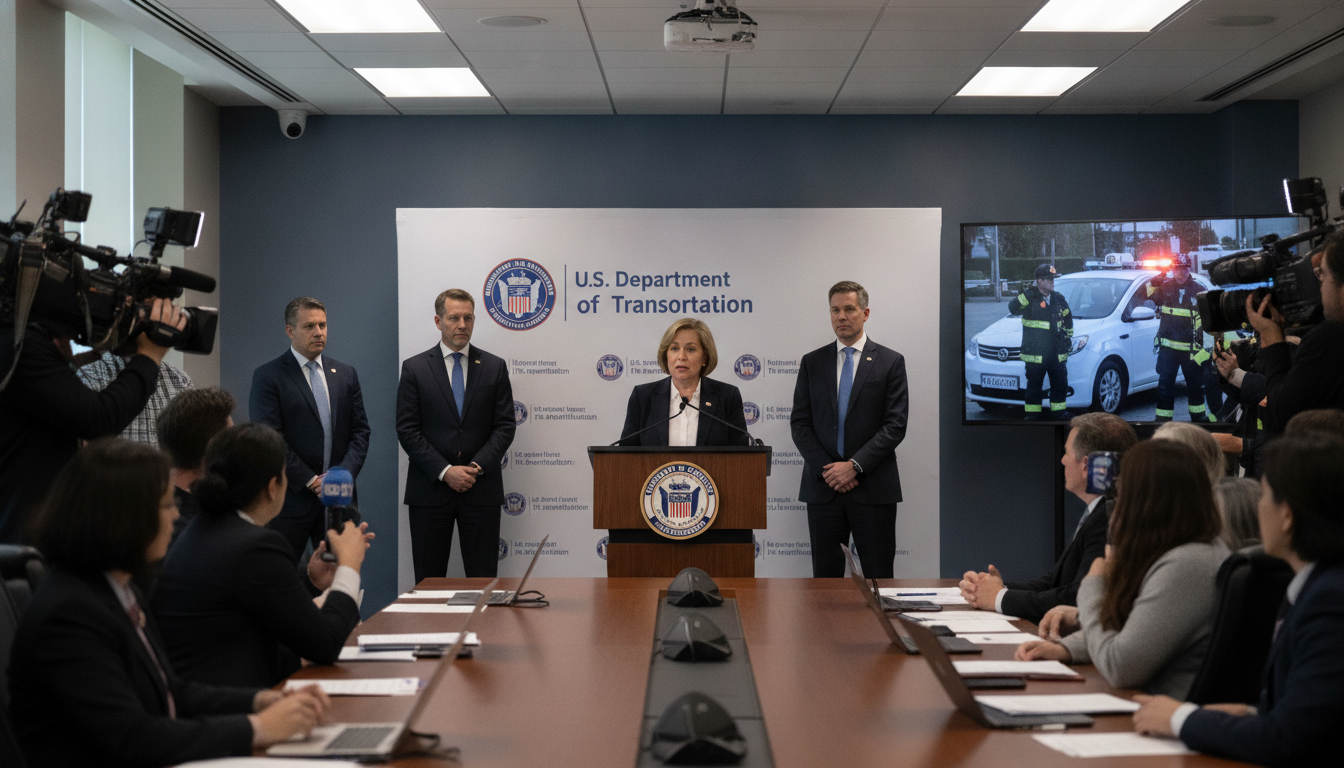
NHTSA Issues Robotaxi Ultimatum, Demands Immediate Fixes to Emergency-Scene Behavior
NHTSA has given autonomous vehicle developers a robotaxi ultimatum, demanding fixes for vehicles that interfere with first responders and outlining a fast deadline for solutions.
Federal regulators this week sent a pointed directive to autonomous vehicle developers, saying robotaxi behavior at emergency scenes represents a critical safety shortfall and must be corrected immediately. The National Highway Traffic Safety Administration, led by administrator Jonathan Morrison, told companies their systems are failing to detect and appropriately respond to emergency responders, and has asked for concrete solutions by the end of the month. The notice landed amid growing friction between major robotaxi operators and heightened scrutiny after high-profile incidents in several U.S. cities.
NHTSA Orders Fixes for Robotaxis at Emergency Scenes
The agency characterized failures to yield to or otherwise cooperate with first responders as more than isolated edge cases and urged AV teams to prioritize remediations. Administrator Jonathan Morrison framed the problem as a "functional insufficiency" that undermines public safety and emergency response operations. Companies on the Department of Transportation’s Standing General Order list received the directive, and the agency has required developers to present timelines and proposed technical fixes within weeks.
Regulatory enforcement options were not detailed in the letter, leaving open whether companies would face fines, operational restrictions, or other penalties if they fail to comply. For now, NHTSA’s move is framed as a call to action, but the speed and specificity of the deadline signal that regulators expect tangible changes rather than high-level pledges.
Waymo and Uber Partnerships Face Uncertain Future
Separately, industry watchers noted fresh instability in the robotaxi market as Uber and Waymo quietly dissolved their Phoenix arrangement while maintaining ties in Atlanta and Austin. The unraveling of agreements between two of the sector’s largest commercial partners raises questions about how network relationships will be renegotiated as AV fleets expand. Observers say the end of remaining ties could shift competitive dynamics from cooperation to direct market rivalry.
Senior executives at both companies have exchanged thinly veiled criticisms in public settings, and analysts expect sharper strategic moves once legacy partnerships end. Policy and municipal access to curb space and ride zones are likely to become contested battlegrounds as operators vie for the same riders and municipal approvals.
San Francisco Gridlock and Towed Robotaxis Spark Inquiry
Local incidents added fuel to the debate after a July 4 fireworks event in San Francisco resulted in severe gridlock and reports that numerous robotaxis stalled and required towing after depleting batteries. San Francisco supervisor Bilal Mahmood said he will submit a formal inquiry into how autonomous vehicles affected public transit and emergency response during the disruption. The episode renewed concerns that robotaxi software and operations are not yet robust enough to handle complex, prolonged emergency scenarios in dense urban environments.
Community advocates and transit officials have demanded clearer operational limits and contingency plans for AV fleets during mass events, and the San Francisco inquiry could prompt tighter municipal conditions or reporting requirements. Regulators and city officials are watching closely for industry responses to both local investigations and the federal directive.
Federal Rulemaking Could Accelerate Steering-Free Vehicle Designs
The recently updated 2026 Regulatory Plan and Unified Agenda includes proposed changes to Federal Motor Vehicle Safety Standards that could clear a regulatory path for steering-wheel- and pedal-free vehicles. The potential revisions would directly affect manufacturers like Tesla and Zoox, which are developing AV platforms that depart from traditional human-driver controls. If finalized, the changes could allow manufacturers to certify new classes of vehicles optimized for driverless operation.
Industry proponents argue the revisions are necessary to enable design innovation and operational efficiency for purpose-built robotaxis, while critics caution that removing human controls raises new safety and cybersecurity considerations. Any final rulemaking is likely to include phased requirements and testing conditions intended to balance innovation with public safety.
Rivian Raises $1.32 Billion as R2 Deliveries Begin
In related mobility news, Rivian disclosed a sale of 86.25 million Class A shares priced at $15.50 each, a transaction the company said would raise roughly $1.32 billion in new capital. The capital raise coincides with the start of deliveries for the company’s new R2 SUV and a revised 2026 delivery outlook of 65,000 to 70,000 vehicles. Rivian noted it is still scaling production and not yet profitable, making the infusion of funds important to support expanded manufacturing and inventory.
Investors and industry analysts will watch whether the raise improves Rivian’s ability to sustain production momentum and margins as the EV maker ramps deliveries and integrates new models. The deal underlines how traditional automakers and EV startups alike are balancing growth ambitions with capital needs in a competitive market.
Industry Stakes Rise as Regulators Tighten Oversight
The NHTSA robotaxi ultimatum amplifies regulatory risk for operators while spotlighting operational readiness as a near-term priority for developers and fleet operators. Companies that cannot demonstrate reliable behavior around emergency scenes may face restrictions on deployment areas or tighter municipal conditions that limit operations during events. Policymakers and city officials now have greater leverage to demand technical changes and operational transparency before granting broader access.
How companies respond in the coming weeks will shape public confidence and the pace of commercial expansion for robotaxi services. With federal regulators asking for concrete fixes on an accelerated schedule, the industry faces a test of both engineering capability and political navigation.
The NHTSA directive marks a clear inflection point for the autonomous vehicle sector, forcing developers to reconcile ambitious commercial deployments with immediate, operational safety obligations. How rapidly and effectively companies reduce interference with first responders will help determine whether robotaxis are woven into urban mobility plans or face sharper regulatory limits in the months ahead.
