
Ten-nation air defence coalition forms to build integrated anti-ballistic missile system
Ten European countries and Ukraine formed an air defence coalition on July 13, 2026 to develop an integrated, lower-cost anti-ballistic missile system.
Ukraine and nine European countries announced on July 13, 2026 the creation of an air defence coalition aimed at countering Russia’s growing ballistic missile threat.
The Paris meeting produced plans for a pooled, integrated anti-ballistic missile system intended as a faster, less costly complement to current systems such as the U.S. Patriot.
Coalition announced in Paris
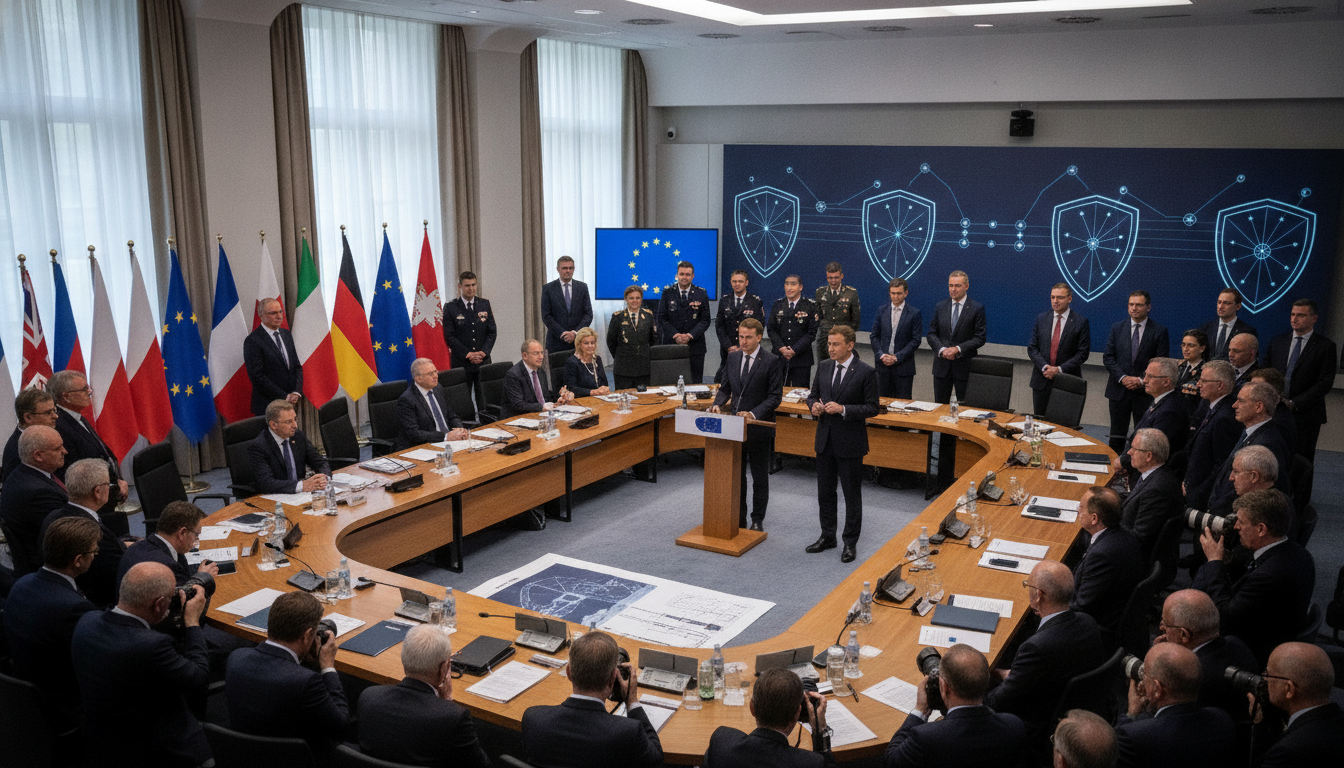
The coalition was unveiled at a high-level meeting in Paris attended by heads of state and defence officials, where leaders described a collective response to an intensified missile campaign.
Participants said the Integrated Anti-Ballistic Missile Coalition will pursue technological openness and trusted industrial cooperation to build a shared shield over Europe and Ukraine.
The announcement followed a NATO summit and a separate “Coalition of the Willing” gathering, underlining transatlantic and European political momentum to bolster Kyiv’s defences.
Officials framed the initiative as complementary to existing national systems rather than as a wholesale replacement of platforms countries already operate or plan to acquire.
Freyja project and capability goals
Delegations discussed the Freyja project, Kyiv’s proposal for a European-backed, lower-cost alternative to the Patriot air defence system.
Freyja is presented as an integrated architecture designed to detect, track and defeat ballistic missiles that travel at several times the speed of sound.
Leaders emphasized the system will focus on scalability, interoperability and cost-efficiency to allow wider deployment across allied territories.
Officials also said the coalition will investigate both kinetic and non-kinetic measures, and aim to field solutions more rapidly than traditional procurement cycles allow.
Participating countries and industry partners
The statement released after the meeting named Denmark, France, Germany, Italy, the Netherlands, Norway, Spain, Sweden, Ukraine and the United Kingdom as initial members.
A dozen defence companies also attended talks, reflecting an early commitment to link national programmes with industry capacity.
France and Italy were singled out for immediate procurement activity, with Paris announcing new Franco-Italian air defence deliveries to Ukraine and an industrial licence for missile production.
The coalition framework is intended to open procurement channels, pool research and reduce duplication across participating nations.
Military and political context
Officials said the coalition responds to a marked escalation in Russian missile and drone strikes on Ukrainian territory and civilian infrastructure.
Kyiv has faced a critical shortage of air defences, a vulnerability that governments said the new coalition seeks to address through shared resources and integrated systems.
Ukrainian President Volodymyr Zelenskyy has repeatedly called for more weapons and for European partners to co-develop a joint anti-ballistic capability.
Leaders at the Paris meeting linked enhanced air defence capacity to broader diplomatic aims, arguing that reducing Moscow’s ability to strike from the air would increase pressure for negotiations.
Crucial deliveries and exercises under way
At the Paris talks, French President Emmanuel Macron said Ukraine had placed orders for Franco-Italian systems and secured permission to produce certain French missiles domestically.
Macron also announced that Ukraine will receive 16 Rafale fighter jets, with delivery and full operational capability expected in the 2028–2029 timeframe.
Allies agreed to intensify military exercises in nations bordering Ukraine and to plan a multinational force that could be positioned near the country if a ceasefire is reached.
Those preparatory steps are part of a broader effort to combine immediate defence needs with long-term planning for regional stability.
Budget, timeline and technical hurdles
Members acknowledged significant technical and budgetary challenges ahead, including sensor integration, command-and-control interoperability and the high costs of missile interceptors.
They signalled an appetite for a modular approach that could layer new technologies on top of existing sovereign systems to speed deployment and reduce expenses.
Industry participants were asked to propose prototypes and roadmaps, with an expectation that early demonstrators and joint tests would follow in coming months.
Officials declined to provide a precise delivery schedule for coalition-wide capabilities but said work would proceed on an accelerated track to meet urgent operational needs.
The coalition represents a notable shift toward pooled European defence initiatives tied directly to Ukraine’s immediate battlefield requirements.
Leaders described the initiative as both a military necessity and a political signal intended to deter further escalation and strengthen collective resilience across the continent.
