
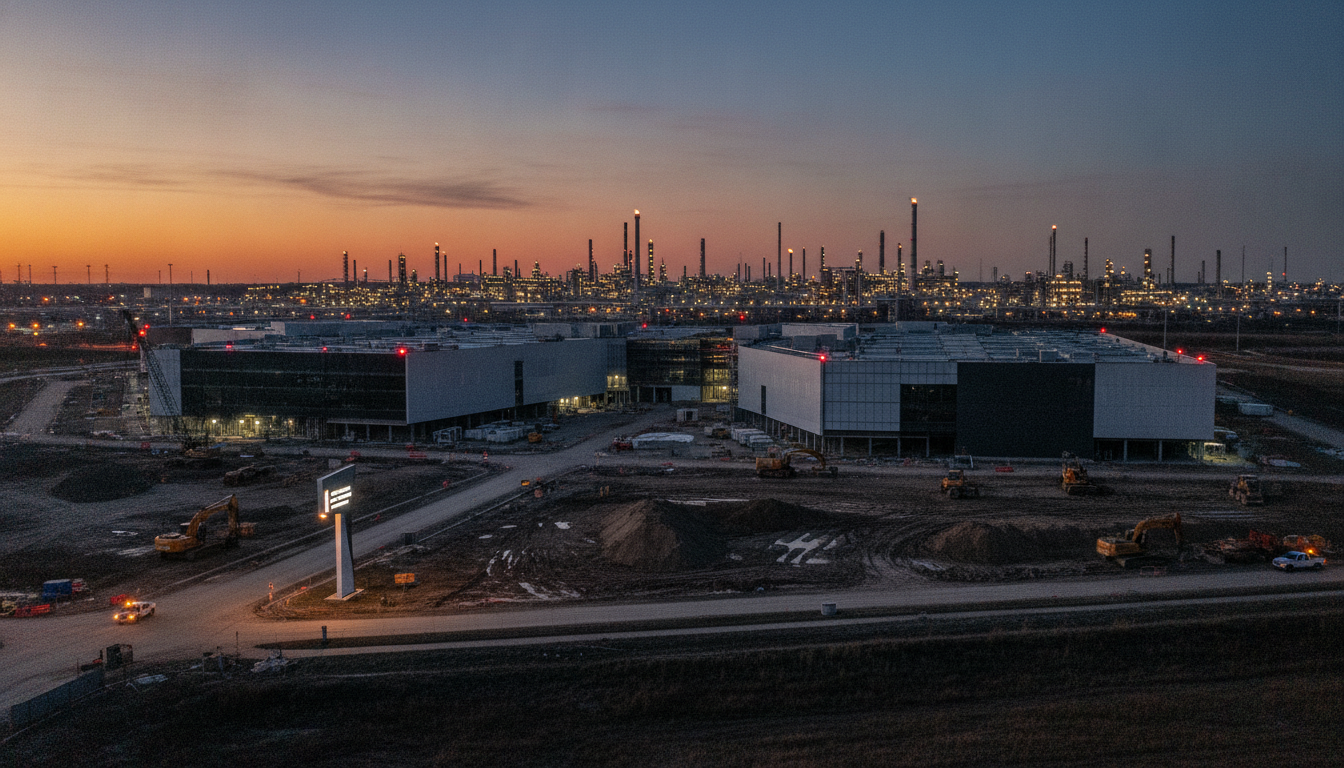
Mega data centre proposed in Sturgeon County near Alberta Heartland industrial corridor
A proposed mega data centre in Sturgeon County would be sited where highways 825 and 643 meet, placing new digital infrastructure amid acres of farm-leased canola and heavy industry nearby. The mega data centre proposal has raised questions about land use, infrastructure capacity and the contrast between rural landscapes and large-scale industrial operations. County officials and residents are weighing potential economic benefits against agricultural displacement and environmental concerns as the proposal advances.
Project site and proposal outline
The proposed site sits on rural acreage at the junction of highways 825 and 643, a location long characterized by seasonal crops and scattered farmsteads. The plan would place a large data centre campus across the river from the Alberta Heartland petrochemical complex, placing digital and chemical industries in close proximity. Developers envision a facility large enough to be described as a mega data centre, signalling substantial electrical and water needs as well as a sprawling footprint on formerly agricultural land.
Industrial neighbours and landscape contrast
Across the river from the site, petrochemical facilities operated by international firms form a silver-lined skyline, and heavy-haul trucks regularly use the same roads local farmers rely on. The juxtaposition of high-tech server halls and traditional fields of canola highlights competing visions for the county’s economic future. Residents and planners must reconcile the physical and visual impacts of such a development with the rural character that has defined the area.
Traffic, roads and transport implications
Highways 825 and 643 already carry a mix of heavy industrial haulers and slow-moving farm equipment, creating safety and congestion challenges during peak seasons. A mega data centre could require additional truck traffic during construction and regular service deliveries thereafter, prompting calls for road upgrades and new access points. Municipal engineers will need to assess whether current provincial and county infrastructure can accommodate higher volumes without compromising local mobility or farm operations.
Power, water and infrastructure demands
Data centres of this scale place large demands on local power grids and water supplies for cooling and reliability systems, making utility planning central to any approval process. Proximity to the Alberta Heartland industrial network may offer connection opportunities to major transmission lines, but it also raises questions about cumulative load on regional energy systems. Officials and developers will face scrutiny over the source of electricity, potential for renewable integration, and measures to limit environmental impacts from increased resource use.
Local economy and employment trade-offs
Supporters point to construction activity, short-term jobs and increased tax revenue as potential benefits of a mega data centre in Sturgeon County. At the same time, permanent on-site employment for advanced server facilities tends to be limited compared with the land area they occupy, prompting debates about the best use of valuable agricultural acreage. The decision will hinge on whether municipal revenue gains and ancillary economic activity offset the loss of farm leases and the shift in local land-use patterns.
Environmental review and community response
Environmental assessments are likely to form a central part of the planning process, focusing on habitat disruption, water consumption, and carbon emissions associated with large-scale data operations. Neighbouring communities and landowners have expressed concerns in similar cases about noise, light pollution, and long-term changes to rural character. Public consultation and transparent impact studies will be critical to addressing both legitimate local concerns and technical questions about mitigation measures.
Regulatory pathway and municipal considerations
Any large development must pass through county zoning, permits and provincial regulatory checks before construction can begin, and Sturgeon County’s planning framework will guide that pathway. Officials will consider rezoning requests, conditional use permits, and infrastructure contribution agreements as part of a comprehensive review. The process is likely to include opportunities for public hearings where residents and stakeholders can present views and ask for conditions or concessions.
Debate over the proposed mega data centre has already reframed conversations about growth in Sturgeon County, forcing local leaders to balance competing priorities. As more details emerge and regulatory reviews proceed, the county will face decisions about infrastructure investment, environmental safeguards and how to preserve agricultural land while pursuing economic development. The coming months of consultation and technical study will determine whether the project moves from proposal to construction and how it will reshape this stretch of rural Alberta.
