
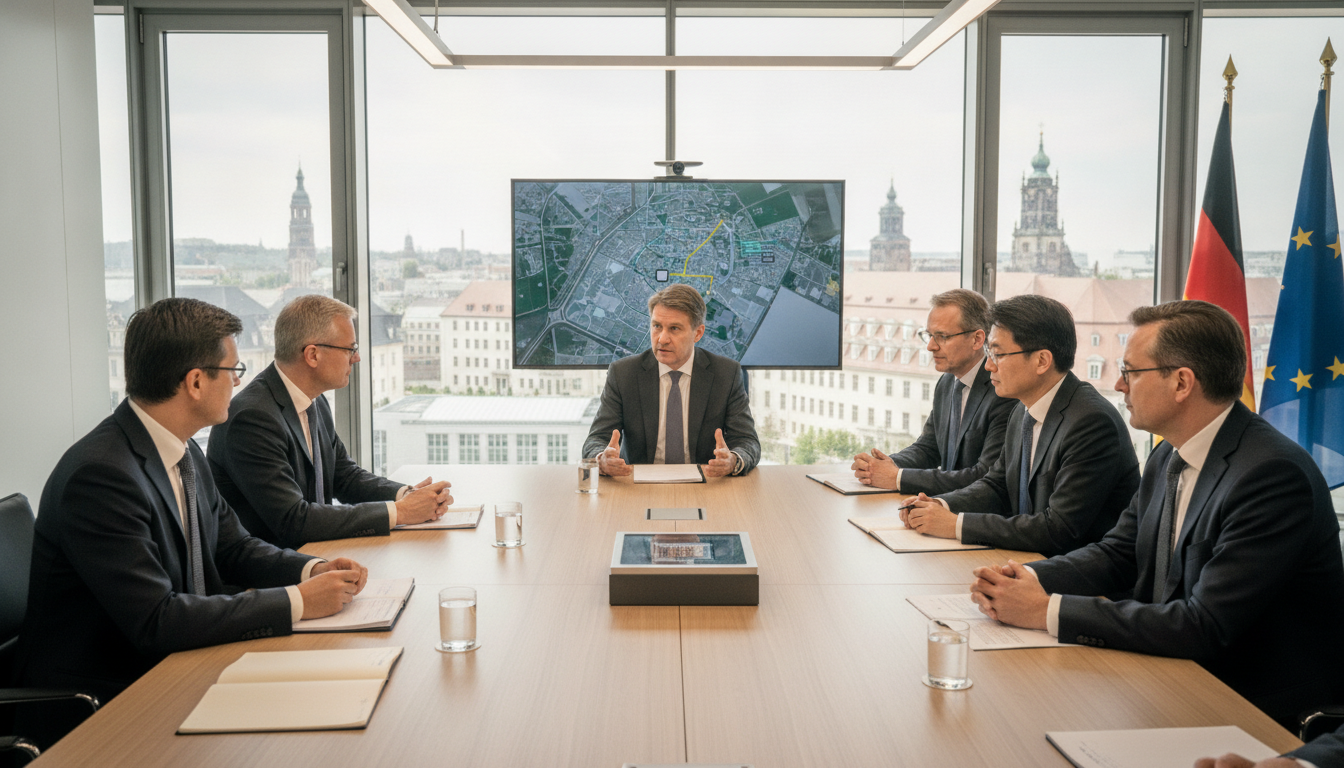
Infineon Urges TSMC Second Fab in Dresden to Strengthen Europe’s Chip Supply
Infineon urges TSMC to build a second fab in Dresden, calling for advanced-node capacity to bolster Germany and Europe’s semiconductor manufacturing and supply chains.
Infineon, Germany’s leading chipmaker, publicly called for a TSMC second fab in Dresden during remarks at a major industry conference. Production chief Alexander Gorski told attendees that the "next step" should be construction of another facility focused on smaller structure sizes. The request signals growing pressure within Europe’s semiconductor sector to secure advanced-node wafer capacity closer to automotive and industrial customers.
Gorski’s remarks at the Bavarian Semiconductor Congress
Alexander Gorski made the comment on the conference stage in Munich, addressing policymakers, industry executives and researchers. He framed a second TSMC plant as a strategic complement to existing European fabrication efforts and as necessary to meet demand for leading-edge process nodes. Gorski emphasized the importance of proximity between design houses, suppliers and production lines for Germany’s automotive and industrial technology clusters.
Why Infineon wants advanced-node capacity in Dresden
Infineon argues that access to smaller structure sizes — typically associated with the most advanced process nodes — is essential for future product roadmaps. The company’s systems increasingly rely on chips that combine high performance with energy efficiency, capabilities that advanced nodes can deliver. Locating that capacity in Dresden would shorten supply chains and reduce logistical friction for European manufacturers that currently import many advanced semiconductors.
Dresden’s role as a European semiconductor hub
Dresden has long been a center for semiconductor activity in Europe, with an established ecosystem of foundries, equipment suppliers and skilled technicians. A second TSMC facility would build on that cluster, potentially attracting further investment and supplier networks to the region. Industry observers say Dresden’s existing infrastructure and workforce make it a logical candidate for expanded capacity compared with greenfield sites that require start-up development.
Economic and strategic implications for Germany and Europe
A new TSMC plant in Dresden could carry significant economic benefits, from construction contracts to long-term employment and supplier growth. Beyond jobs, policymakers view expanded domestic fabrication as a matter of industrial security, particularly for sectors where semiconductor availability is mission-critical. The move would also play into broader European efforts to reduce dependency on overseas production and to deepen onshore capabilities for advanced chips.
Challenges and next steps for a second TSMC plant
Despite the strategic logic, several hurdles remain before a second TSMC fab becomes reality. High capital expenditure, competition among potential host regions, and the need for government incentives or guarantees are typical barriers in semiconductor projects. Technology transfer concerns and coordination with existing supply partners would also require careful negotiation. Industry stakeholders will be watching for follow-up discussions between Infineon, TSMC and regional authorities to clarify timelines and commitments.
A second TSMC fab in Dresden would mark a major milestone for Europe’s semiconductor ambitions, but realization will depend on complex commercial and political decisions. Infineon’s public call adds momentum to the debate and places the company among voices pressing for faster expansion of advanced-node capacity within the continent.
