
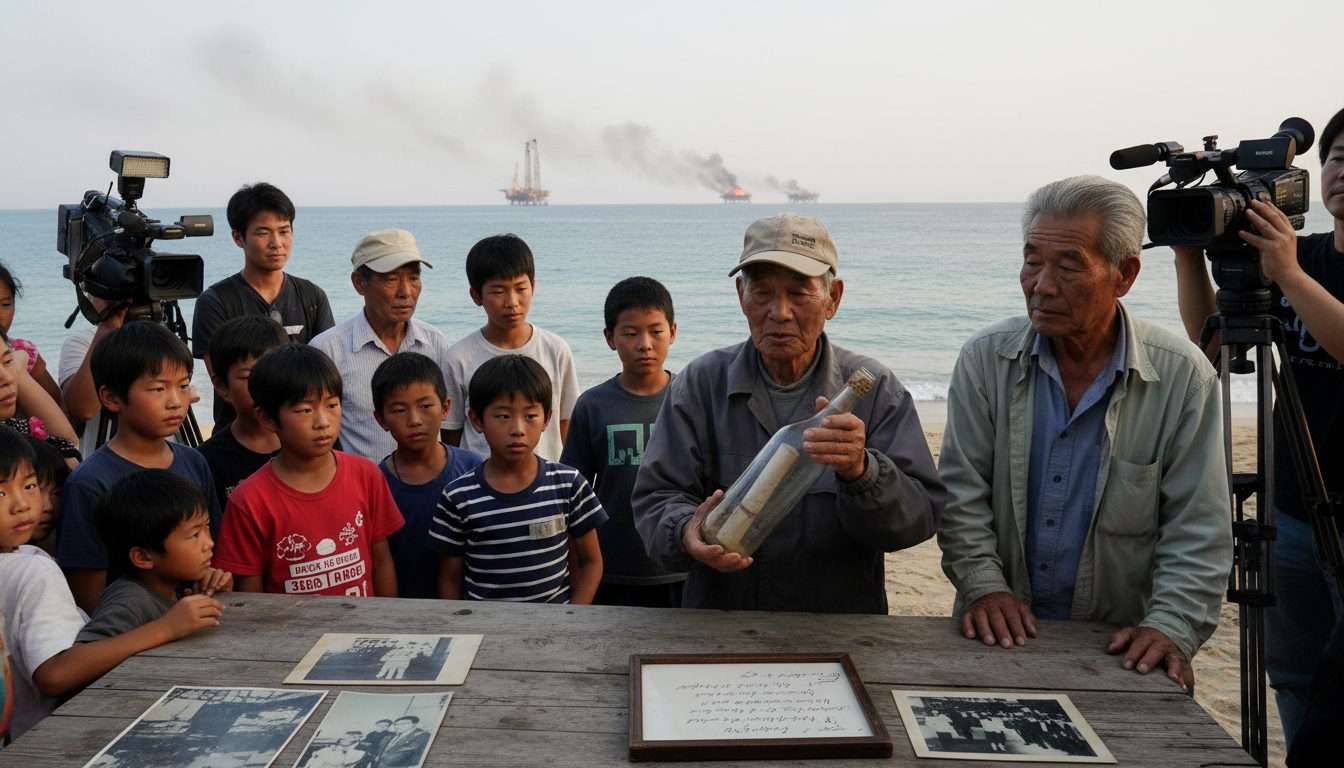
Kikaijima-Iran friendship born from a message-in-a-bottle endures as islanders pray for peace amid renewed regional strikes
A message-in-a-bottle found on Kikaijima in 2013 sparked a Kikaijima-Iran friendship that led to a 2015 video call and a filmmakers’ visit, and now residents fear for their friends amid recent strikes.
Bottle washes ashore with a handwritten plea
In May 2013, a bottle carrying a handwritten note and a drawing washed up on the western coast of Kikaijima, a small island in Kagoshima Prefecture. The paper bore the name “Amir Kalantar,” the Iranian city of Ahvaz and a simple image of people holding hands, a message interpreted locally as a plea for peace.
The discovery by island resident Yuko Kaimi set in motion a chain of contacts that would link the island with Iran at the civilian level. Local tourism officials and volunteers worked to trace the author, drawing on a visiting Japanese traveler who was planning a long-distance cycling trip as an intermediary.
Video contact confirms identity and intent
By March 2015, contact had been established: a video call connected Kikaijima residents with Amir Kalantar, who identified himself as a chef aboard a tanker and said he had released the bottle near Taiwanese waters. He told the islanders that he had “put hopes for peace” into the message, and expressed happiness at having made friends in Japan.
The exchange reinforced the human dimension of the encounter, turning a found object into a sustained bond. For islanders, who had initially treated the bottle as a curiosity, the video call confirmed that the fragile link could be transformed into real people-to-people relations.
Filmmakers travel to Kikaijima to document ties
In August 2015, a small Iranian film crew that included director Reza Farahmand arrived on Kikaijima to document the encounter and the island’s culture. Over nearly two weeks, the group filmed banyan trees and wartime air-raid shelters, and recorded conversations with residents about local customs and songs.
Local volunteers, including Daichi Tanabe, coordinated logistics and guided the filmmakers across the island. The visit evolved into a cultural exchange: meals were shared, island folk songs were sung around communal tables, and the filmmakers brought spices and stories from Iran that left a strong impression on hosts.
Island reactions to renewed violence in the region
News reports of attacks beginning Feb. 28 have unsettled Kikaijima residents who still keep contact details and memories of their Iranian friends. Tanabe, who assisted the filmmakers, saw coverage of damage in Tehran and attempted to reach the crew via social media, but his message remained unread.
Kaimi said he can only hope the Iranian visitors are safe. “I want to sing island songs with them again,” Tanabe said, reflecting a widely held desire on the island for a quick return to peaceful exchange and the revival of the relationships built a decade earlier.
Civilian ties mirror long diplomatic history
The Kikaijima-Iran friendship sits against a longer backdrop of Japan-Iran relations that date back to 1929 and have generally remained cordial despite geopolitical ups and downs. Historical episodes, such as Japan’s discreet purchase of Iranian crude oil in the 1950s, are remembered in Iran as gestures that deepened bilateral goodwill.
Civil-society exchanges continue to play a central role in sustaining that goodwill. Since 2004, Hiroshima-based non-profit organizations have invited Iranian victims of chemical weapons to Japan to meet with atomic bomb survivors, fostering dialogue across painful historical experiences.
Local leaders emphasize culture and personal ties over politics
Community leaders on Kikaijima emphasize that the connection was never primarily political but human and cultural. The tourism association’s former staffer, Ryosuke Azuma, recalls coordinating the initial search for the note’s author and the surprise at how quickly informal contacts developed into real friendships.
Residents say the bottle’s message — a simple drawing of people holding hands — captured the spirit of their exchange. They hope that cultural contact, including future visits and possible exchanges, can persist even as diplomatic and security tensions rise elsewhere.
The bottle that arrived on Kikaijima more than a decade ago remains a tangible symbol for many on the island: a reminder that individual acts can form lasting ties across borders, and a prompt for renewed calls from residents for a swift return to peaceful conditions that would allow friends from Iran to visit again.
