
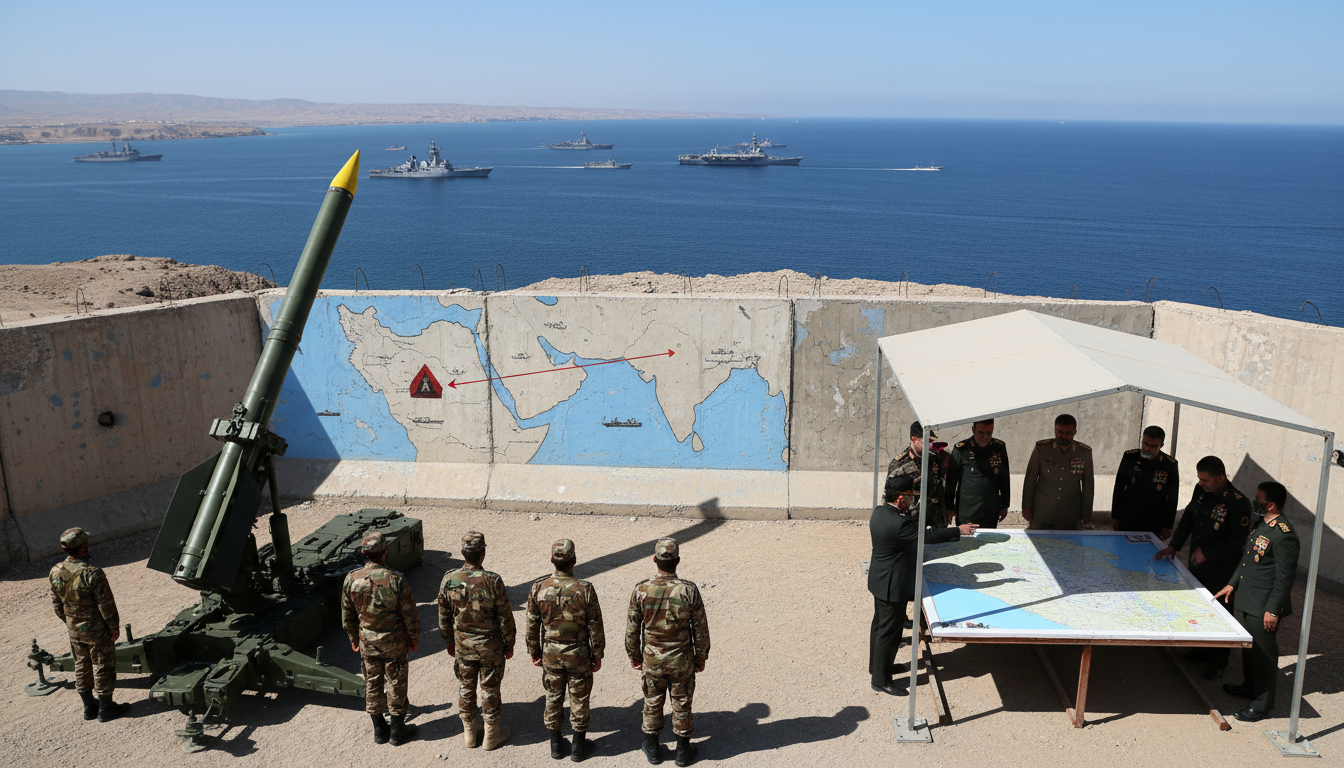
Iran Threatens “Long and Painful” Strikes as Strait of Hormuz Closure Persists
Iran warns of ‘long and painful’ strikes as the Strait of Hormuz closure continues, choking global oil flows and complicating US plans to reopen the strategic waterway.
Opening summary
Two months into the conflict, Iran has warned it will carry out “long and painful strikes” on US positions across the Gulf if Washington resumes attacks, while restating its claim to the Strait of Hormuz closure that is disrupting global energy supplies. The closure of the Strait of Hormuz has halted roughly one-fifth of the world’s oil and gas exports and has sent prices sharply higher, amplifying fears of wider economic fallout. Tehran says the closure is a legitimate defensive response to a US naval blockade it blames for strangling its oil exports.
Iran’s legal and strategic justification
Iranian foreign ministry spokesman Esmaeil Baghaei defended the decision to block the strait as lawful and necessary under international law, framing it as the defence of a coastal state’s rights. He accused the United States of exploiting a waterway that Iran considers within its remit and argued that such circumstances preclude misuse by outside powers. Baghaei also framed recent strikes on US assets in the region as responses to what he called unjust cooperation by neighbouring states with a foreign power during Ramadan. Those comments underline Tehran’s view that the Strait of Hormuz closure is both a legal and strategic countermeasure.
Impact on global energy markets
The Strait of Hormuz closure has had immediate consequences for global energy markets, cutting off roughly 20 percent of seaborne oil and gas and forcing buyers and traders to scramble for alternatives. Supply disruptions have driven up crude and gas prices and increased volatility on international exchanges, heightening concerns about inflation and slower growth. Energy-dependent economies are monitoring the situation closely as extended disruption would likely ripple through manufacturing, transport and household energy costs.
Diplomatic efforts and ceasefire stalemate
Pakistan-led mediation has failed to secure a lasting resolution despite a ceasefire that took effect on April 8, according to diplomatic accounts. Iran continues to hold the strait in response to what it describes as a US blockade of its ports, a situation that has effectively blocked Tehran’s primary export revenue. The diplomatic impasse has complicated plans by the United States to assemble a coalition to reopen the waterway, leaving reopening efforts in disarray. International envoys say negotiations remain fragile as regional grievances and strategic calculations persist.
Regional governments push back
Several Gulf states have responded sharply to Iran’s posture and actions. The United Arab Emirates barred travel by its citizens to Iran, Lebanon and Iraq and urged nationals already in those countries to return home, citing security concerns. An adviser to the UAE president, Anwar Gargash, warned that Tehran’s unilateral arrangements in the region could not be trusted after what he described as “treacherous aggression.” Bahrain’s King Hamad bin Isa Al Khalifa condemned what he called Iranian aggression and signalled domestic measures against those he accused of supporting Iran, including possible imprisonment or revocation of citizenship for alleged collaborators.
Military posturing and defence preparations
Iranian state and semi-official media reported heightened air-defence activity in Tehran and engagements against small drones and unmanned surveillance vehicles, signalling preparations for possible escalation. A senior Islamic Revolutionary Guard Corps official warned that any renewed US strike, even if limited, would prompt retaliatory attacks on regional targets and naval assets. The aerospace force commander was quoted as saying that Tehran would mirror the damage seen to regional bases on enemy warships, underscoring the risk to maritime traffic in the Gulf. Supreme Leader Mojtaba Khamenei framed the new management of the strait as an effort to remove “enemies’ abuses” and said foreign forces had no place except “at the bottom of its waters.”
U.S. decision-making and congressional constraints
Washington’s next moves remain uncertain as political and legal constraints weigh on the administration’s options. Officials have laid out a range of military and economic scenarios for the president, while lawmakers in Congress face a deadline tied to authorizing continued offensive operations. Some US senators and officials, citing briefings, have warned that renewed strikes are under consideration and could carry significant risks to US personnel and regional stability. The prospect of further hostilities has prompted cautious language from US policymakers and a renewed push behind closed-door deliberations over strategy and legal authority.
The continued closure of the Strait of Hormuz has transformed a tactical maritime dispute into a geopolitical crisis with broad economic and security implications, and all parties appear to be preparing for a range of outcomes while diplomatic channels struggle to produce a durable solution.
