
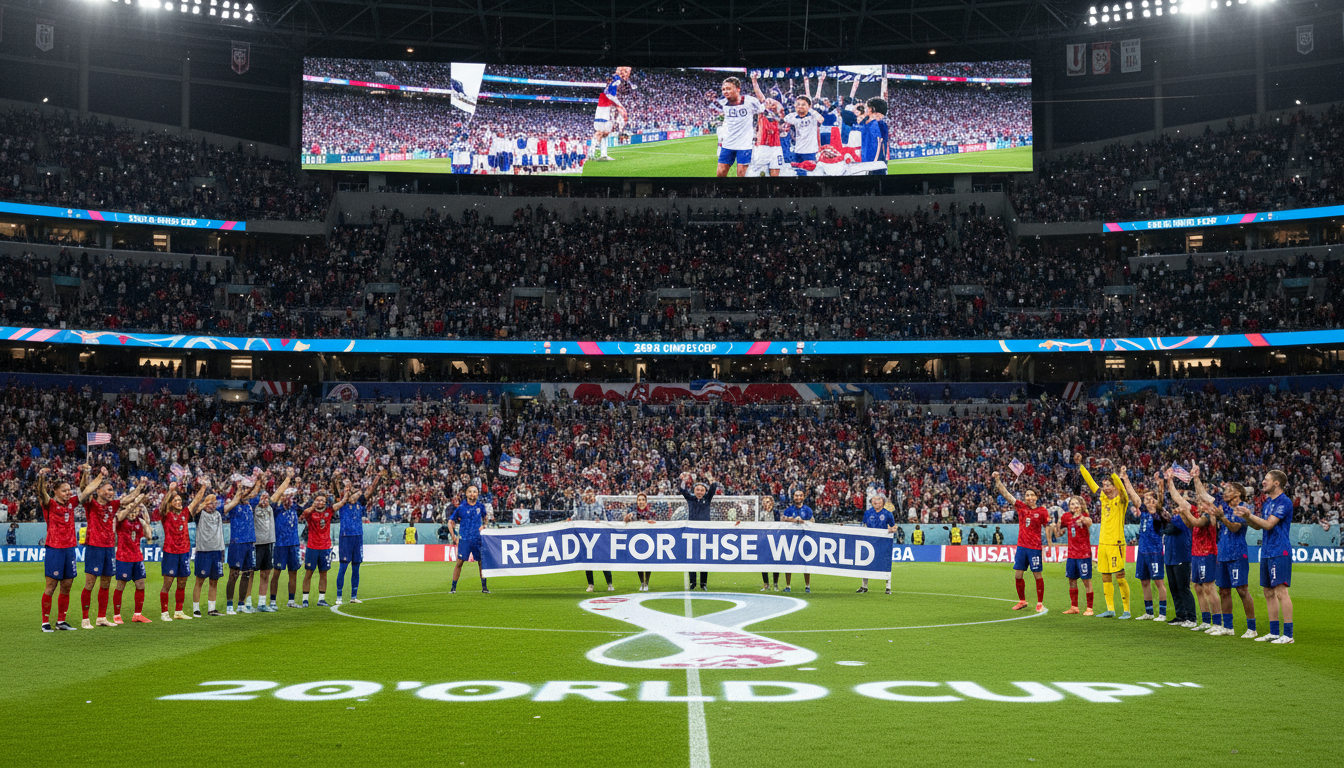
Soccer in the US: From 1994 Doubts to a 2026 World Cup Boom
Soccer in the US has transformed since 1994, driving MLS expansion, stadiums and rising ticket demand as the country prepares to co-host the 2026 World Cup.
The United States arrives at the 2026 World Cup with a vastly different soccer landscape than the one that hosted the tournament in 1994. What was once a nation with no nationwide professional league and a national team assembled from amateurs and journeymen has become home to a broad professional pyramid, thriving domestic competitions and robust commercial investment. As stadiums fill and demand for tickets far outstrips supply, the 1994 tournament looks increasingly like the seed that grew into a major sporting industry.
Attendance surge and the 1994 turning point
In 1994 the World Cup proved unexpectedly successful on the ground, drawing roughly 3.5 million spectators and averaging nearly 69,000 fans per match. That turnout swapped early skepticism for confidence and showed commercial backers that the United States could stage football on a global scale. The immediate legacy was clear: the event created political and business momentum to launch a sustained professional era.
Those figures also masked the fragile state of organized professional play at the time, when the country relied on amateur and youth participation to sustain interest. The World Cup’s success persuaded governing bodies and investors that a top-tier professional structure was achievable and necessary to keep the sport growing.
Birth and growth of Major League Soccer
Major League Soccer kicked off in 1996 in direct response to that momentum, starting modestly but with an explicit mandate to build a domestic top flight. Early seasons experimented with rules and formats, but by the late 1990s the push to build soccer-specific stadiums accelerated. Columbus led the way with a purpose-built venue in 1999, and the model spread to other cities.
Two decades later, MLS has expanded into a 30-team league with about 22 soccer-specific stadiums and average attendances in the tens of thousands. Expansion, new ownership groups and marquee signings have turned MLS into a visible fixture of the American sports calendar rather than a marginal curiosity.
Professional depth and the women’s game
The professional footprint has widened beyond MLS to include multiple sanctioned divisions and a growing women’s game. The U.S. Soccer Federation now lists more than a hundred professional men’s teams and several dozen professional women’s teams, reflecting investment at several levels. The National Women’s Soccer League and other competitions have boosted participation and elevated the profile of women’s professional soccer.
Commercial interest has followed. High valuations for clubs and significant franchise sales in the women’s game underscore growing market confidence, while broadcast and sponsorship deals have added recurring revenue that further stabilizes the landscape.
Commercial valuations and ownership trends
A steady flow of deep-pocketed buyers — including owners with NFL backgrounds — has transformed club ownership and valuations. Some MLS franchises now command valuations in the nine figures, with flagship clubs valued well over a billion dollars. Those sums reflect real estate, stadium control and growing media rights, as well as anticipation around major international events like the 2026 World Cup.
That investor appetite has helped fund stadium projects, academy expansion and overseas partnerships, reinforcing the domestic league’s commercial viability even as questions remain about competitive standards and on-field quality relative to older football markets.
Development concerns and competitive questions
Despite the growth story, critics argue structural issues limit elite player development. Former national team forwards and commentators have pointed to a system that registers millions of youth players but does not always provide a high-pressure, promotion-and-relegation style environment that forces clubs and players to adapt under threat of demotion. Some say that emphasis on development pathways and a winning mentality must increase to produce athletes who can dominate on the global stage.
Salary structures and roster construction have also drawn scrutiny. League minimums and concentrated wage distribution mean many domestic players earn modestly while a limited number command top-tier pay. MLS clubs have at times struggled in regional club competitions, though there have been notable exceptions that suggest progress.
Expectations for 2026 and legacy planning
With the World Cup returning to North America this summer, American cities find themselves balancing immediate demand with long-term legacy goals. Organizers and federation officials argue the tournament is an opportunity to convert casual interest into enduring support for youth development, expanded fan bases and upgraded facilities. Local stakeholders expect the event to generate renewed commercial deals and inspire a new generation of players and fans.
Analysts and former players offer cautious optimism, suggesting the home advantage and broad interest could propel the U.S. team deep into the knockout rounds, while the wider legacy hinges on whether investment is redirected into competitive development rather than solely into branding and stadium projects.
The transformation of soccer in the US from a sport on the margins in 1994 to an integrated professional ecosystem by 2026 is clear, but the debate over how to convert popularity into sustained international success will shape the game in the years after the World Cup.
