
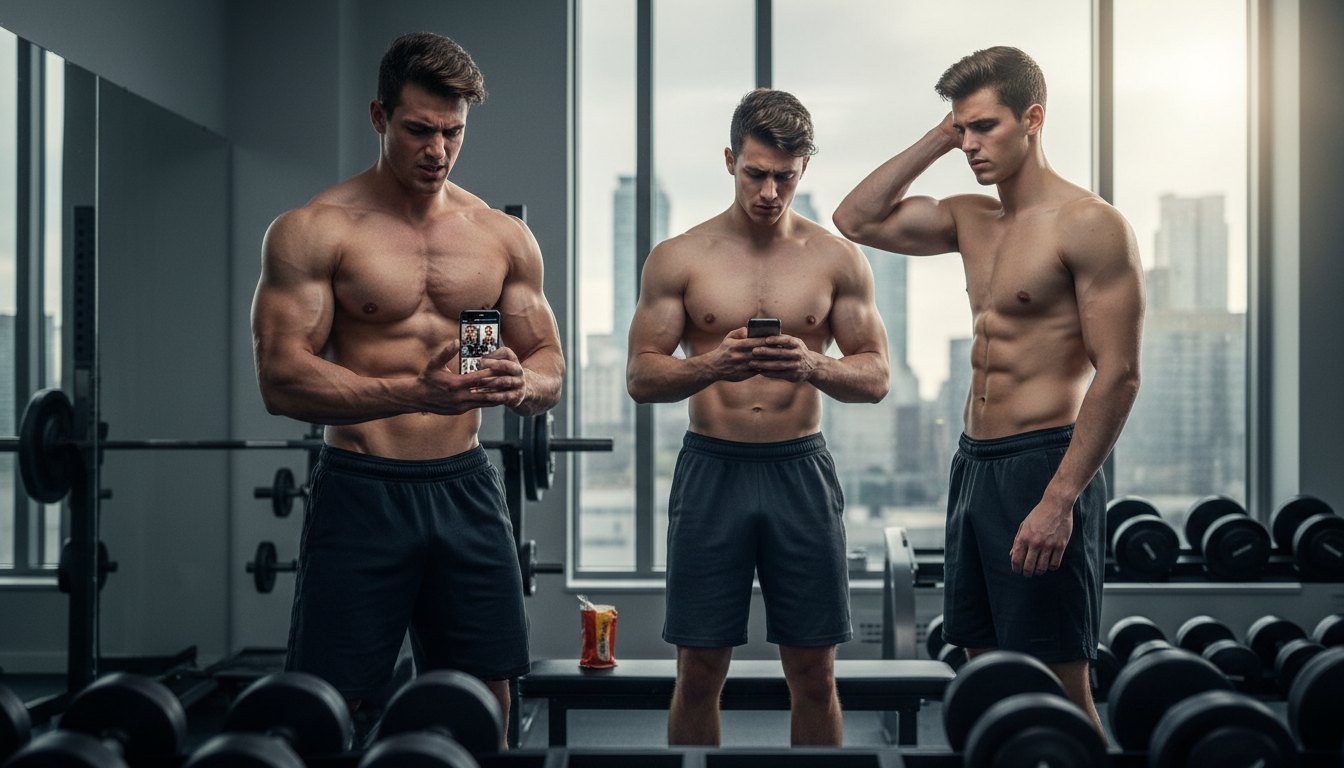
Muscle Dysmorphia Rises Among Young Canadian Men as Social Media and Protein Culture Fuel Obsession
Muscle dysmorphia is rising among young Canadian men, experts warn, driven by social media, protein supplements and intense training — prompting calls for urgent help.
Young men describe daily training routines
Seventeen-year-old gym-goer Zackary trains six times a week and says exercise occupies almost his entire day. He and others interviewed describe a constant urge to work out and shape the body, a pattern some call addiction and clinicians classify as muscle dysmorphia.
Actor Pierre‑Luc Lafontaine, who struggled with body fixation in his teens, says his intense focus on muscle served to mask deeper vulnerability. His experience illustrates how a preoccupation with physical strength can be both an appearance issue and a psychological coping strategy.
Clinical studies point to measurable risk
Recent Canadian research shows the problem is not isolated. A study of young Canadians aged 16 to 30 found roughly one in four men—about 25.7%—screened at clinical risk for muscle dysmorphia.
A separate investigation of men aged 15 to 35 in Canada and the United States estimated probable muscle dysmorphia at about 2.8%, a rate comparable to some recognized eating disorders in other groups. Researchers say these figures suggest the condition affects a non‑negligible segment of young men.
Diet patterns and the protein industry intensify focus
Researchers and clinicians highlight dietary behaviours as a central component of the disorder. Many young men report cycling between "bulk" phases, focused on high‑protein consumption to build mass, and "cut" phases aimed at fat loss through restricted eating.
The rise in use of protein powders and supplements has accompanied this trend, and health professionals warn the marketing around these products can encourage extreme regimens. Nutritionists note cases in which powders replace meals and warn of potential harms, including kidney strain when consumption exceeds physiological needs.
Social platforms and algorithms amplify body ideals
Experts link the spread of muscle‑focused content to algorithmic curation on social media. Platforms that tailor feeds to users’ interests can create a feedback loop, increasing exposure to muscular ideals and performance‑driven influencers.
Researchers point to online communities that promote an aggressive fitness culture and to high‑profile figures who market supplements and an idealized masculine image. Clinicians say constant, personalized exposure can intensify dissatisfaction and push vulnerable users toward obsessive training and restrictive eating.
Behavioral signs and daily impacts described by sufferers
Clinicians report that muscle dysmorphia often manifests as obsessive tracking of food, macronutrients and protein intake, alongside rigid training schedules. Those affected may count calories and grams of protein, manipulate meals, and prioritize gym time over other activities.
Beyond physical risk, experts emphasize the mental health toll: decreased self‑esteem, isolation, increased anxiety, and impaired social functioning. Survivors and practitioners stress the stigma that surrounds men seeking help for body image issues, which can delay diagnosis and treatment.
Calls for better awareness, research and support services
Researchers and community groups are urging expanded conversation about male body image and more accessible resources tailored to men and boys. Some specialists welcome that public discussion has increased compared with a decade ago but say services and prevention efforts lag behind need.
Clinicians recommend balanced nutrition education, critical media literacy for young people, and screening in settings that see youth regularly, such as schools and primary care. They also encourage families and coaches to look for signs of extreme dieting or compulsive exercise and to steer those affected toward professional care.
If you or someone you know is struggling with an unhealthy preoccupation with muscle or eating and exercise behaviours, support is available. In Quebec, Anorexie et boulimie Québec (ANEB) offers confidential help by phone at 514‑630‑0907 in Montréal and 1‑800‑630‑0907 elsewhere in the province, and you can also reach them by text at 1‑800‑630‑0907. For English‑language support across Canada, the NEDIC helpline is available by phone at 1‑866‑633‑4220, and organizations in many regions offer online chat and resources for eating‑disorder concerns.
