
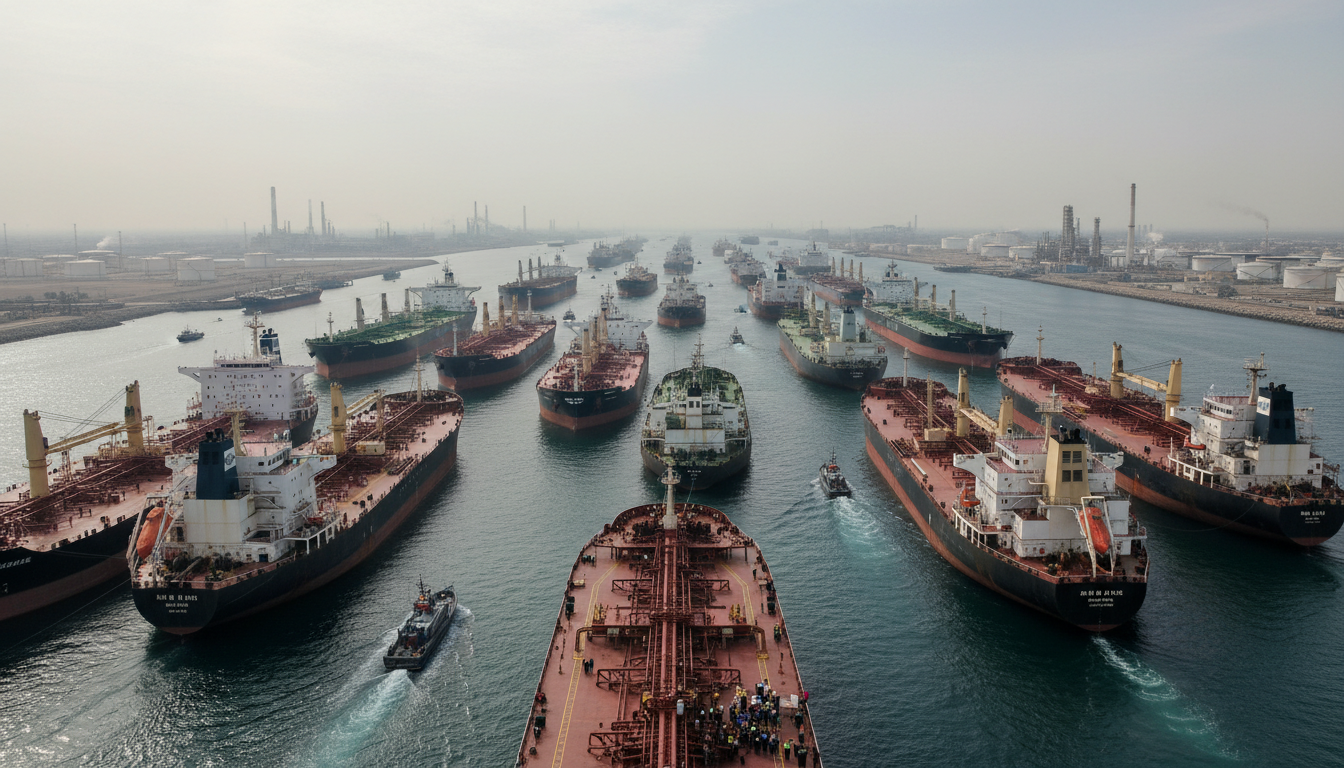
Strait of Hormuz oil disruption to delay shipments for months, experts warn
Strait of Hormuz oil disruption threatens global fuel deliveries, raising costs and prolonging shortages as tankers, refineries and insurance markets adjust.
The Strait of Hormuz oil disruption has created a cascading slowdown in global petroleum deliveries that will take weeks and months to fully reverse. Ships can travel faster but doing so raises safety risks and fuel costs, and the pace of refining and port operations is fixed by infrastructure limits. Nations with strategic reserves and robust distribution can buffer the shock, but many others face protracted delays and mounting economic pain.
Transport Bottlenecks Extend Delivery Times
Long ocean voyages and rerouted tankers mean fuel shipments that once took weeks are now stretching into months, and there is no quick fix. Increasing ship speed consumes more fuel and heightens accident risk, so operators are reluctant to push vessels beyond safe limits. Once cargoes arrive, queues at terminals, limited berth capacity and slow unloading further extend the time before fuel reaches consumers.
Japan’s Reserves and Distribution Eased Immediate Pressure
Countries with large strategic petroleum reserves and mature distribution networks can blunt short-term shortages and price spikes. Japan’s stockpiles and efficient domestic logistics have helped maintain supply to essential sectors, though that buffer is not infinite. Other economies without similar reserves or with weaker transport links will feel the disruption much sooner and more acutely.
Refining Capacity and Cross-border Dependencies
Many nations depend on imported crude or on foreign refineries to produce usable fuels, creating vulnerability when Gulf refining is impaired. Damage to processing equipment in affected Gulf states reduces the regional refining throughput and lengthens the time customers wait for refined products. For countries that export crude but import refined fuels, those dependencies translate directly into longer and costlier supply chains.
Clearing the Tanker Backlog Could Take Months
Even after maritime routes through the strait are deemed safe and reopen fully, traffic will not return to normal immediately because hundreds of tankers remain trapped or have been diverted. Ports will face a significant scheduling logjam as carriers and charterers try to reposition vessels and restore intended itineraries. The rebalancing of global tanker flows—plus inspections and safety checks—will likely stretch into multiple months.
Insurance Costs Make Some Routes Uneconomic
Shipping through or near high-risk zones has prompted insurers to sharply raise premiums, adding a layer of cost that can make certain voyages uneconomical. Higher war-risk and hull premiums feed into freight rates that importers must absorb or pass on to consumers. For some carriers, the increased financial exposure will prompt longer detours that add time and fuel costs, further complicating recovery of normal trade patterns.
Industrial and Consumer Supply Chains Strained Across Asia
Beyond transport and refining, the disruption is rippling through manufacturing sectors that rely on petroleum derivatives, with shortages of plastics, adhesives and paints already reported across parts of Asia. Those inputs are essential to industries from packaging to construction, and downstream shortages can magnify economic harm even after crude flows resume. For lower-income countries or those without domestic petrochemical capacity, the supply interruption translates into production slowdowns and higher retail prices.
Global traders, refiners and national planners are recalibrating schedules, rationing inventories and exploring alternate suppliers, but the fundamental limits of shipping and processing mean recovery cannot be accelerated without steep cost or safety trade-offs. Policymakers in affected states are weighing measures such as strategic stock releases, expedited port operations and temporary rationing to contain immediate impacts.
The Strait of Hormuz oil disruption underscores the fragility of tightly coupled energy supply networks and the high cost of concentrated refining capacity. Restoring normal service will require time, coordinated logistics and investment in resilience across shipping, refining and storage to reduce vulnerability to future shocks.
