
Calgarians mark Red Dress Day with Field of Ribbons memorial for missing and murdered Indigenous women
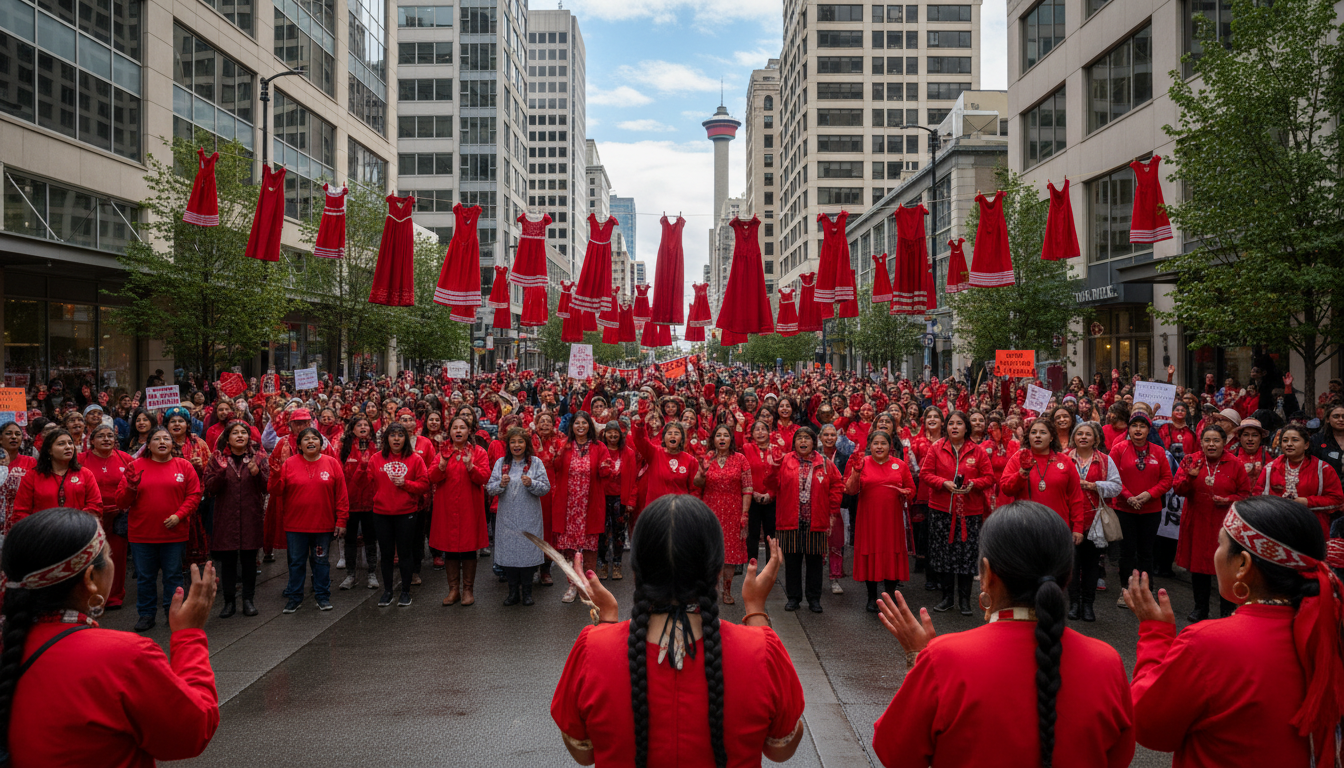
Calgary crowd gathers at the Field of Ribbons on Memorial Drive on May 5, 2026 for Red Dress Day, remembering Missing and Murdered Indigenous Women, Girls, Two-Spirit and LGBTQ+ people.
Field of Ribbons draws hundreds to Memorial Drive
On Tuesday, May 5, 2026, Calgarians packed the Field of Ribbons along Memorial Drive to observe Red Dress Day and honour missing and murdered Indigenous women, girls, Two‑Spirit and LGBTQ+ people. Red dresses, shirts and sweaters were hung in the trees lining the path, each garment bearing the name of someone lost to violence or disappearance. Organizers said the display aimed to make absence visible and to insist that these community members not be forgotten.
Family members share personal losses and calls for justice
Speakers at the gathering included family members who recounted the lives of their loved ones and challenged authorities’ responses. Vanessa Badger Hunter, who spoke about her daughter Willow Little Red Fox, said Willow had been missing for five months and died four days before the family was notified. Hunter criticized multiple agencies, including police and child welfare, for failing to act on concerns she raised, and urged accountability as part of the call for systemic change.
Ceremony included prayer, smudge and traditional performances
The afternoon programme, which began at 3 p.m. and continued through the evening, opened with a prayer and a smudge led by a community elder. Attendees sat on blankets and under a tent as drum songs, honour songs and dances were performed throughout the event. Hunter wore a red jingle dress, a traditional garment she described as both a healing practice and a symbolic demand for justice.
Children and intergenerational grieving were central themes
Several attendees arrived with children to teach the next generation about remembrance and resilience. Trian Knight, who brought his daughter Tleaha Sugar Knight, said he wanted his child to learn how to grieve and how to honour relatives who were lost to violence. Knight, whose family lost two aunts in Saskatchewan years earlier, carried a small red drum and planned to sing an honour song to support healing and remembrance.
Public display aims to transform invisibility into action
Organizers emphasized that the red garments are intended to counter a culture of disregard and neglect that family members say compounds their loss. “Red is the only colour that the spirits see,” Hunter told the crowd, explaining why the trees were clothed in red and why names were spoken aloud. The visual installation and spoken names sought to pressure institutions and to renew public attention on ongoing investigations and prevention efforts.
Community organizers outline events and advocacy goals
Throughout the four‑hour event, speakers urged attendees to remain engaged beyond the memorial. Organizers described planned next steps that include community meetings, supports for families navigating investigations, and advocacy for improved responses from police and child welfare agencies. They also distributed information about local support services for survivors and family members affected by violence.
Participants described a measured, quiet determination as red garments swayed in a light breeze above the pathway. For many, the act of naming and of performing traditional songs and dances was both an expression of grief and a public insistence on recognition.
The Field of Ribbons on Memorial Drive served as a visible reminder on Red Dress Day that families and communities continue to seek answers, reparations and systemic reform. Attendees left with commitments to continue speaking names and pressing for changes in how missing and murdered Indigenous cases are investigated and prevented.
