
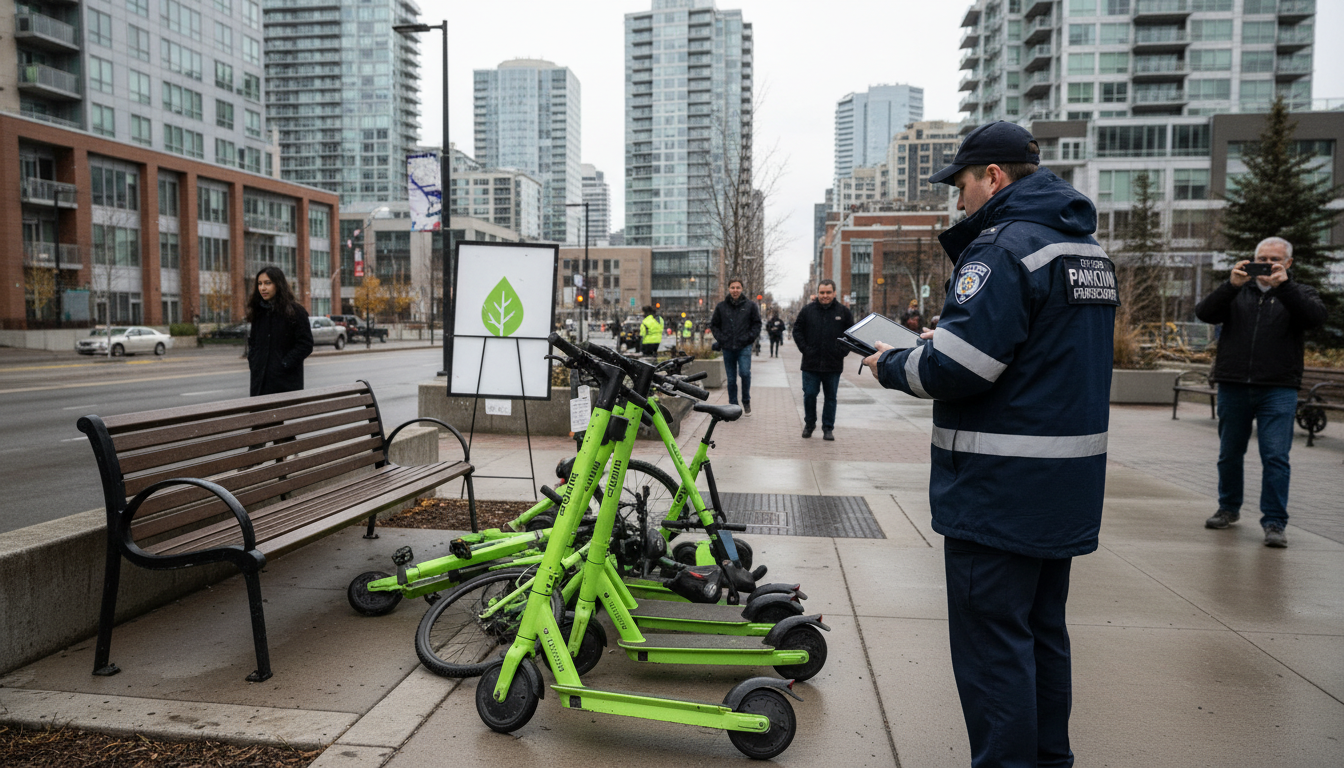
Lime parking rules Edmonton: operator pledges responsible parking to protect sidewalks
Lime parking rules Edmonton: Lime says it will work with the city to keep sidewalks clear, support designated parking zones and impose penalties on repeat offenders.
Edmonton’s approach to shared micro-mobility parking is under the spotlight after Lime confirmed it will collaborate with municipal officials to reduce sidewalk clutter and improve pedestrian safety. Lime parking rules Edmonton were described by the company’s government relations leader as flexible and focused on keeping doorways, travel paths and public rights of way clear. The operator said it supports a range of models — including designated bays, free‑floating systems and hybrids — and will enforce rider responsibilities through escalating penalties.
Lime’s position on parking enforcement
Lime told city officials and the public that it requires riders to park responsibly and out of the public right of way. The company highlighted that failing to follow parking guidance can lead to consequences ranging from fines to temporary suspension and, in serious or repeated cases, removal from the platform.
The statement emphasized co‑operation with municipal partners rather than unilateral action, noting that different cities have adopted different approaches depending on local infrastructure and pedestrian patterns. Lime framed enforcement as one element of a broader strategy that includes education, app prompts and technology to encourage compliant parking.
Models cities are using for parking
Municipalities worldwide have experimented with several parking models for shared scooters and bikes, and Lime referenced those examples when discussing options for Edmonton. Designated parking zones concentrate devices in fixed locations, while free‑floating models allow users to leave vehicles across a wider area; some cities now combine both to balance accessibility and curbside order.
Officials in other jurisdictions have also used geofencing and app-based reminders to steer riders toward approved parking areas. Lime said such tools can be part of a tailored solution for Edmonton, depending on the city’s priorities for sidewalks, transit stops and commercial doorways.
Pedestrian safety and public right of way
At the heart of the discussion is pedestrian safety, and the need to keep sidewalks and travel paths unobstructed for people walking, those using mobility aids and parents with strollers. Lime acknowledged that clear travel paths and access to doorways are vital and said it will back measures that help preserve those spaces.
The company’s remarks stressed that improperly parked devices pose hazards and erode public confidence in micro‑mobility options. By prioritizing the public right of way, both the operator and municipal planners aim to reduce conflicts and maintain safe, walkable streets.
Escalating penalties and rider accountability
Lime described a tiered enforcement policy intended to deter repeat violations while giving riders a chance to correct behaviour. According to the company, penalties rise from warnings to fines, then to temporary suspensions and eventual removal for persistent offenders.
The operator also pointed to user education as a first step, using in‑app prompts, maps that show approved parking areas and post‑ride reminders. Enforcement, Lime argued, is most effective when combined with clear guidance and convenient parking options.
City collaboration and next steps for Edmonton
Lime said it is committed to working directly with Edmonton to craft solutions that reflect the city’s built environment and pedestrian needs. The company did not outline a timeline but indicated it would consider a mix of parking approaches and enforcement tools that have worked elsewhere.
City officials and community groups typically weigh factors such as curb space, transit integration and commercial loading zones before adopting changes. Lime’s pledge to collaborate suggests the company expects negotiated rules and possibly shared investments in parking infrastructure.
Broader industry context and policy trends
Shared micro‑mobility operators and municipalities are increasingly moving toward regulated frameworks that balance rider convenience with public space management. The mix of designated zones, technological controls and graduated penalties reflects an industry trend of blending incentives with enforcement.
For operators like Lime, maintaining user access while addressing public concerns is central to sustained service and licence agreements. Clear, enforceable parking rules can help ensure that scooters and bikes remain a viable complement to urban transit without compromising pedestrian safety.
Lime’s commitment to work with Edmonton signals an openness to tailored solutions rather than one‑size‑fits‑all rules, and it underscores a growing municipal focus on integrating micro‑mobility into city street management while protecting sidewalks and public access.
