
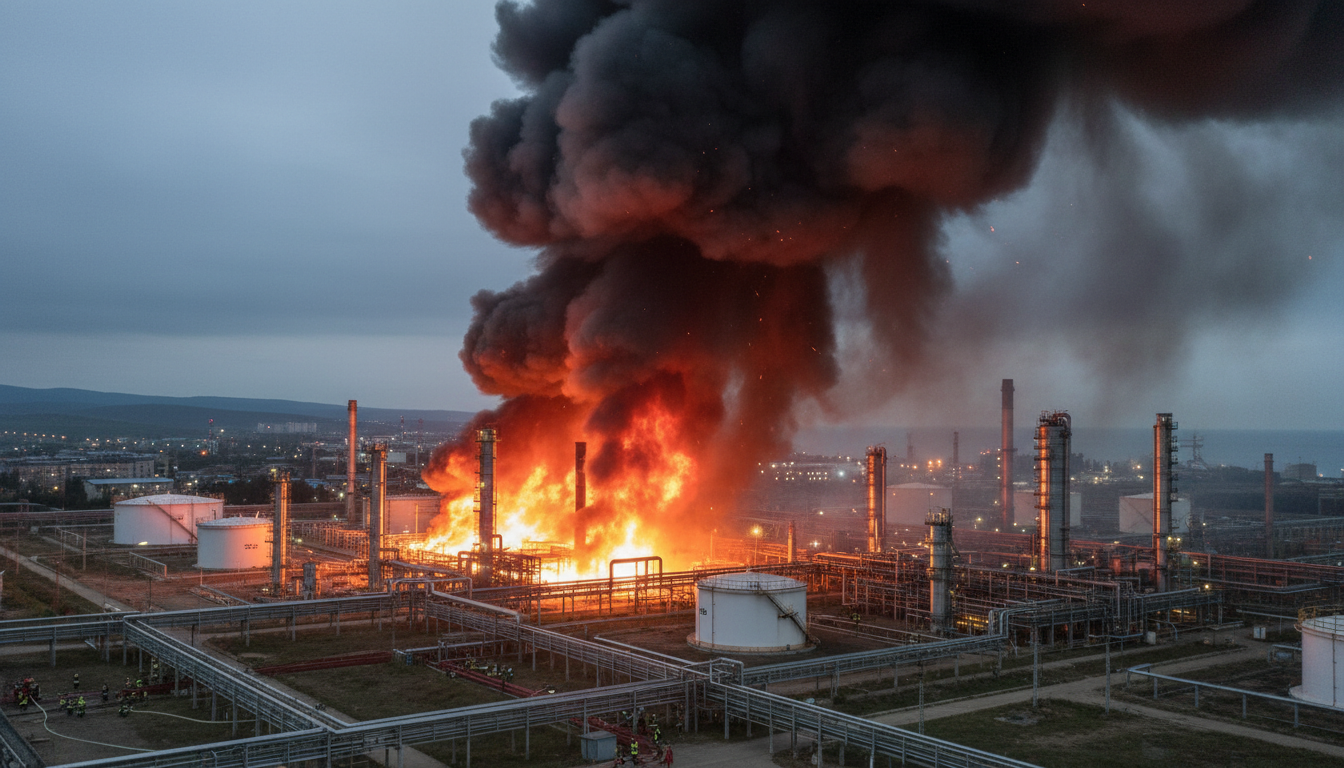
Tuapse oil refinery fire sparks health fears after drone strike
Tuapse oil refinery fire after a drone strike raises health and environmental fears as thick smoke covers the Black Sea coast; residents seek urgent testing.
The Tuapse oil refinery fire, which began after a reported drone strike, has been burning for days and is prompting growing health concerns among residents along the Black Sea coast. Local authorities say emergency teams are on scene as thick plumes of smoke drift over populated areas, prompting alerts and calls for air-quality monitoring. Neighbourhoods downwind report a strong smell of burning hydrocarbons and worry about long-term exposure.
Fire Engulfs Tuapse Refinery After Drone Strike
The blaze ignited following what local sources described as a drone attack on the refinery complex, setting storage tanks and processing units alight. Firefighters faced intense heat and shifting winds that hampered containment efforts during the first 48 hours. Officials have not yet released a full inventory of damaged infrastructure or a final assessment of the refinery’s operational capacity.
Residents Report Concern Over Toxic Smoke
Residents in Tuapse and nearby communities described scenes of black, acrid smoke spreading over residential streets and coastal areas. Many reported respiratory irritation, headaches and eye watering, and some sought shelter or medical attention as a precaution. Local clinics reported a rise in patients with complaints consistent with smoke inhalation, though comprehensive health impact data is not yet available.
Emergency Crews Battle Blaze and Contain Spread
Regional emergency services deployed multiple firefighting teams and specialized equipment to cool exposed tanks and prevent secondary explosions. Crews focused on isolating fuel sources and establishing firebreaks to limit the spread of the blaze across the refinery complex. Authorities also implemented temporary road closures and restricted access to the immediate area to allow safe operations.
Air Quality Monitoring and Health Advisories Issued
Authorities advised residents to stay indoors, close windows and avoid outdoor exercise while smoke persisted, and officials said mobile air-quality units were sent to measure particulate and chemical concentrations. Local governments urged people with respiratory conditions, children and older adults to take extra precautions. Public health officials cautioned that the full scope of airborne contaminants from oil fires can take time to quantify and recommended follow-up testing.
Potential Environmental Impact on Black Sea and Coastline
Environmental concerns extend beyond immediate air pollution, with officials monitoring possible contamination of soil and coastal waters from firefighting runoff and oil residues. Marine and coastal ecosystems near Tuapse are vulnerable to hydrocarbon pollution, and agencies are preparing sampling programs to assess impacts on fisheries and habitats. Cleanup and remediation efforts could be protracted if significant contamination is confirmed.
Conflict Context and Official Responses
The incident occurred amid an ongoing pattern of strikes and counterstrikes in the region, adding a security and geopolitical dimension to the local emergency response. Government spokespeople emphasized that investigations into the origin and responsibility for the strike are underway, and promised accountability if foul play is confirmed. Meanwhile, humanitarian and civil agencies are prioritizing immediate health safeguards and environmental assessments.
Local leaders said the fire began on April 24, 2026, and appealed for outside assistance as they moved to manage both the blaze and community concerns. Emergency managers stressed that evolving conditions require continuous monitoring and that updates would be issued as more data from air and water testing becomes available.
The Tuapse oil refinery fire has underscored how infrastructure attacks can quickly become public-health emergencies, combining immediate risk from flames and explosions with longer-term threats from toxic smoke and pollution. Residents and officials alike are calling for transparent testing, rapid health screenings and a coordinated cleanup plan to address both short- and longer-term consequences.
