
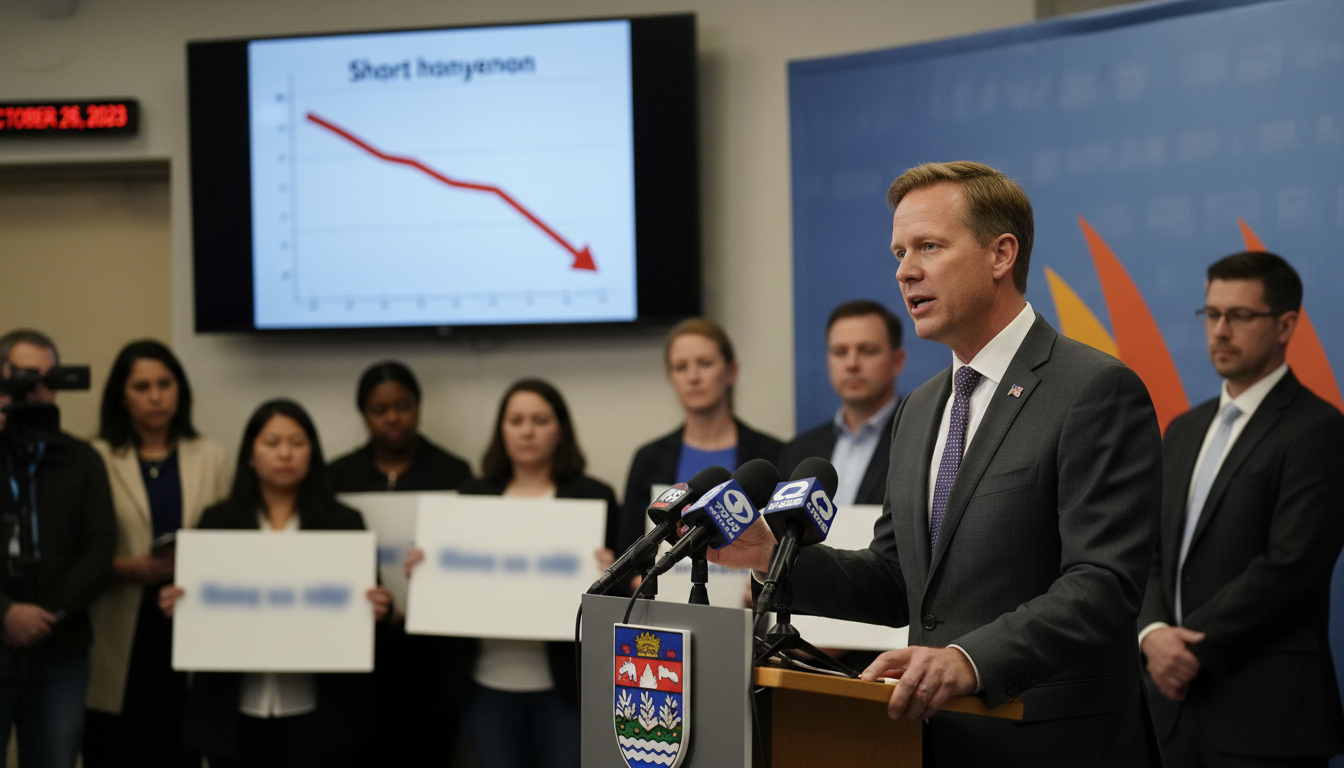
Rob Anderson’s ‘popcorn’ remark sparks debate over UCP honeymoon
Rob Anderson’s ‘popcorn’ quip has reignited discussion about the UCP honeymoon in Alberta politics, drawing comparisons to the Ralph Klein era and prompting scrutiny of party momentum.
Opening remarks from government aide
Rob Anderson, described in public statements as Premier Smith’s right-hand man, drew attention this week when he suggested observers “grab some popcorn” while watching the Alberta NDP and its “fearless leader” explain why they have not matched the length of the current UCP honeymoon.
The comment was framed as a provocation aimed at the opposition’s narrative about political momentum and public approval.
It has since become a focal point for commentators debating whether the UCP’s popularity is durable or a temporary advantage.
Context of the UCP honeymoon claim
The term UCP honeymoon has been used by government supporters to describe an extended period of favourable polling and public goodwill following the party’s most recent electoral success.
Supporters point to early legislative wins and visible campaign promises as reasons for sustained public support, while critics argue that a honeymoon phase can erode if policy missteps accumulate.
Anderson’s remark ties directly into this debate by casting the opposition’s questions about longevity as theatrical rather than substantive.
Historical comparison with the Ralph Klein era
Comparisons to the Ralph Klein era have surfaced repeatedly in political coverage when assessing long-running waves of provincial support.
Klein’s premiership in the 1990s and early 2000s is widely cited as a benchmark for prolonged political popularity in Alberta, and invoking his name sets a high bar for contemporary parties.
Analysts caution that while historical parallels are useful, changes in media, social platforms and voter demographics make direct comparisons imprecise.
Reaction from the opposition
The Alberta NDP has been portrayed by government-aligned voices as scrambling to explain the absence of a comparable political rebound, a portrayal that Anderson’s comment implicitly endorses.
Opposition strategists say their focus remains on policy critiques and mobilizing voters rather than on media-driven exchanges, although such remarks can force responses and reshape messaging.
Public statements from NDP officials since the comment have emphasized policy priorities, but the episode underscores how political theatre can alter campaign rhythms.
What political analysts are saying
Political analysts note that rhetorical flourishes like Anderson’s serve multiple functions: energizing a base, provoking opponents and setting the narrative framework for media coverage.
Some commentators warn that leaning too heavily on a narrative of inevitable dominance can backfire if it discourages policy delivery or underestimates public concerns.
Others observe that the durability of any party’s advantage depends on measurable outcomes—economic indicators, service delivery and tangible results for voters—rather than slogans.
Potential implications for upcoming campaigns
If the UCP honeymoon narrative continues to hold, it could shape strategic choices for both the government and opposition as election cycles near.
A sustained advantage typically allows governing parties to prioritize longer-term projects, but it can also breed complacency that opponents will highlight.
For the opposition, the immediate task will be translating critique into credible alternatives that can regain voter confidence and counter the perception of an entrenched governing mandate.
The exchange between Anderson and the NDP illustrates how brief, pointed public remarks can amplify underlying political questions about momentum and legitimacy, and how both rhetoric and policy performance will determine whether the so-called UCP honeymoon endures or fades.
