
Alberta separation referendum sparks First Nations demand to halt vote over lack of consultation
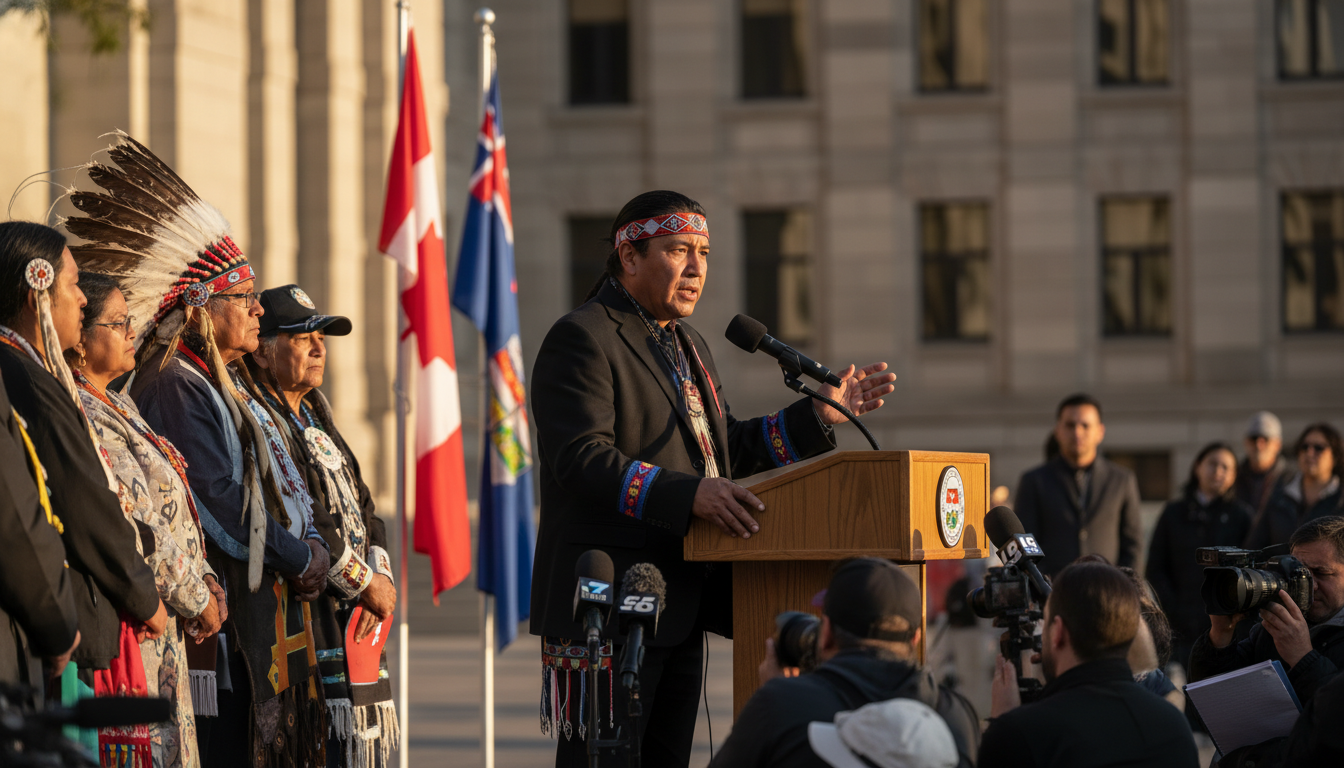
A Treaty 8 grand chief has called on Premier Danielle Smith to cancel the Alberta separation referendum this fall, saying the Alberta separation referendum cannot proceed without formal Indigenous consultation.
Trevor Mercredi, grand chief of the Treaty 8 First Nations, wrote an open letter to Premier Smith demanding the government withdraw the referendum question announced in May and pause any further steps until treaty rights are fully considered.
Mercredi warned that proceeding without consultation risks direct constitutional conflict and repeats legal failures already identified by the courts.
Treaty 8 grand chief demands halt to fall referendum question
Trevor Mercredi’s letter centers on the duty to consult, a constitutional obligation that arises when government actions may affect treaty rights.
He argued the Alberta government’s plan to ask voters this fall about permanence in Canada or initiating a separation process cannot be advanced while Indigenous nations are excluded from meaningful discussion.
Mercredi described the duty to consult as more than a procedural step, framing it as a legal requirement that protects treaty rights and prevents unilateral provincial action that could undermine those rights.
His letter underscored that Treaty 8 leaders across multiple jurisdictions view the referendum initiative as a matter that touches their constitutional protections and must be addressed before any referendum campaign or vote proceeds.
Premier Smith raises questions about Section 35 and scope of consultation
Premier Danielle Smith has publicly questioned how Section 35 of the Constitution applies to provincial citizen initiatives and referenda.
At a late-May news conference she suggested the duty to consult should be re-examined and may not extend to every type of political exercise, including citizen petitions and referendum questions.
That stance alarmed Indigenous leaders who see Section 35 — which recognizes and affirms existing Aboriginal and treaty rights — as central to their constitutional protection.
Legal experts and chiefs have cautioned that treating consultation as discretionary risks weakening long-established legal obligations and could prompt immediate legal challenges.
Court ruling found election office failed to consult on pro-separation petition
The current controversy follows a May ruling by Alberta’s Court of King’s Bench that quashed approval of a citizen-initiative petition led by a pro-separatist group.
Justice Shaina Leonard found the province’s chief electoral officer did not properly carry out a duty to consult with First Nations and failed to account for an earlier court decision linking separation to potential violations of treaty rights.
The judgment highlighted specific procedural shortcomings in the approval of the petition and signaled that legal thresholds for consultation had not been met.
The government has said it intends to appeal that decision even as Indigenous leaders point to the ruling as evidence that the province must pause and address consultation obligations comprehensively before moving toward a binding referendum.
Treaty 8 warns of constitutional conflict across western territories
Treaty 8 territory spans parts of British Columbia, Alberta, Saskatchewan and the Northwest Territories, giving the dispute cross-jurisdictional resonance.
Mercredi argued Alberta’s actions risk not only provincial disputes but broader constitutional tensions that would affect multiple Indigenous nations bound by historic treaties.
First Nations leaders in those regions have repeatedly emphasized that questions about the nation’s future cannot be resolved through processes that exclude Indigenous rights holders.
Mercredi framed the debate as one of legal principle rather than political convenience, noting that treaty rights are protected under federal constitutional law and cannot be unilaterally overridden by provincial initiatives.
Legal and political consequences if referendum proceeds without consultation
Legal analysts warn that moving forward with a referendum that lacks meaningful consultation would likely trigger further court challenges and could leave any result open to judicial review.
A court could examine whether the government satisfied its constitutional obligations and whether the referendum process unlawfully circumvented treaty protections.
Politically, the issue sharpens divisions between the provincial government and Indigenous communities, and could draw federal attention if litigation or constitutional questions escalate.
For the provincial government, the potential costs include not only legal defeats but also intensified opposition from Indigenous nations and reputational damage in intergovernmental relations.
Indigenous leaders emphasize treaty rights will prevail in any legal test
Mercredi and other Indigenous leaders have been explicit that treaty rights will stand in courts and that any provincial attempt to sidestep those rights is unlikely to succeed.
They stress that legal precedent affirms the Crown’s duty to consult prior to actions that may adversely affect Aboriginal or treaty rights.
Indigenous representatives have framed the dispute as a matter of honouring treaty obligations and ensuring that any political process that might alter constitutional arrangements includes Indigenous nations as full participants.
That position places a procedural and ethical imperative on governments to seek Indigenous input well before asking the public to decide on fundamental questions about provincial status within Canada.
What the government says and next steps in the legal process
The Alberta government has defended its actions by arguing for clarity on the boundaries of consultation obligations and for the right to pursue public engagement on matters of provincial governance.
Premier Smith has indicated the province will pursue an appeal of the Court of King’s Bench decision, signaling a continued legal contest over both procedure and substance.
An appeal would prolong judicial scrutiny and could reach higher courts if legal questions about consultation and constitutional interpretation remain unresolved.
In the meantime, Indigenous leaders have called for immediate talks and for any referendum planning to be paused pending formal consultation and negotiated timelines.
There is a narrow window for a legally defensible path forward if the province wishes to hold a binding referendum this fall.
That path would require documented, meaningful engagement with affected Indigenous governments, legal clarity on the scope of consultation, and procedures that withstand judicial review.
The dispute exposes a tension between provincial political strategies and long-standing constitutional protections for Indigenous peoples.
How Alberta navigates that tension will shape not only the referendum debate but also the province’s relations with First Nations and other federal and provincial institutions.
Observers say the coming weeks are likely to see intensified legal filings, formal requests for government-to-government talks, and public statements from Indigenous organizations across Treaty 8 territory.
Those developments will test whether political leaders can reconcile a desire for public input with the legal and constitutional necessity of Indigenous participation.
Stakeholders from Indigenous communities have signalled that any consultation must be substantive, transparent and accompanied by timelines that allow for meaningful deliberation.
They have also indicated willingness to explore legislative or negotiated mechanisms that respect treaty rights while addressing provincial concerns about public policy and governance.
If the government proceeds without such engagement, experts predict repeated litigation and the possibility that courts would enjoin referendum activities until consultation obligations are met.
That outcome could delay any vote indefinitely and deepen divisions at a time when cooperative problem-solving is widely seen as preferable.
The Alberta separation referendum debate now centers on whether political expediency will yield to constitutional duty.
Premier Smith’s questions about the reach of Section 35 have crystallized the issue, forcing legal and political actors to confront the limits of provincial authority in matters affecting Indigenous rights.
For many Indigenous leaders, the challenge is straightforward: treaty rights are not negotiable extras to be set aside for convenience.
Their insistence on consultation is both a legal demand and an appeal to the honour of the Crown, rooted in decades of jurisprudence and treaty practice.
As the province prepares for potential appeals and political campaigning, Indigenous nations are mobilizing legal resources and public advocacy to ensure their voices are not sidelined.
The unfolding dispute will be watched closely by other provinces, Indigenous governments and federal authorities for its implications on constitutional law and intergovernmental relations across Canada.
The coming months will likely determine whether Alberta can craft a referendum process that withstands legal scrutiny and respects treaty obligations, or whether the courts will again step in to restrict or halt the provincial initiative.
The resolution of that question will matter not only for Alberta voters but for Indigenous peoples whose rights and futures could be affected by any decision on separation.
