
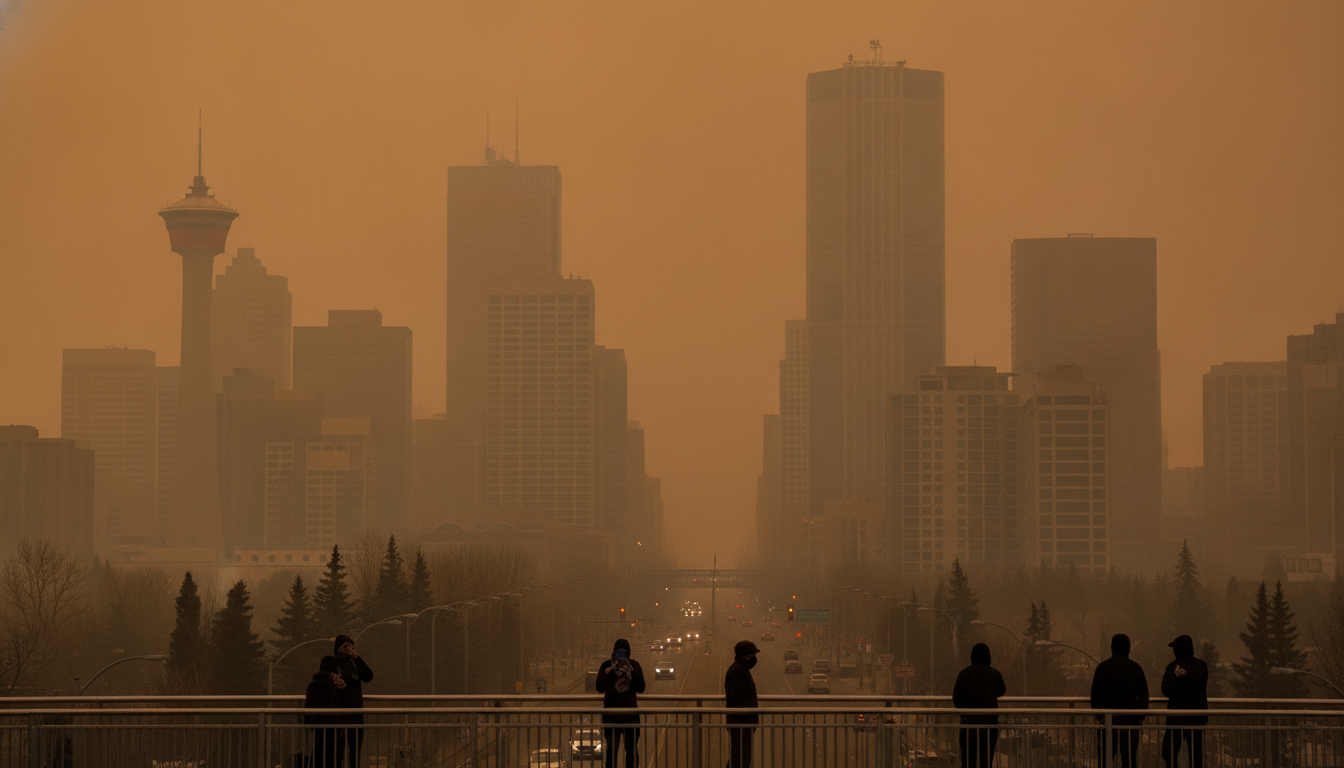
Wildfire smoke in Calgary possible as winds shift; Environment Canada lifts advisory
Winds toward Calgary may bring wildfire smoke this week; Environment Canada lifted a Tuesday advisory but warns B.C. fires could worsen air quality this week.
Calgary’s temporary smoke advisory was rescinded Tuesday morning, but city residents are being told to prepare for a potential decline in air quality as winds shift and bring wildfire smoke from British Columbia.
Environment Canada reported that Calgary’s air quality index briefly peaked at 7 before local surface winds cleared the smoke, while northern cities such as Edmonton experienced much poorer conditions.
Meteorologists say a new airflow pattern will likely push Pacific smoke eastward over the Rockies, creating a heightened risk of haze and poorer air quality in Calgary later this week.
Environment Canada lifts Tuesday advisory
Environment Canada cancelled an early-morning smoke advisory for Calgary after surface winds helped disperse smoke that arrived from the Northwest Territories.
Officials noted the city’s air quality index was lower than in some northern Alberta centres, where the index reached higher risk levels and prompted local health advisories.
Air quality disparities across Alberta
While Calgary’s air remained relatively clear after the advisory was lifted, Edmonton and other northern communities reported significantly worse conditions.
Edmonton’s air quality index climbed to levels considered high risk, and health officials there advised people with respiratory symptoms to reduce or reschedule strenuous outdoor activities.
Winds changing course toward southern Alberta
Meteorologist Janelle Gergely of Environment Canada said a shift in large-scale atmospheric flow has redirected winds from the Pacific toward Alberta.
That change, driven by undulations in upper-level winds sometimes described as Rossby waves, can steer smoke from western fires across the province and bring warmer, drier conditions with it.
B.C. blazes driving the threat
Forestry and emergency updates show multiple out-of-control wildfires in southern B.C., including three fires west of Kimberley that have prompted evacuation orders for about 9,000 residents.
A separate large wildfire near Boston Bar, along Highway 1 in the Fraser Canyon, has also triggered evacuations and alerts, increasing the pool of smoke available to travel eastward.
Forecasting smoke remains difficult
Predicting where and when smoke will affect communities is inherently uncertain, officials say, because it depends on fires’ behaviour and shifting winds.
Even with sophisticated modelling, a single change in wind direction or fire intensity can alter smoke transport, making short-term updates from Environment Canada and local authorities essential.
Health guidance as conditions change
Public health advisories recommend that people with lung disease, young children, older adults and others sensitive to air pollution limit outdoor exertion when smoke increases.
Residents should monitor symptoms such as coughing or sore throats and follow any municipal or provincial guidance on vulnerable populations and exposed workers.
Calgarians planning outdoor events or travel this week are advised to check Environment Canada forecasts and local health notices frequently, as air quality can deteriorate rapidly when smoke arrives.
Visibility may be reduced and daylight may take on a hazy, sun-dimmed appearance during heavy smoke episodes, affecting outdoor workers and those with respiratory vulnerabilities.
Officials emphasize preparation: secure medications, consider reducing outdoor plans if you are sensitive to smoke, and stay tuned to official channels for evacuation or health alerts.
As the wildfire season continues, shifting winds and active B.C. blazes mean Calgary’s air quality could change quickly, so residents should remain alert and ready to adjust activities if smoke moves into the city.
