
Calgary council weighs exemptions for 247 properties after Calgary citywide rezoning repeal
City council will consider exempting 247 properties from the Calgary citywide rezoning repeal so they can keep higher-density zoning ahead of the policy taking effect Aug. 4, 2026.
Council to decide on 247 property exemptions
City council is set to consider whether an additional 247 properties should be exempted from the repeal of Calgary citywide rezoning, allowing those lots to retain higher-density land-use designations.
The exemptions were identified by city administration after reviewing development permit histories and applications submitted before the repeal’s effective date.
The debate follows a council decision earlier in 2026 to repeal citywide rezoning, a move that will revert more than 306,000 residential parcels to their prior low-density districts when the repeal takes effect on Aug. 4, 2026.
City staff say the newly flagged 247 properties met exemption criteria between Jan. 1 and April 8, 2026, and therefore could lawfully remain designated for higher-density uses if council agrees.
Timeline of the rezoning and repeal decisions
Calgary’s citywide rezoning was approved by the previous council in May 2024 after the longest public hearing in the city’s history, which prompted sustained public debate.
The 2024 policy made residential grade-oriented infill (R-CG) the default residential zoning across the city, enabling a broader range of housing types on single lots.
After months of public feedback and political pressure, the current council voted to repeal the citywide rezoning during a public hearing in April 2026, but set an implementation delay so the repeal would become effective on Aug. 4, 2026.
Before the repeal, council already exempted applications submitted or approved between Aug. 2024 and Dec. 31, 2025 from losing their rezoned status; the new list of potential exemptions covers qualified applications submitted in early 2026.
Administration’s reasoning for the additional exemptions
City administration says the extra exemptions are grounded in legal and procedural obligations tied to development permit applications that were submitted or deemed complete before the effective repeal date.
Officials argue that changing zoning mid-process can jeopardize the legal footing of applications and expose the city to appeals or litigation if a property owner’s expectations of a permitted development are disrupted.
Teresa Goldstein, director of community planning, told councillors that development permit files continued to arrive even after the repeal vote, noting the city received dozens of files the day council moved to repeal.
Administration asserts it is required by the land-use bylaw to accept and assess development permit submissions that are complete, and that many of the files now under review predate the repeal’s effective implementation.
Residents express concern about neighbourhood impacts
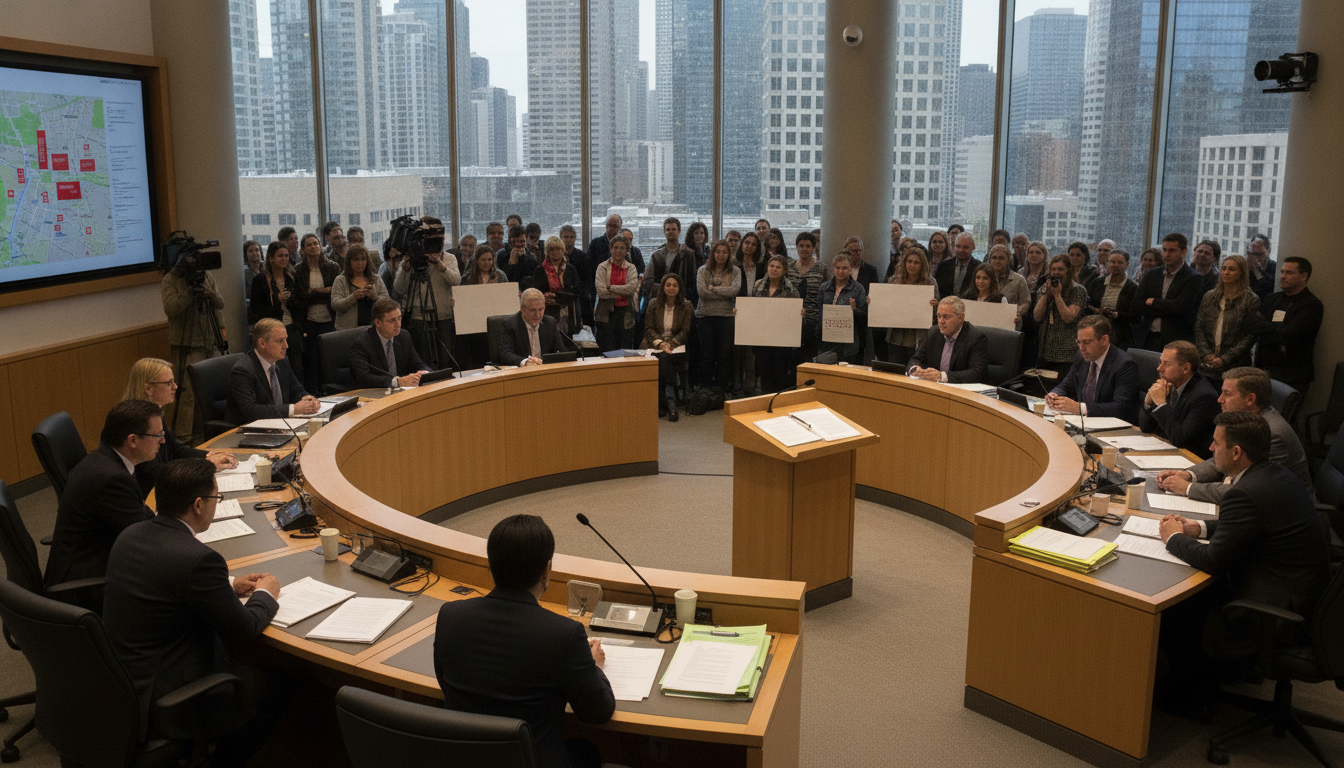
Hundreds of residents signed up to speak at the recent public hearing, with many expressing frustration and concern about the prospect of certain lots retaining higher-density zoning.
Several speakers said they had expected the repeal to end the debate and felt blindsided to see new exemption proposals that could allow upzoning in established neighbourhoods.
Lake Bonavista residents and other neighbourhood advocates argued some exemption requests appear to be preserving future development rights at neighbours’ expense, saying the lack of active development plans raises questions about intent.
Speakers including Janice Grant and Maureen Haight said they felt relief when the repeal passed and dismayed that the issue has returned to council for further consideration.
Legal and risk-management considerations cited by city leaders
Mayor Jeromy Farkas acknowledged the political difficulty of the situation while emphasizing the city’s duty to comply with legal and legislative obligations.
“Obviously, I don’t love that we’re in this situation,” he said, while urging councillors to weigh community concerns alongside potential legal exposure for the municipality.
City officials warned that rescinding zoning on properties tied to pending or approved applications could create legal uncertainty and increase the risk of successful appeals against the city.
Administration also noted there is a responsibility to treat landowners consistently under the land-use bylaw, which can require review of applications that are complete or in progress regardless of policy shifts.
Policy context and housing implications for Calgary
The broader policy dispute centers on how Calgary balances neighbourhood character with the need for more diverse housing types, including rowhomes, duplexes and other missing-middle options.
R-CG zoning, made ubiquitous under the 2024 policy, was designed to expand housing choices and increase density across residential areas, a goal proponents say is necessary to address long-term affordability and supply.
Opponents of citywide rezoning argued the change was too broad and rushed, raising concerns about parking, streetscapes and the pace of change in established communities.
The repeal reflects those community objections and a political decision to restore local zoning frameworks, but the exemption debate highlights the tension between settling community concerns and honoring development approvals already under way.
What council’s decision could mean for property owners and neighbourhoods
If council approves the additional exemptions, the 247 properties would retain their higher-density zoning status and remain eligible for developments consistent with the R-CG designation.
That outcome would protect the legal expectations of applicants and landowners who filed or received permits in the early months of 2026, but could further inflame local opposition in affected neighbourhoods.
If council declines the exemptions, properties that have not advanced to a binding approval stage would revert with the rest of the city to their pre-2024, lower-density zoning on Aug. 4, 2026.
That reversal could prompt landowners to seek alternative appeals or rely on provisions in the bylaw to challenge decisions they view as retroactive or unfair.
Next steps and the public process ahead
Council will hear from the hundreds of registered speakers and weigh administrative recommendations in the coming sessions before making a formal decision on the exemption list.
Local officials have emphasized that any decision will be grounded in the timelines established by the land-use bylaw and the documentation of development permits and complete applications.
City administration will continue to process files deemed complete and is expected to supply councillors with a detailed inventory and legal analysis to support deliberations.
Observers say the council vote will be watched closely by developers, neighbourhood groups and provincial stakeholders as it signals how Calgary intends to manage transition risks in land use policy.
Calgary’s debate over citywide rezoning and the targeted exemptions underscores ongoing challenges in municipal governance when policy shifts intersect with active development activity.
The coming council decision will determine whether hundreds of properties keep their upzoned status and will shape how Calgary reconciles procedural fairness, legal risk and neighbourhood expectations as the city implements the repeal later this summer.
