
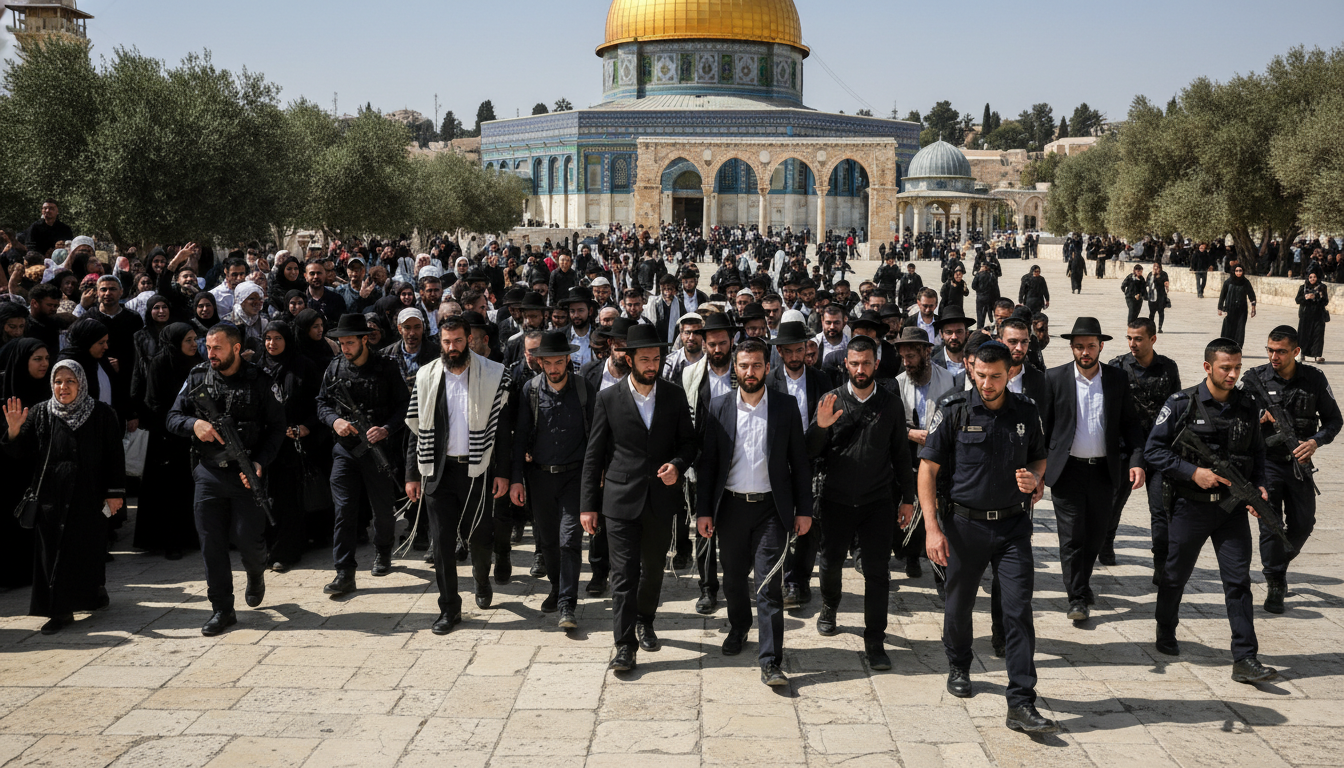
Temple Mount visits surge as Israeli hardliners challenge long-standing Al-Aqsa status quo
Temple Mount visits have increased amid high-profile trips by Israeli hardliners and a growing police presence, raising fears of renewed regional tensions over Al-Aqsa.
The Temple Mount has seen a steady rise in Jewish visitors, many escorted by armed Israeli police, a development that has reignited disputes over access and control of the Al-Aqsa compound in Jerusalem. Pilgrims and hardline political figures have pushed for expanded Jewish presence on the site, while Palestinian custodians and regional actors warn the changes threaten a fragile decades-old arrangement. Analysts say the pattern of visits, policing and political intervention could precipitate wider unrest if authorities alter the established rules governing the holy site.
Pilgrims and protesters on a contested plateau
A growing number of Jewish worshippers say they visit the Temple Mount for spiritual reasons and greater access, describing the site as central to their identity. Many enter the compound under restrictions that prohibit public prayer, but they report marching, singing and stopping near the Dome of the Rock while accompanied by police.
For Palestinians and Muslim custodians, those scenes amount to provocation and an erosion of the status quo that has governed the esplanade for decades. The Waqf, the Jordanian-run Islamic trust that manages the compound, and local Muslim leaders have publicly condemned escorted Jewish visits as politically motivated and destabilizing.
Origins of the current status quo after 1967
The arrangement that leaves day-to-day religious authority at the Al-Aqsa compound to the Waqf dates to 1967, when Israeli officials decided to preserve Muslim custodianship while maintaining overall security control. That posture aimed to avoid inflaming wider religious sensitivities across the Muslim world while acknowledging Jewish historical ties to the site.
Under that framework, non-Muslim visitors may enter under conditions set by Israeli authorities and the Waqf, including a prohibition on public Jewish prayer. Over time, the informal balance between religious administration and security oversight has been strained by both political decisions and rising numbers of visitors from each community.
Far-right visits and shifting policing dynamics
Since 2022, political figures from Israel’s far right have staged prominent visits to the esplanade, drawing attention and criticism. One such minister has appeared on the compound waving an Israeli flag and leading religious chants, statements that Western and regional observers say challenge the long-standing norms.
Journalists and analysts note that police present at these visits often do not enforce the ban on public Jewish prayer, a development critics attribute to the ministerial authority overseeing security forces. The perceived tolerance for such displays has alarmed Palestinian leaders who view it as tacit state support for altering access practices.
Rising visitation numbers and on-the-ground security changes
Groups that advocate increased Jewish visitation report dramatic growth in recent years, with figures that campaigners say reached historic highs in 2025 compared with a much smaller number in 2010. Palestinian custodians and international observers point not only to visitor counts but to a marked uptick in armed Israeli police and military presence at entrances and within the compound.
Security units created after deadly attacks in 2017 have been tasked with protecting visitors, but the Waqf’s leadership says those forces increasingly appear to be safeguarding settler worshippers rather than preserving the neutrality of the site. That shift, the Waqf argues, undermines the delicate balance that has kept broader conflict in check.
Historical precedents and the risk of renewed violence
Experts and local leaders recall how past high-profile visits inflamed tensions, notably a 2000 visit by then-opposition leader Ariel Sharon that many Palestinians consider a trigger for widespread unrest. Those memories shape current fears that similar provocations or policy changes could spark new waves of violence within Jerusalem and beyond.
Observers caution that any formal moves to alter custodianship or to declare equal religious rights that change access rules would likely provoke strong reactions across the Muslim world. Reports of diplomatic proposals to restructure management of the compound—unconfirmed by key governments—have already prompted alarm among regional partners who treat control of Al-Aqsa as a red line.
Israel’s leaders face competing pressures: satisfy segments of a domestic political base that demand expanded Jewish access, while preserving relations with Arab states and avoiding an international backlash. How Jerusalem navigates these demands will determine whether the current tensions remain localized or spread across the region.
The Temple Mount remains one of the most sensitive flashpoints in the Israeli–Palestinian landscape, where religious devotion, national identity and political power meet. For residents, clerics and politicians alike, decisions made about visitation, policing and governance of the Al-Aqsa compound will not only shape daily life on the esplanade but may also influence the wider arc of regional stability.
