
Canada weighs options as new U.S. tariffs loom, risking $28B in exports
Ottawa readies responses as new U.S. tariffs — pegged near 50% — loom in 29 days, sparking emergency ACEUM talks and meetings with provincial premiers.
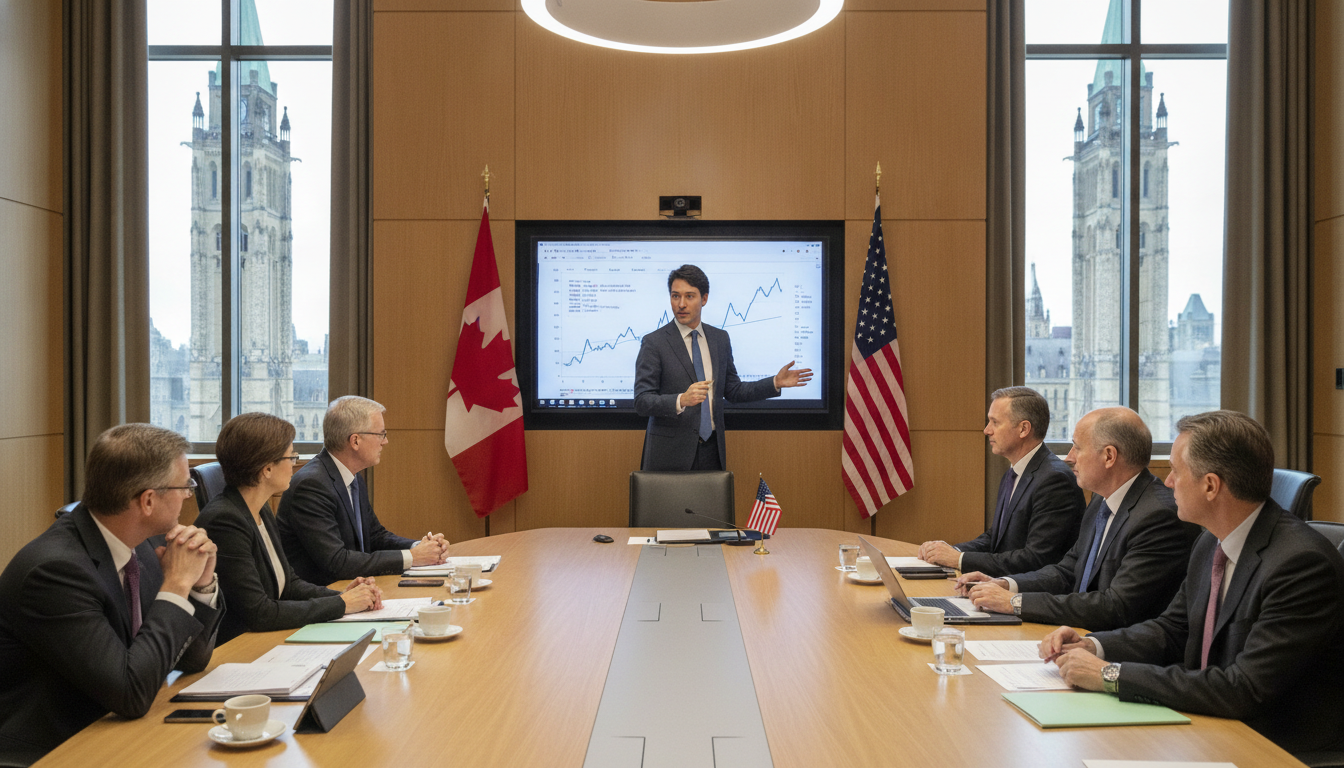
The federal government says it will evaluate options if the new U.S. tariffs take effect in 29 days, after Washington announced steep, sectoral duties that target a wide range of goods. Prime Minister Mark Carney told reporters he has spoken with U.S. President Donald Trump and that both leaders agreed to intensify negotiations on the Canada–United States–Mexico Agreement (ACEUM) over the next two weeks. The prospect of 50% levies on items from alcoholic beverages to plywood and hockey sticks has pushed Ottawa into crisis mode.
Ottawa’s immediate timeline and review of options
Carney said the government will assess legal, diplomatic and economic responses while pursuing talks with the United States. He scheduled virtual meetings with provincial and territorial premiers on Tuesday and an in-person session Thursday as part of the Council of the Federation meetings in Charlottetown.
Federal officials have not ruled out reciprocal measures and will consult provinces whose industries could be hard hit, the prime minister added. Ottawa’s strategy appears aimed at combining intensified bilateral negotiations with contingency planning should tariffs be imposed.
Scope of the U.S. tariff measures and legal basis
The U.S. administration has cited Section 338 of the Tariff Act of 1930 to justify the new duties, a provision that allows the president to impose tariffs when American imports face discriminatory or abusive restrictions abroad. The proposed tariffs, described by Washington as sector-specific, would reportedly run as high as 50% on a list that includes alcohol, cement, plywood and sporting goods.
U.S. officials say the measures respond to perceived Canadian trade barriers, including provincial restrictions on American alcoholic beverages, tariffs or quotas on U.S. vehicles and protection for Canada’s dairy sector. Washington has told Ottawa and other trading partners that it may apply similar measures to dozens of countries.
Economic impact estimates and sectoral exposure
Economists consulted by Canadian outlets estimate that roughly 5% of Canada’s exports to the United States could be affected, representing about $28 billion in goods and roughly 0.8% of national output. Robert Kavcic, chief economist at the Bank of Montreal, warned the effective tariff rate on Canadian exports to the U.S. would likely rise by around 2.5 percentage points, lifting the gap well above pre-trade‑tension levels.
Kavcic and other analysts say Canada’s overall economy could weather the shock, though certain regions and industries — notably agriculture, forestry and select manufacturing segments — would face acute disruption. Businesses with tightly integrated North American supply chains say uncertainty alone is already chilling investment.
Provincial leaders press Ottawa while staking regional positions
The premiers will press Ottawa for clarity and concrete options at the Charlottetown gatherings, and provincial reactions are already mixed. Ontario Premier Doug Ford urged a forceful response, calling for tariff-for-tariff countermeasures if negotiations fail, while British Columbia Premier David Eby emphasized the effect on U.S. consumers and reiterated that British Columbia will not reverse its decision to remove many American alcoholic products from store shelves.
Saskatchewan’s leader said the federal government must lead on trade retaliation, since Ottawa sits at the negotiating table and understands the wider consequences. Conservative Party leader Pierre Poilievre called for cross-party cooperation to block the tariffs’ application and to defend Canadian exporters.
U.S. officials signal hard line but leave room for talks on North American content
On American television, U.S. trade representative Jamieson Greer said the era for extended discussions is over and that the administration seeks concrete results for U.S. workers and firms. Greer argued that targeted measures can be tools to bring about better negotiating outcomes and warned that some 60 countries could face new duties.
At the same time, Greer suggested there may be negotiation space to protect close neighbours and to emphasize North American content rules, which could steer some manufacturing and energy supply chains back to Canada and Mexico if agreements are reached. He acknowledged previous sectoral duties on steel, aluminum and autos have had significant effects across the region.
Implications for ACEUM renegotiation and energy cooperation
The tariff escalation arrives as Canada, the United States and Mexico continue discussions about the future of the Canada–United States–Mexico Agreement. Ottawa says it has put forward detailed proposals to modernize the pact, including measures on energy collaboration, but formal bilateral talks with Washington have not yet started. Mexico and the United States have opened official negotiations, and the U.S. decision earlier this month not to renew the agreement triggered a series of annual reviews that could lead to its expiration unless all parties agree to extend it.
Officials in Ottawa stress any concession on domestic policies — such as provincial alcohol rules — would be made only as part of a comprehensive agreement, not as a unilateral response to U.S. pressure. Business groups are urging clarity so firms can plan for supply, pricing and investment decisions.
The next two weeks are likely to shape whether the dispute is resolved through intensified diplomacy or whether preparations for reciprocal trade measures accelerate, with exporters and provincial governments watching closely.
