
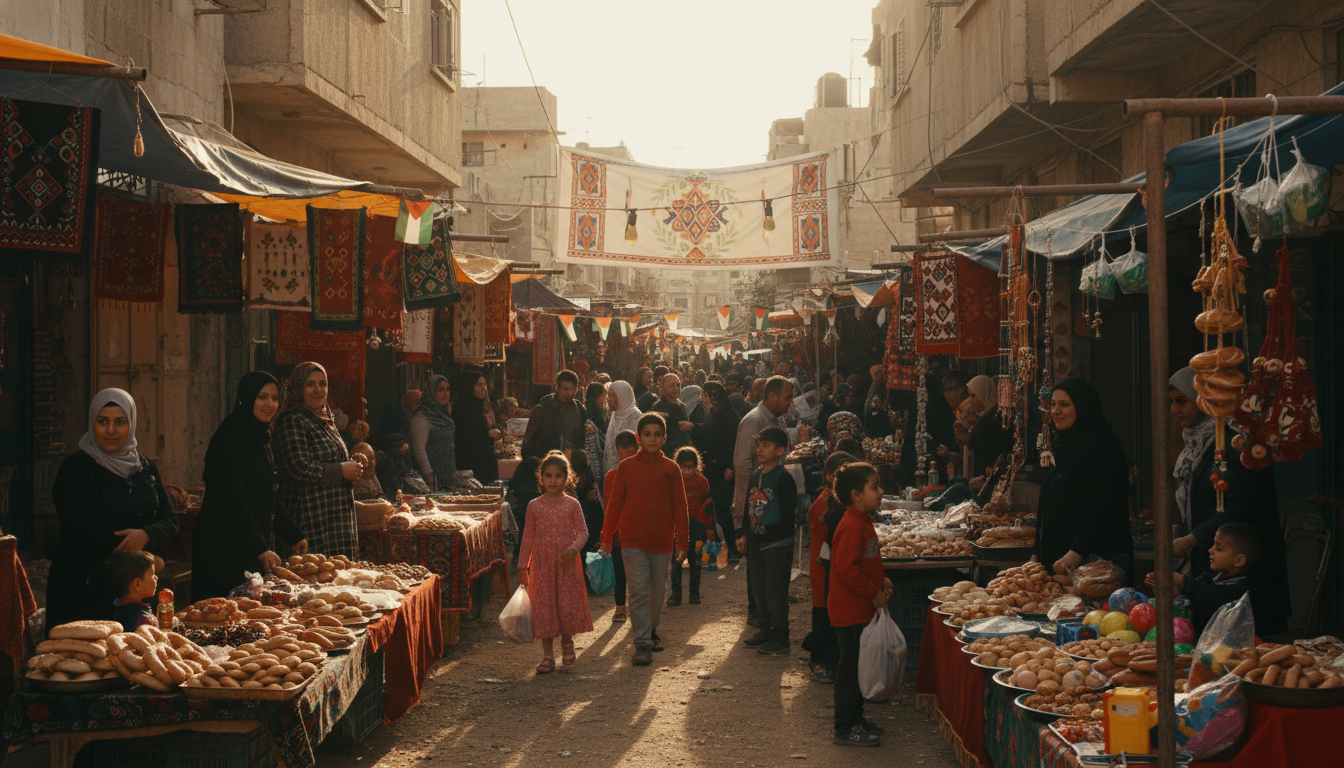
Aida refugee camp’s Bazaar of Return reopens during Eid amid walls and watchtowers
Aida refugee camp’s “Bazaar of Return” reopened this Eid after a two-year pause, with residents setting up stalls, cooking food and letting children play amid the separation wall, watchtowers and remote-controlled guns. The event, reported by Al Jazeera on May 31, 2026, marked a rare public gathering for the camp and was framed by organisers as both a cultural revival and an act of peaceful assertion. The market brought music, art and food back into streets long hemmed in by security infrastructure.
Eid Bazaar returns for first time in two years
The Bazaar of Return was staged during Eid celebrations and attracted families across the camp who had been unable to hold such public festivities for years. Vendors sold homemade food, crafts and artwork while neighbours reconnected in lanes shadowed by military installations. Organisers described the event as an attempt to restore normalcy and community dignity in a setting many residents call claustrophobic.
Security infrastructure surrounds daily life
Aida refugee camp is encircled by a concrete separation wall, dotted with military watchtowers and equipped in places with remote-controlled weapons systems. These structures dominate the skyline and shape daily movement, access to services and the atmosphere of public spaces. Residents say the security apparatus is a constant reminder of restricted mobility and a backdrop to any communal activity.
Stalls, food and art transform narrow streets
Market stalls lined alleyways that are usually empty or used for essential errands, creating a sense of bustle not felt in the camp for two years. Women prepared traditional Eid dishes at improvised food stands while young artists displayed paintings and prints reflecting themes of home and return. The smell of cooking mingled with music and conversation, giving a festive rhythm to neighbourhoods long defined by checkpoints.
Children reclaim play amid surveillance
Parents watched as children ran between stalls, played football and tried sweets, scenes many said had been missing from the camp for an extended period. For the young, the Bazaar offered brief relief from the visible military presence and a chance to experience communal celebration. Aid workers and local organisers noted the psychological value of play for children living in high-tension environments.
Organisers frame event as cultural and political statement
The name “Bazaar of Return” was chosen deliberately by organisers who linked the market to longstanding claims to dignity and right of return. Local leaders and participants framed the reopening as both a cultural revival and a peaceful assertion of identity under constrained conditions. Al Jazeera’s reporting highlighted how gatherings like this carry layered significance beyond commerce and celebration.
Humanitarian and access challenges remain
Despite the festive scenes, organisers and humanitarian observers warned that the broader conditions in the camp have not fundamentally changed. Movement restrictions, limited access to services and the constant presence of security installations continue to affect daily life and economic prospects. Aid agencies have repeatedly noted that sporadic cultural events cannot substitute for sustained improvements in living conditions and access to basic needs.
The Bazaar of Return offered a momentary reopening of civic space in a camp long defined by barriers and surveillance, and residents described the day as simultaneously joyous and fraught with the memory of restrictions. As families shared meals and neighbours traded goods, the event underscored both the resilience of the camp’s community and the limits imposed by the surrounding infrastructure. The market closed at the end of Eid with organisers expressing hope that such gatherings could become a more regular feature of life in Aida refugee camp.
