
Ontario wildfires scorch more than 734,000 hectares as season threatens record
Ontario wildfires have burned over 734,000 hectares this season, straining crews and forcing evacuations in northern First Nations amid disputes over response.
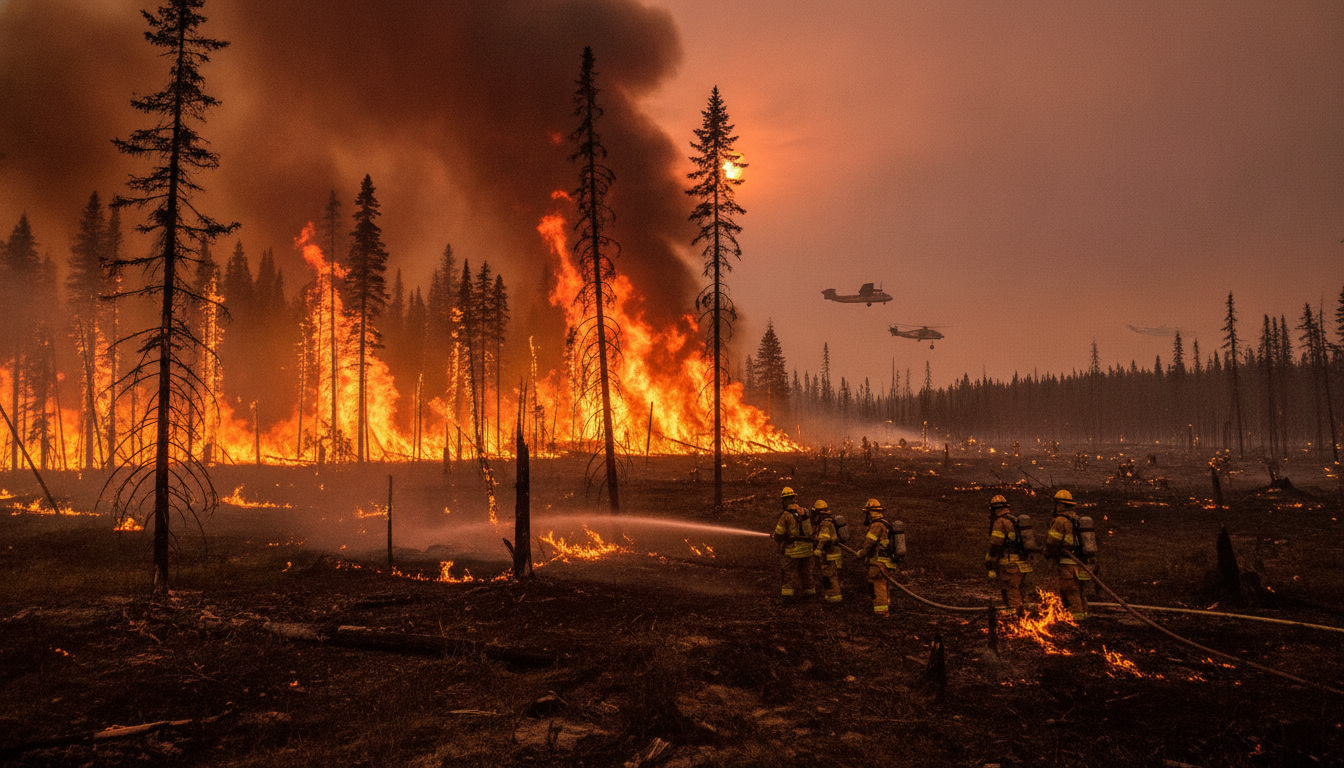
This summer’s Ontario wildfires have already consumed more than 734,000 hectares — roughly 7,340 square kilometres — a tally that provincial authorities say is on course to become the largest on record since systematic tracking began in 1969. The scale of the blazes and the speed with which they spread have led to widespread evacuations, heavy smoke across large parts of the province, and intense pressure on firefighting resources.
Area burned and record prospects
Ontario’s Emergency, Aviation and Forest Fire Services (SUALFF) reports that the bulk of the burned area occurred in a concentrated period in mid-July, pushing totals far beyond typical seasonal averages. Officials say persistent heat, drought and widespread lightning strikes combined to ignite hundreds of concurrent fires, particularly in the northwest. The province cautions that totals remain provisional as crews continue to survey and map burn scars, but the current figure already places the season among the most severe in provincial records.
Meteorological factors behind the spread
Researchers point to a rare concurrence of weather extremes that created near-ideal conditions for rapid fire growth. Scientist Yan Boulanger of Natural Resources Canada attributes the outbreak to drought, prolonged high temperatures and intense lightning that struck during a dry spell between July 13 and 17. He warns that pockets of the boreal remain especially vulnerable while dryness and warm conditions persist, and that short-term rainfall will not immediately negate fire risk across the landscape.
Fire behaviour and operational strain
Fire specialists say the simultaneous ignition of hundreds of fires overwhelmed suppression capacity and stretched national mutual-aid systems. Large air tankers, helicopters and dozens of ground crews were deployed, but the geographic spread of incidents limited the ability to concentrate assets. Veteran researcher David Martell of the University of Toronto noted, “The fires are natural in the boreal forest. But this year is not a normal season,” underscoring that magnitude and concurrency, not the presence of fire itself, have driven operational challenges.
Evacuations and impacts on First Nations
The season has prompted evacuations across multiple remote communities, disproportionately affecting First Nations in northern Ontario. Leaders including Alvin Fiddler, Grand Chief of Nishnawbe Aski Nation, have raised concerns about delayed evacuations, gaps in communications and limited infrastructure that complicate large-scale emergency movements. In some communities, residents reported waiting days before aircraft could reach them, hampered by dense smoke and limited aviation capacity in the far north.
Government response and political dispute
Premier Doug Ford, speaking at a public event, defended the provincial response and noted significant numbers of evacuees had been transported and accommodated. He pointed to mobilized personnel and the logistical support provided to affected communities, including temporary housing and supplies. That account, however, has been contested by Indigenous leaders and local officials who say coordination and on-the-ground timelines require improvement; the disagreement highlights friction over evacuation protocols and consultation during fast-moving crises.
Ecological outlook and long-term concerns
Scientists caution that while some forested areas will regenerate naturally over time, severe burns can produce lasting shifts in ecosystem composition. Where fires burn with exceptional intensity or recur frequently, certain tree species may struggle to re-establish, changing forest structure for decades. Boulanger and other specialists say climate-driven shifts in fire regimes mean such extreme seasons will likely become more common, with significant implications for wildlife habitat, carbon storage and community resilience.
Longer-term recovery will hinge on fire severity, the frequency of repeat burns, and targeted restoration where necessary. Forestry managers and Indigenous stewards are likely to play central roles in monitoring regeneration and planning reforestation or assisted recovery projects where natural regeneration proves insufficient.
Community leaders and emergency managers emphasize the need to review evacuation plans, invest in northern infrastructure, and improve early-warning systems to reduce risk to remote populations. The season also underscores the limits of existing firefighting capacity when multiple large incidents occur simultaneously across a vast province.
As crews continue suppression and assessment work, authorities say residents should expect smoke impacts to linger and remain prepared for possible additional evacuations. The province has urged continued vigilance, noting that although short-term precipitation may offer temporary relief in places, broader seasonal forecasts indicate that favorable conditions for fire risk could persist into the summer months.
Emergency services, researchers and Indigenous representatives say post-season reviews will be essential to understand gaps exposed by this summer’s crisis and to adjust preparedness, resource allocation and community consultation for future wildfire seasons.
