
Quebec–Ottawa $10‑Billion Funding Deal to Back Transit, Hospitals, Housing and Campus Projects
Quebec and Ottawa signed a near C$10‑billion, 10‑year Quebec–Ottawa funding deal to finance transit, hospital upgrades, housing and university campus projects.
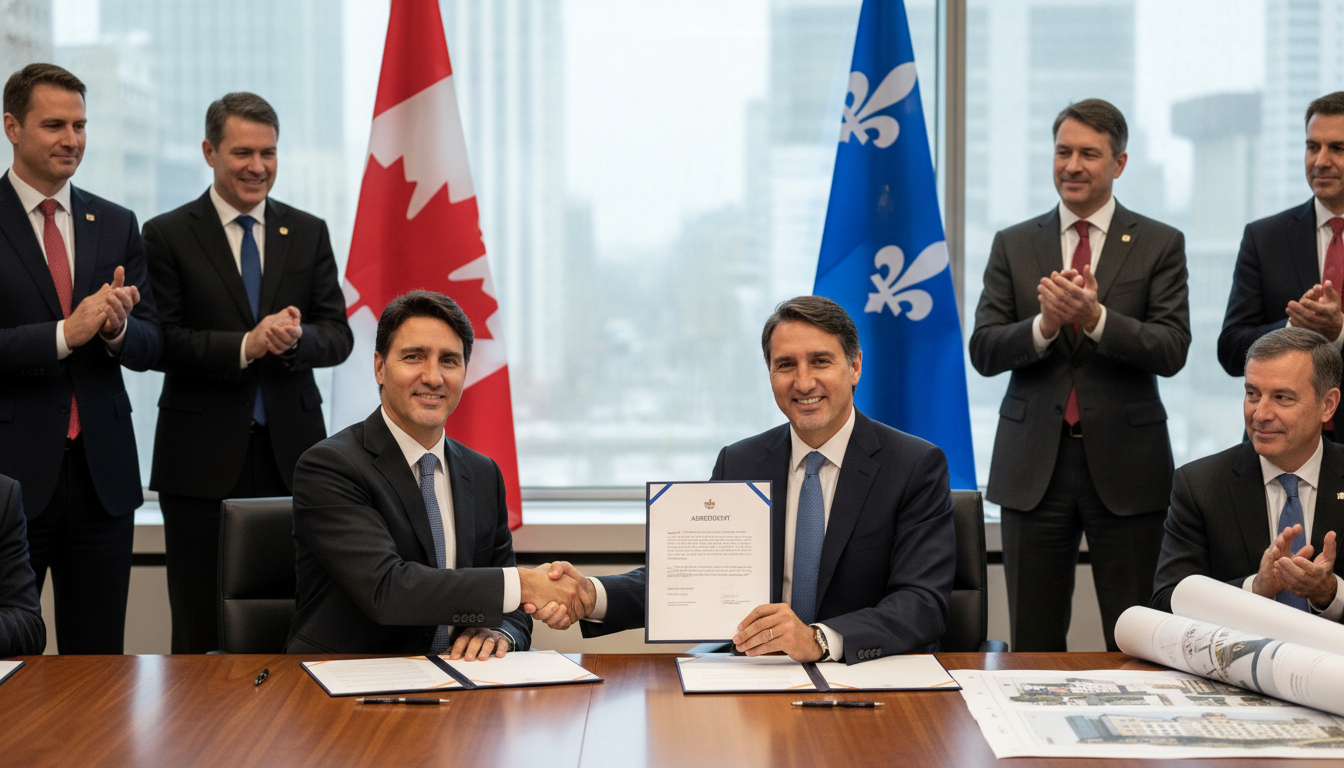
Quebec and the federal government announced on June 2, 2026, that they have signed five agreements worth nearly C$10 billion over ten years to fund projects across transit, public infrastructure, higher education and health. The package, unveiled in Longueuil by Quebec’s premier Christine Fréchette and Prime Minister Mark Carney, channels the largest share to public transit and includes targeted envelopes for electrification and community building. Officials said the agreements are intended to accelerate planned projects, support maintenance and modernize facilities across the province.
Details of the funding package and timeline
The five agreements cover a decade and are intended to be disbursed according to project timelines and provincial approvals. Nearly C$6 billion will come from the Canada Transit Fund, while a further C$400 million is earmarked for zero‑emission transit projects. Another C$3.6 billion is allocated under a fund described by officials as supporting the construction of stronger communities. Federal and provincial representatives said annual allocations and project milestones will determine actual cash flows.
Officials highlighted that project selection and delivery will proceed under bilateral governance arrangements agreed by both governments. The agreements set out high‑level priorities, but many details — including timelines for individual projects and release of funds — depend on subsequent project agreements and provincial authorizations. Both orders of government described the process as collaborative, while noting the province retains authority over approvals that fall within its jurisdiction.
Transit investments and electrification commitments
The largest portion of the Quebec–Ottawa funding deal is aimed at public transit expansion and upkeep. The Canada Transit Fund portion — reported at almost C$6 billion — is slated to support new transit projects, bus network development and the rehabilitation of existing infrastructure. Federal officials specifically cited planned work on Quebec City’s tramway project and the extension of Montreal’s Blue Line among priority investments.
A separate envelope of C$400 million from the zero‑emission transit fund will support 11 electrification projects across Quebec, federal officials said. Those funds are intended for battery and electric bus purchases, charging infrastructure and depot upgrades, with the stated goal of reducing emissions from urban transit fleets. Provincial transport authorities will be responsible for defining project scopes and tendering, subject to the terms of the bilateral funding agreements.
Funding for hospitals, campuses and housing
The C$3.6‑billion community‑building fund within the deal targets housing, post‑secondary campuses and health‑care facilities. The federal government said the money will help build more homes, expand university campuses and finance modernization and expansion work at 17 hospitals and clinics in Quebec. Among the institutions named were Hôpital Charles‑Le Moyne, Hôtel‑Dieu de Lévis, Hôpital de Chicoutimi and Hôpital Maisonneuve‑Rosemont.
Health‑sector advocates welcomed the hospital commitments, noting long‑standing infrastructure pressures in several facilities. The Coalition HMR, which represents users and employees associated with the Maisonneuve‑Rosemont hospital, urged the provincial government to authorize and start construction quickly. Coalition representatives said federal funding addresses a clear need for modern, better‑equipped facilities and called for swift provincial action to move projects from planning to construction.
Political response and opposition criticism
The announcement drew immediate criticism from opposition parties in Quebec, which questioned the timing and motives behind the deal. The Parti Québécois accused the federal government of electoral tactics ahead of the provincial vote, with leader Paul St‑Pierre Plamondon saying the “federal machine” appeared to be active as the campaign approaches. Critics also raised concerns about past conditional federal investments and potential encroachment on provincial jurisdiction.
Leaders from the Quebec Liberal Party and Quebec Solidaire similarly questioned the timing or scope of the agreements. Liberal leader Charles Milliard said he would not congratulate the premier for being the “last province” to sign such an agreement, while Québec solidaire co‑spokesperson Ruba Ghazal suggested the influx of federal cash looked strategically timed as the province heads into an election period. The Parti conservateur du Québec also pressed for clarity on some project priorities, contrasting the pace of the tramway advancement with slower progress on other major infrastructure proposals.
Quebec government and federal officials defend the agreement
Senior members of the governing Coalition Avenir Québec welcomed the deal as necessary to bring federal dollars to projects in the province. Vice‑Premier and Minister of Public Safety Ian Lafrenière said it was important that the money reach projects quickly and that the agreements respect Quebec’s areas of jurisdiction. France‑Élaine Duranceau, president of the Treasury Board, dismissed criticisms that the accord represented federal overreach and described the deal as proof that the provincial government can secure results through cooperation.
Prime Minister Mark Carney framed the package as an example of cooperative federalism, saying both governments are working together to make the country “stronger, fairer and more prosperous.” Federal ministers emphasized that the funds were made available through previously announced national envelopes and that Quebec’s share reflects negotiated priorities meant to address provincial needs.
Next steps involve provincial approvals, project business cases and the development of specific funding transfers tied to milestones. Both Ottawa and Quebec said implementation timetables would be published as projects are finalized.
The bilateral agreements announced in Longueuil on June 2, 2026, mark a significant federal investment in Quebec infrastructure, but the pace of delivery will depend on follow‑up approvals and project management by provincial authorities.
